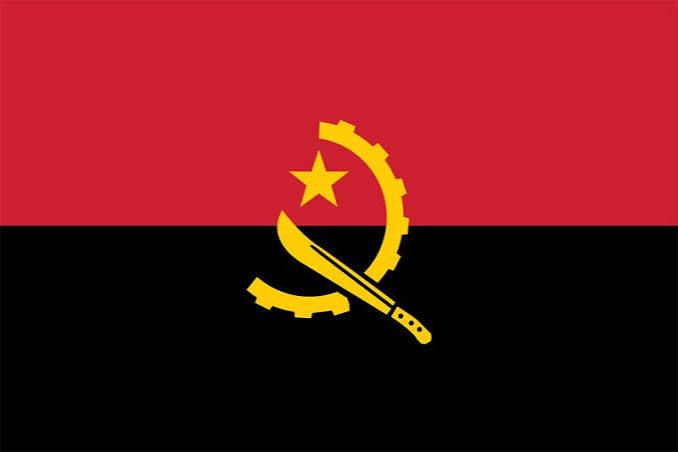
Imagine a country waking up to discover that almost overnight, its entire administrative and technical backbone has vanished into thin air. In the chaotic months surrounding November 1975, as the final pages of Portuguese colonialism were violently torn out, nearly 500,000 ethnic Portuguese fled Angola in a state of absolute panic. They left behind a country blessed with an unbelievable curse of natural resources, boundless oil and vast diamond fields, and three heavily armed, deeply bitter liberation movements ready to tear each other apart for the right to rule the capital city of Luanda.
The original power-sharing agreement collapsed almost immediately. What followed was not just a domestic struggle for power; it was the outbreak of the Angolan civil war, a 27-year catastrophe that quickly transformed into one of the most lethal, complex proxy conflicts of the global Cold War. For nearly three decades, the soil of Angola became a literal chessboard where local ethnic alignments collided with the grand, ideological strategies of Washington, Moscow, Pretoria, and Havana. It was a war that tore families apart, left millions internally displaced, and permanently reshaped the geopolitical landscape of southern Africa.
Roots of Fracture and the Colonial Injustice
To understand how the newly independent nation collapsed so spectacularly, one must examine the deeply entrenched ethnic and class cleavages that developed long before the first guns were fired. Like many post-colonial African states, Angola was arbitrarily constructed through centuries of heavy Portuguese colonial intervention. For over four hundred years, the Portuguese empire maintained a disruptive presence, initially centered on the Atlantic slave trade and later expanding inland through military expeditions to fix territorial boundaries by the early 20th century.
In doing so, colonial rule forcefully combined vastly different Bantu ethnic groups under a single, centrally administered territory, effectively politicizing ethnicity. By the mid-20th century, these social identities hardened into three distinct liberation movements born in the 1950s:
- The MPLA (Popular Movement for the Liberation of Angola): An urban-based movement primarily rooted among the Mbundu people and the multiracial, highly educated intelligentsia of cities like Luanda. They adopted a communist, Marxist-Leninist discourse.
- The FNLA (National Liberation Front of Angola): Led by Holden Roberto, this rural movement was rooted among the Bakongo people of northern Angola, fiercely dedicated to defending traditional identity and resisting the urban bourgeoisie.
- UNITA (National Union for the Total Independence of Angola): Founded in 1966 by Jonas Savimbi after he broke away from the FNLA, this movement drew its massive popular support base from the Ovimbundu people of the central Bié Plateau, the largest ethnic group in the country.
When the Portuguese military dictatorship was overthrown in Lisbon during the 1974 Carnation Revolution, colonial troops abruptly exited Angola without supervising elections or formalizing a transition. Left to their own devices, the shared anti-colonial goal vanished. On August 1, 1975, UNITA officially declared war on the MPLA, sparking the Angolan War.
The Cold War Proxy Firestorm
The internal power struggle instantly drew the attention of global superpowers, transforming the war in Angola into a high-stakes microcosm of international tensions. The Marxist-oriented MPLA quickly secured the patronage of the Soviet Union and Cuba. By contrast, the anti-communist forces of UNITA, Angola, and the FNLA looked to the West and regional powers for their survival.
The conventional phase of the conflict exploded in October 1975. In an effort to thwart the socialist MPLA from consolidating power, the apartheid government of South Africa launched Operation Savannah, dispatching thousands of armored troops and specialized task forces from Namibia into southern Angola. Simultaneously, Zaire deployed infantry battalions and armored cars to support the FNLA from the north.
Faced with a total military encirclement, the MPLA launched an urgent plea for help. Fidel Castro responded with an audacity that stunned global diplomats, launching Operation Carlota, a massive, long-range military intervention that eventually deployed up to 50,000 Cuban combat troops to Angolan soil. Backed by heavy Soviet arms shipments, including BM-21 Grad multiple rocket launchers, the Cuban forces successfully repelled the South African advance and completely routed the FNLA at the historic Battle of Quifangondo.
With the capital secured, MPLA leader Agostinho Neto declared the independence of the People's Republic of Angola on November 11, 1975, establishing a de facto government in Luanda. While the FNLA rapidly disintegrated, Savimbi’s UNITA retreated to the southern and eastern forests, pivoting to a brutal campaign of irregular guerrilla warfare.
Covert Operations and the Irony of the Resource Curse
The United States entered the conflict covertly under President Gerald Ford, who authorized the CIA’s Operation IA Feature, funneling millions of dollars in munitions and intelligence reports to the anti-communist rebels. However, this covert pipeline was abruptly shut down when American journalists exposed the operation, prompting a deeply cautious U.S. Congress to pass the Clark Amendment in 1976, which explicitly banned any government aid to paramilitary groups in Angola.
The ban locked the conflict into a protracted, bloody stalemate. In a cruel twist of geographical irony, both sides funded their ongoing military campaigns by extensively exploiting the staggering resource wealth of the Angolan soil. The MPLA government sustained its state budget and purchased sophisticated Soviet hardware through its externally managed oil industry. Conversely, UNITA forces captured major diamond mines across the Lunda Sul and Lunda Norte provinces, successfully keeping their guerrilla armies well-funded through the illicit international sale of blood diamonds worth billions of dollars.
Internal Purges and the Rise of Dos Santos
The internal dynamics within the ruling MPLA party were just as volatile as the battlefields. By 1977, serious factionalism threatened Agostinho Neto's presidency, culminating in a violent, bloody coup attempt led by hardline Interior Minister Nito Alves and his followers, known as the Nitistas. Alves openly denounced Neto’s foreign policy of non-alignment and multiracialism, seeking to force Angola into a tighter, direct alignment with the Soviet Union.
The Nitistas successfully broke into prisons and captured several government generals, but Cuban troops stationed in Luanda intervened swiftly, crushing the rebellion and restoring order. In the aftermath, the MPLA government launched an incredibly brutal, far-reaching internal security purge. Secret courts carried out thousands of executions, with estimates of the death toll ranging from 2,000 to an astounding 30,000 individuals. The coup attempt permanently altered Angola's internal security landscape and left Neto deeply distrustful of the Soviet leadership.
When Agostinho Neto passed away in September 1979, the party's central committee unanimously chose José Eduardo dos Santos as the new president. Dos Santos inherited a shattered economy and an intensifying civil war, but he would go on to rule the country for the next 38 years, gradually navigating the state away from orthodox communism toward a market economy.
Climax at Cuito Cuanavale and the Road to Peace
The conflict escalated to its absolute military peak during the 1980s. Following the election of US President Ronald Reagan and the subsequent repeal of the Clark Amendment in 1985, Washington intensified its backing of UNITA, treating Savimbi as a key strategic ally in a global effort to roll back Soviet influence. Savimbi was even invited to the White House, securing advanced Stinger surface-to-air missiles to counter the MPLA’s air power.
In response to expanding UNITA operations, the Soviet military mission planned a massive conventional offensive in 1987 to crush the rebels. This directly triggered a heavy counter-intervention by the South African Defence Force (SADF). The opposing forces clashed in the historic Battle of Cuito Cuanavale between January and March 1988, which is widely recognized as the largest conventional battle on the African continent since World War II.
The grueling, indecisive battle marked a massive geopolitical turning point. Faced with the escalating human and financial costs of a conventional stalemate, all international actors realized that a military victory was completely impossible. This realization paved the way for the historic New York Accords signed on December 22, 1888. The agreement granted independence to Namibia, brought an end to South African incursions, and established a phased, total withdrawal of all Cuban forces from Angolan soil.
The Final Resolution and a Broken Landscape
The departure of foreign armies did not instantly bring peace to the Angolan civil war. In 1991, the Bicesse Accords attempted to transition the state into a multi-party democracy, leading to the historic multi-party elections of 1992. When the official results showed that MPLA candidate José Eduardo dos Santos won the presidency over Jonas Savimbi, the UNITA leader violently disputed the outcome, alleging widespread election fraud.
The election process collapsed completely, and the country plunged back into a horrific cycle of guerrilla warfare that claimed over 120,000 lives in the following eighteen months alone. UNITA became increasingly isolated as the United Nations Security Council passed devastating international sanctions, explicitly banning the purchase of Angolan diamonds and freezing Savimbi’s bank accounts.
The tragic, 27-year conflict finally reached its definitive conclusion on February 22, 2002, when government forces successfully ambushed and killed Jonas Savimbi in the eastern province of Moxico. Weakened and deprived of its charismatic founder, UNITA's remaining military leadership signed a permanent ceasefire on April 4, 2002. The rebel group formally demobilized its armed forces and successfully transformed the movement into a legitimate, formidable political party in Angolan politics.
The aftermath of the Angolan civil war left behind a deeply traumatized nation. Decades of fighting resulted in over 500,000 casualties and internally displaced more than four million people, one-third of the country's entire population. Today, millions of unexploded landmines still litter the beautiful rural countryside, posing a constant danger to civilians and severely hindering agricultural development. Yet, despite the heavy scars of the past, the silence of the guns has allowed a resilient Angola to slowly rebuild its infrastructure, resettle its refugees, and confidently forge a new national identity from the ashes of war.