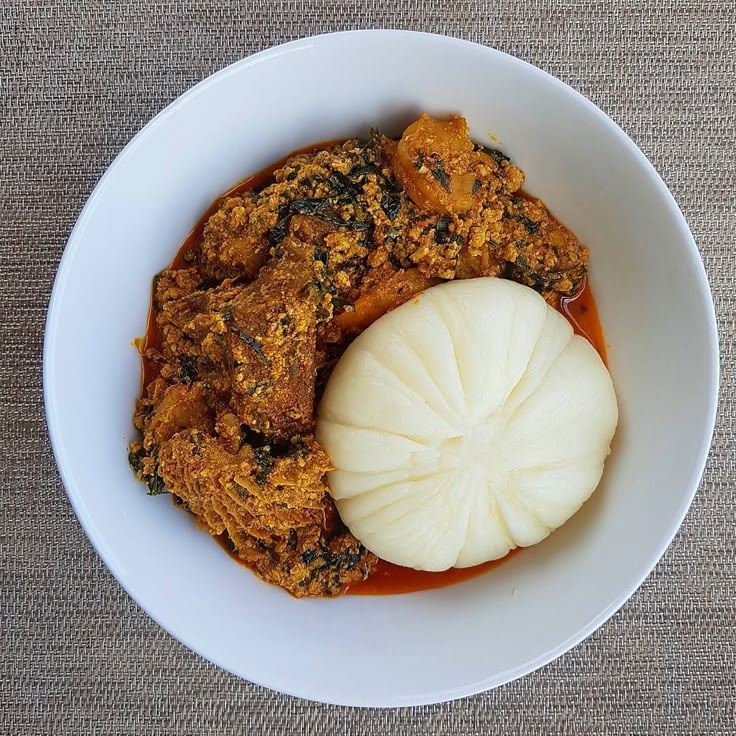
Pounded yam is a traditional West African swallow food with deep roots extending into the pre-colonial era. The dish relies on the domestication of yam, a crop that was consumed in its wild form around 50,000 BC and fully domesticated by 3000 BC. Today, Nigeria produces over 70% of the world’s yams, maintaining the crop's status as a fundamental dietary and cultural pillar. The dish is widely known by various ethnic names, including iyan in Yoruba, utara-ji in Igbo, and sakwara in Hausa. It is also deeply ingrained in the culinary traditions of the Tiv and Ebira peoples.
Cultural Significance and Wealth
In West African cultures, yam is much more than sustenance; it is a historical indicator of wealth, identity, and social standing.
- In Ekiti State and throughout Yorubaland, yam is revered as the king of crops. It serves as a strict identity marker for the Ekiti people, who share the local saying, “No Ekiti man without pounded yam”.
- In pre-colonial Igbo societies, yam was strictly categorized as a men's crop, whereas cocoyam and cassava were considered women's crops. The crop is considered the “king of all crops” and is overseen by the specific yam deity, Njọkụ or Njokuji.
- Historically, a man's success, wealth, and prestige were explicitly measured by the size of his yam barn (ọba ji). During harvests, wealthy farmers publicly displayed their yields, and making pounded yam from these harvests became a symbol of high social status.
- The annual harvest is commemorated through the New Yam Festival, known as Odun Ijesu in Ekiti and Iri Ji or Ikeji in Igboland. This ancient festival is a time to thank God and ancestral spirits before any new crops are eaten.
- Oral traditions tightly link yam cultivation to regional history, connecting it to early farming experiments in Afikpo and Ezza, and to the historical figure Orunmila in Ile-Ife.
Traditional Preparation
Pounding yam is a labor-intensive, communal activity.
- The process begins with the African yam, also known as puna yam, true yam, or white yam, which features rough brown skin, off-white flesh, and can grow up to five feet long.
- Peeled chunks of the yam are boiled until soft and then transferred to a large wooden mortar (ikoko or odo).
- The act of pounding yam requires significant physical strength and a steady rhythm. Typically, women or young men stand and take turns striking the yam with a heavy, long pestle (omo odo), while another person turns the dough inside the mortar.
- The repetitive striking breaks down the sticky starch fibers, converting lumpy pieces into a silky, stretchy, and lump-free dough that is heavier in consistency than mashed potatoes. It is traditionally eaten smoothly with the hands.
- In Ekiti State, a unique generational belief holds that yesterday's pounded yam tastes significantly better when reheated the following day.
Modern Evolution and Variations
As populations urbanize, the methods used to pound yam have evolved significantly to prioritize convenience.
- Many modern households now utilize food processors, blenders, or dedicated yam pounding machines, which cost approximately 35,000 naira.
- Instant pounded yam flour, commonly referred to commercially as poundo, is also frequently used to bypass the manual labor entirely.
- Despite the convenience of these modern appliances, cultural traditionalists argue that no machine can accurately replicate the authentic, elastic texture produced by a wooden mortar and pestle.
- Regional variations of the dish also exist. In Ile-Ife, a variation known as iyan gbere incorporates the African breadfruit (Treculia africana). The breadfruit is cooked until soft, mashed into a paste, and combined with traditional yam paste to alter the dish's nutritional profile and taste.
Soups and Culinary Pairings
As a heavy swallow food, the dough is traditionally served hot alongside rich, savory West African soups. Pounded yam and egusi (melon seed soup) are a premier pairing that serves as the centerpiece for weddings, royal events, naming ceremonies, and communal festivals.
Other traditional soup pairings include:
- Ogbono
- Efo riro (stewed spinach)
- Ewedu (jute leaves)
- Okra soup
- Gbẹ̀gìrì
- Ofe akwu (banga/palmnut soup)
- Ofe Nsala (white soup)
- Ofe oha
The dish's legacy has expanded far beyond local borders, with the Ekiti State Council for Arts and Culture actively planning to market it internationally as a unique cultural export. Today, the meal is proudly served in restaurants across Nigeria and throughout the diaspora.