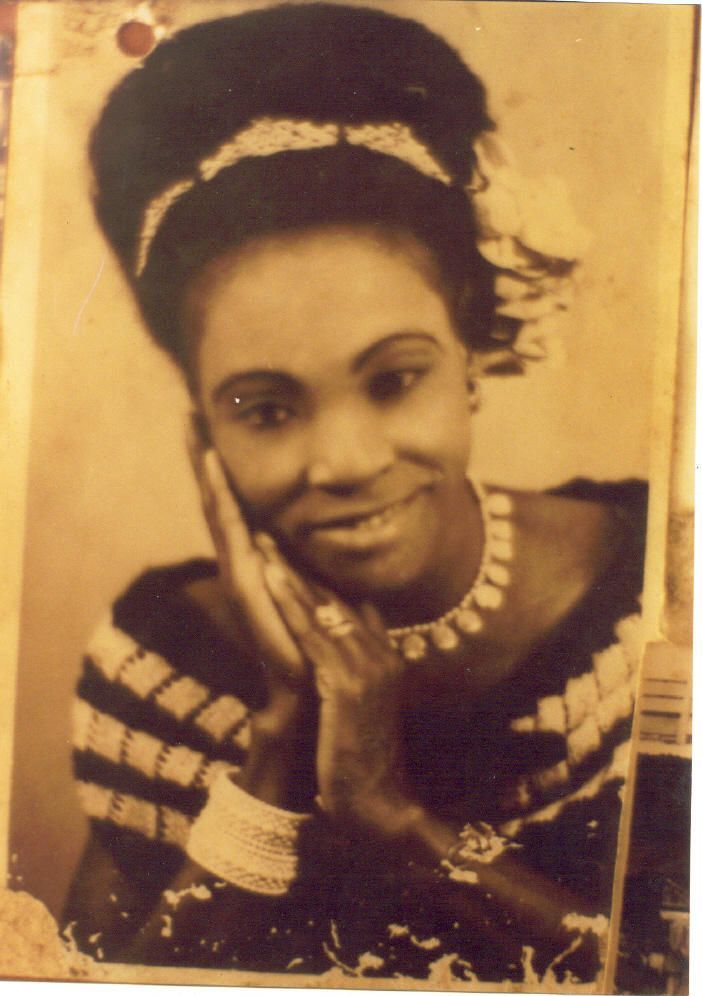
History often preserves the names of men who signed treaties and drafted constitutions, while quietly sidelining the fierce grassroots organizers who actually built the nation's political pulse. Chief Margaret Ekpo (1914–2006) was not a quiet footnote. She was a seismic force, a pioneering women’s rights activist, social mobilizer, nationalist, and parliamentarian who shattered the glass ceilings of Nigeria’s First Republic. Operating in a deeply hierarchical, male-dominated political landscape, Ekpo organized women across ethnic lines, stared down British colonial authorities, and forever altered the trajectory of African civic leadership.
Early Life and Heritage: Roots of Resilience
Born Bassey (meaning God's day) on July 27, 1914, the exact year the Northern and Southern Protectorates of Nigeria were amalgamated, Margaret Sampson Ekpeyong Efa hailed from Adiabo Okurikang in Creek Town, Cross River State. Her lineage bridged two powerful worlds: her father, Okoroafor Obiasulor (later named Sampson Ekpeyong Efa), was a palm produce merchant from Agulu-Uzo-Igbo in Anambra State, while her mother, Inyang Eyo Aniemewue, belonged to the royal family of King Eyo Honesty II of Creek Town.
Raised by a strict disciplinarian father who was a Presbyterian pastor and teacher, Ekpo attended the Girls Institute in Creek Town and later completed her Standard Six examinations at the prestigious Hope Waddell Institute in 1931. Though she excelled in academics and athletics (competing in high jump, long jump, and sprints), the tragic death of her father in 1934 cut short her dreams of attending a teacher training college. She instead worked as an elementary school pupil-teacher across various institutions in Calabar and Aba.
In 1938, she married Dr. John Udo Ekpo, an Ibibio medical doctor trained at the Yaba Medical School in Lagos. Their inter-ethnic marriage, defying the rigid cultural boundaries of the era, moved to Aba, where Dr. Ekpo resigned from government service in protest against the racial discrimination and lower wages imposed on indigenous doctors by European colonial administrators.
Stepping Into the Arena: Political Awakening in Aba
Margaret Ekpo’s entry into partisan politics in 1945 was initially born out of necessity. Because Dr. Ekpo was a civil servant barred from attending political gatherings that critiqued colonial discriminatory practices, Margaret volunteered to attend in his place. There, she found herself the only woman at a fiery nationalist rally featuring legends like Herbert Macaulay, Nnamdi Azikiwe, and Mazi Mbonu Ojike. Listening to their calls for independence ignited an unyielding political fire within her.
Recognizing that women were being deliberately excluded from the freedom struggle, Ekpo set out to mobilize them. When she tried to recruit women into the fledgling Aba Market Women Association, their husbands routinely blocked them. Demonstrating extraordinary tactical brilliance, Ekpo capitalized on a post-World War II scarcity of salt, an essential household commodity. She used her savings to buy up and hoard available bags of salt from major trading companies, decreeing that only registered members of the women's association could purchase it. Left with little choice, husbands quickly permitted their wives to join.
What began as a market union transformed into a formidable political pressure group. Ekpo used these gatherings not only to organize economic solidarity but to radicalize women politically, urging them to look beyond domestic confines and envision a future where their children could become doctors, district officers, and live without colonial subjugation.
Global Exposure and Grassroots Activism
In 1946, Dr. Ekpo suffered a stroke and was flown to Dublin, Ireland, for medical treatment. Selling their landed property in Aba to fund the trip, Margaret turned the crisis into an opportunity. She enrolled at the Rathmines School of Domestic Economy (now the Dublin Institute of Technology), earning a diploma in domestic science between 1946 and 1948.
Observing European women firsthand in Ireland shattered her illusions of Western superiority. She realized that European women also performed basic domestic chores and faced varying economic classes, a revelation that inspired her to write a book titled European Women as I See Them to help liberate Nigerian women from “colonial mental slavery”. Upon returning to Aba, she established the Windsor Domestic Science Institute, training young women in dressmaking, bookkeeping, and home economics to ensure they achieved financial independence.
Her activism soon placed her on the front lines of historic national resistance:
-
The Enugu Colliery Massacre (1949): When British colonial troops opened fire on striking coal miners in Enugu, killing 21 workers, Ekpo teamed up with fellow pioneer Chief Funmilayo Ransome-Kuti to declare a national day of mourning. Her fiery speeches at protest rallies led to her brief arrest and threats of deportation, prompting outraged Aba women to threaten to burn the town down until she was released.
-
The Enugu Prison Investigation (1954): When a female prison wardress, Mrs. Onyia, was murdered by a male colleague for rejecting his sexual advances, and the authorities attempted to cover it up, Ekpo led a mob of Aba women to storm the prison gates, forcing an exhumation, a proper autopsy, and the subsequent execution of the guilty guard.
Legislative Pacesetting and the National Stage
Ekpo’s alignment with the National Council of Nigeria and the Cameroons (NCNC) propelled her into national governance. As Vice President of the NCNC Women’s Association (alongside Flora Nnamdi Azikiwe), she toured the country, orchestrating grassroots voter registration. Her organizing power was so absolute that by 1955, female voters in Aba officially outnumbered male voters in citywide elections.
Her political ascension broke historical barriers:
-
House of Chiefs (1954–1958): Appointed as a special member of the Eastern Region House of Chiefs, she broke a long-standing male preserve, sitting alongside traditional rulers to advocate for women's interests.
-
Constitutional Conferences: She served as an official advisor to NCNC delegations at critical pre-independence constitutional conferences in Lagos and London (1953, 1957, and 1958), where she fiercely championed universal adult suffrage, ensuring women aged 21 and above gained the right to vote and run for office.
-
House of Assembly (1961): Ekpo won an elective seat in the Eastern Regional House of Assembly, representing Aba Urban North. As a legislator, she relentlessly pushed for infrastructure upgrades on market roads, the employment of women in the Nigerian Police Force, expanded scholarship opportunities for girls, and the protection of workers' rights.
Civil War Trials, Later Life, and Legacy
The outbreak of the Nigerian Civil War (1967–1970) brought a brutal halt to her political career. Standing firmly for the indivisibility of Nigeria and opposing secession, she was labeled a saboteur and detained without adequate food by Biafran authorities for three years. Despite facing severe physical deprivation, she remained unbowed and deeply patriotic.
Following the war, she relocated to Lagos, ran a boutique, and eventually retired to Calabar, living a modest life marked by grace and public dignity. Chief Margaret Ekpo passed away on September 21, 2006, at the age of 92 at the University of Calabar Teaching Hospital.
Her enduring legacy is etched into the landscape of modern Nigeria:
-
The Margaret Ekpo International Airport in Calabar was named in her honor during her lifetime in 2001.
-
The main refectory at the University of Nigeria, Nsukka, and several institutional halls bear her name.
-
She held prestigious traditional titles, including the Obong-awan of the Efik and Ezinne of the Igbo, cementing her status as an unifier across ethnic lines.
Margaret Ekpo proved that true political power belongs to those who stand shoulder-to-shoulder with the people. Her life remains an immortal blueprint for civic courage, equity, and national unity.