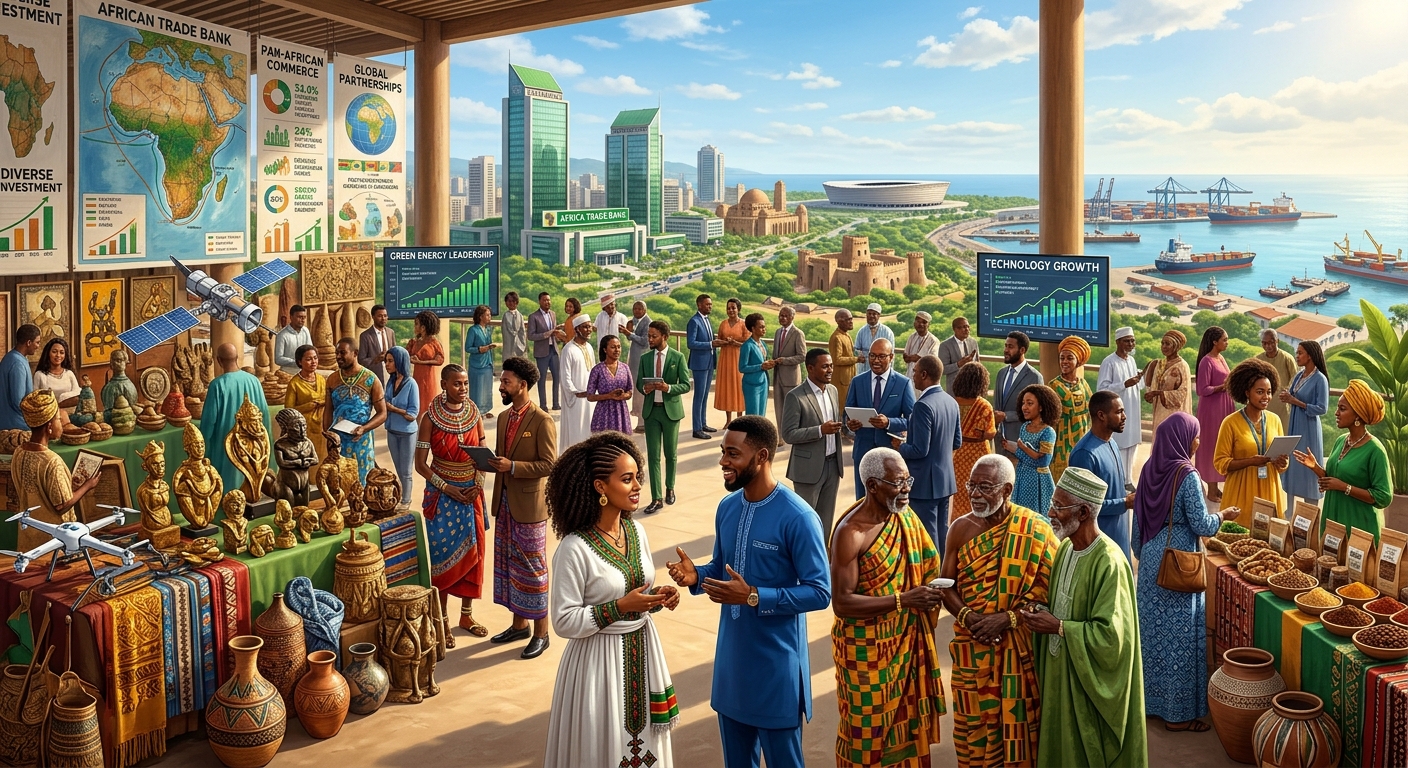
As a child growing up in a brainwashed Africa, I had a problem, yeah, an identity problem that even affected how I viewed my own surname.
During my primary education, footballers from Brazil had names we felt were so cool that I genuinely wanted to change my name to Ronaldo or Kaka. Plus, I was a good footballer, still a very good one though, (If you are doubting you can pull-up with your squad at our next Heritage Football match), so in my mind, I felt my own African surname was somehow not befitting.
You might think this is just coming from a place of youthful playfulness or kids simply being kids, but truth be told, it is the direct result of a brainwashed child seeking validation from a source outside of self. To think that those names I aspired to emulate didn't even have deep meaning in the real sense, some were merely childhood nicknames! You should know that if I had possessed a deep knowledge of what my surname actually meant and understood the rich, unvarnished history of my direct ancestors, I would have been able to wear that name proudly as a badge of honor.
This personal anecdote is just one small window into the broader identity crisis that an average mind is plagued with across Africa today. Think about it: how can a group of people who don't even know their true heritage, let alone understand their core identity, effectively solve problems genuine to them? How can they look inward to forge a reality that will truly emancipate them from systemic suffering?
As a young child who later realized how great his ancestors truly are, and who went on to help build a solution like CYSTADS, I have to ask myself: would I have become this person if I did not first seek to understand my roots?
The Roots of the African Identity Crisis
When we discuss the challenges facing modern Africa, our conversations almost always revolve around economics, governance, infrastructure, and foreign aid. We debate GDP growth, technological adoption, and policy reforms in boardrooms and international summits. Yet, we routinely overlook the invisible architect of our continuous stagnation: a deep-seated crisis of identity.
From a very tender age, many Africans are subtly and sometimes overtly conditioned to view their indigenous heritage through a distorted lens. Through history books written by colonizers, media portrayals that reduce a vibrant continent to a monolith of poverty, and societal preferences for foreign names, languages, and standards of beauty, the message is clear: validation lies elsewhere.
My desire to swap my African surname for a Brazilian football moniker wasn't just a quirky childhood phase; it was an early symptom of cultural dislocation. It was the subconscious belief that my history started and ended with colonial disruption, and that anything native to my soil was inferior to what was imported from the West or Latin America.
When you internalize this narrative, your worldview shifts. You begin to look outward for permission to exist, outward for solutions to your local problems, and outward for definitions of success.
The Cost of Cultural Disconnection
How does a society function when its people are culturally dislocated? The cost is monumental, manifesting across every sector of life:
Epistemic Dependency: When we don’t trust our own indigenous systems of knowledge, philosophy, and organization, we become chronic consumers rather than creators of solutions. We adopt foreign blueprints that often fail to fit our unique socio-cultural realities because we haven't bothered to study what worked for our ancestors.
Loss of Agency: True agency requires self-definition. If someone else defines who you are, what you are worth, and what you are capable of achieving, they effectively control your trajectory. A population suffering from an identity crisis is easily manipulated, economically exploited, and culturally colonized long after physical flags of independence have been raised.
The Brain Drain Dilemma: Beyond physical migration, there is an internal brain drain a psychological migration where the best minds of a continent dream primarily of escaping it, viewing their homeland merely as a stepping stone rather than a sanctuary to be built and preserved.
If we do not know who we are, we cannot possibly know what we are capable of achieving.
Looking Inward: The Turning Point
My personal transformation and the shift that eventually led me to co-create solutions like CYSTADS did not happen by accident. It happened the moment I stopped looking outward for validation and started digging inward into the vast, untapped reservoirs of my ancestral history.
When you finally research your lineage, study pre-colonial African innovations, understand traditional governance structures, and appreciate the resilience encoded in your surname, something remarkable happens. The inferiority complex evaporates, replaced by an unshakable sense of responsibility.
You realize that your ancestors were scientists, artists, traders, astronomers, and community builders who solved complex environmental and social problems without modern technology. They built empires, cultivated sophisticated agricultural systems, and fostered rich oral and written traditions.
Armed with this realization, the way you approach modern problems changes entirely. You stop waiting for foreign saviors. You stop trying to force square pegs of foreign ideologies into round holes of African realities. Instead, you begin building context-aware, indigenous-powered solutions designed by us, for us.
Building Solutions for the Future: The Story of CYSTADS
This awakening is precisely what birthed initiatives like CYSTADS. When you understand your roots, innovation ceases to be an attempt to mimic the West; it becomes an authentic expression of local ingenuity.
Africa does not lack brilliant minds, resources, or raw potential. What it needs is a psychological reclamation, a deliberate unlearning of the colonial mindset and a fierce reconnection with our heritage. Only when we know our true worth can we design sustainable technologies, robust economic ecosystems, and resilient institutions that stand the test of time.
If I had remained trapped in that childhood mindset, ashamed of my name, disconnected from my lineage, and seeking external validation, I would never have had the clarity, courage, or conviction to build the things I build.
Fuel the Movement: Building independent, context-aware solutions like CYSTADS requires a collective effort. If this vision resonates with you, consider directly supporting our ongoing research, community education, and platform development.
Conclusion: The Call to Reclaim Your Narrative
The journey to Africa’s true emancipation does not begin in parliament houses or corporate boardrooms; it begins in the mirror, in our archives, in our family histories, and in how we teach the next generation to value their names, languages, and heritage.
It is time to strip away the layers of historical amnesia. It is time to look inward, reclaim our identity, and wear our names and roots as badges of honor. Because until we know who we are, we will never truly unlock who we can become.
If you believe in empowering homegrown African innovations and restoring identity through education and tech solutions, partner with us today.