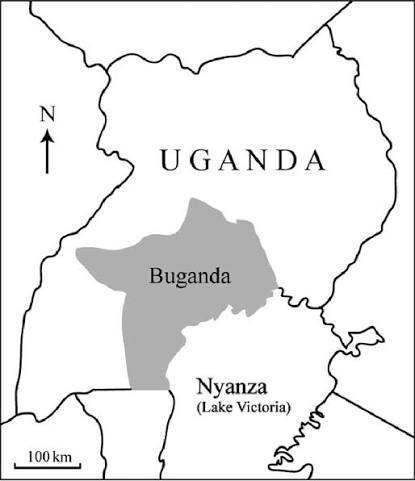
Nestled along the fertile, sun-drenched northern shores of Lake Victoria lies the Buganda Kingdom, the largest and most influential traditional monarchy in present-day Uganda. To understand the soul of this East African nation, one must look deep into the rich, intricate history of the Baganda people. Their story is not just a relic of the past; it is a living, breathing testament to cultural resilience, brilliant political strategy, and an unbreakable bond between a people and their king.
For centuries, this dynamic state has been a powerhouse in the Great Lakes region, evolving from a small cluster of central counties into a sprawling embryonic empire. Let us take a journey through the epic history of the Buganda Kingdom, tracing the footsteps of legendary kings and cunning diplomats, and following the modern revival of an ancient throne.
From Muwaawa to the Birth of Buganda
Long before the world knew it as Buganda, the region was referred to as Muwaawa, a name that essentially meant a sparsely populated frontier. The area was initially inhabited by indigenous clans who were ruled by local leaders known as the Bataka. According to vibrant oral traditions, the landscape was plagued by a ruthless leader named Bemba, whose terrifying reputation earned him the nickname Bemba Musota, comparing his venomous rule to that of a deadly cobra.
The turning point that birthed the modern kingdom arrived with the legendary figure Kato Kintu. Rallying the oppressed clans, most notably the Lugave clan commanded by Mukiibi, Kintu launched a successful rebellion and defeated Bemba at Naggalabi, Buddo. To this day, the crowning of a new king takes place at this very site to commemorate Kintu’s historic victory.
Following his triumph, Kintu gathered the clan leaders at Magonga to establish a unified government and a shared constitution. A famous traditional story claims that a spiritual healer handed Kintu a single stick, which he snapped with ease, followed by a thick bundle of sticks that proved impossible to break. The healer instructed him to rule his people as a united bundle, or “Obuganda”. This powerful metaphor led to the dropping of the name Muwaawa, and the mighty kingdom of Buganda was officially born.
The Rise of a Regional Powerhouse
From its humble nucleus consisting of counties like Busiro, Mawokota, and Kyaddondo, the kingdom expanded with breathtaking speed. By the eighteenth and nineteenth centuries, Buganda had transformed into an aggressively expanding state. Utilizing massive fleets of war canoes, the kingdom established absolute dominance over Lake Victoria and aggressively annexed territories from the neighboring Bunyoro kingdom.
This military success was matched by a highly sophisticated system of central governance. At the top of the hierarchy sat the Kabaka, or king, who eventually claimed the ultimate title of head of all the clans. Because children belonged to the clan of their mother, the Kabaka could marry into any clan in the society, brilliantly preventing the formation of an exclusive, isolated royal clan and keeping the monarchy deeply tied to the people. The king was assisted by a powerful inner circle of advisors, led by the Katikkiro, who functioned simultaneously as the prime minister and chief justice of the realm.
The daily life of the Baganda people thrived in a warm, pleasant climate perfectly suited for agriculture. The society prospered by cultivating bananas, yams, and coffee, while a strict division of labor saw women managing the gardens and men serving in the military, hunting, and constructing the kingdom's infrastructure.
Explorers, Missionaries, and the British Protectorate
In the mid-nineteenth century, the geopolitical landscape of Uganda, Buganda, shifted dramatically with the arrival of foreigners. Kabaka Muteesa I, a visionary leader who reigned from 1856 until he died in 1884, welcomed the first wave of European explorers, including John Hanning Speke and Henry Morton Stanley. Seeking a strategic counterweight against Egyptian expansion moving down the Nile, Muteesa formally invited the Protestant Church Missionary Society to his court in 1877, quickly followed by French Roman Catholic missionaries in 1879.
This influx of foreign religious ideologies sparked intense internal turmoil. Muteesa's successor, Mwanga II, fiercely resisted the growing European influence that threatened his absolute authority. In 1886, Mwanga ordered the execution of dozens of Christian converts, now remembered as the Uganda Martyrs, who bravely went to the flames rather than renounce their new faith.
Despite Mwanga's fierce resistance, the tide of colonialism was unstoppable. Armed religious factions erupted into civil war, prompting the British East Africa Company, represented by Captain Lord Lugard, to intervene in 1890 with a Maxim machine gun to secure Protestant dominance. In 1894, the British government declared a formal protectorate over the territory. This era culminated in the signing of the Buganda Agreement of 1900, a landmark treaty that formalized British indirect rule while allowing the Kabaka and his chiefs to retain significant autonomy, land rights, and political leverage.
Independence and the Dark Days of the Mengo Crisis
As the winds of independence swept across Africa in the mid-twentieth century, Buganda fiercely guarded its unique autonomy. The kingdom's conservative loyalists, known as the “King's Friends,” were terrified of being swallowed by a newly centralized national government. When colonial Governor Sir Andrew Cohen attempted to force integration in 1953, he deported Kabaka Mutesa II, affectionately known as “King Freddie”, to London. This aggressive move backfired spectacularly, instantly making the king a martyr and uniting the Baganda in fierce anticolonial protests until the British were forced to reinstate him two years later.
In October 1962, Uganda achieved full independence through a fragile political alliance. Kabaka Mutesa II was appointed as the nation's first ceremonial president, while Milton Obote, a politician from the north who fiercely opposed Buganda's hegemony, took the role of prime minister.
This marriage of convenience ended in absolute tragedy. In May 1966, Obote suspended the constitution and ordered the federal army to attack the royal Lubiri compound in Mengo. Amid a torrential downpour, Kabaka Mutesa II was forced to flee his own palace, eventually escaping to exile in Britain, where he later passed away. In 1967, Obote officially abolished all traditional kingdoms and declared a republic, turning the sacred royal palace into military barracks and plunging the Baganda people into decades of profound cultural suppression.
The Cultural Restoration and Modern Buganda
Despite years of political violence and dictatorial regimes under leaders like Idi Amin, the spirit of the Buganda kingdom remained entirely unbroken. In 1986, a new government led by Yoweri Museveni took power. After years of relentless pressure from traditional clan elders and loyal subjects, the government formally permitted the restoration of the traditional monarchies in 1993.
In a moment of massive national healing and triumph, Ronald Muwenda Mutebi II, the son of the exiled Mutesa II, was crowned as the 36th Kabaka of Buganda. Today, the kingdom operates proudly as a constitutional monarchy. Its parliament, known as the Lukiiko, convenes in the historic Bulange building, representing the voices of over fifty distinct clans.
While it no longer wields the absolute political power of its ancestors, the modern kingdom remains an irreplaceable pillar of cultural identity and socioeconomic development. It is a shining example of how a deeply rooted African civilization can survive colonialism, violent political upheaval, and modernization to remain the enduring heartbeat of its people.