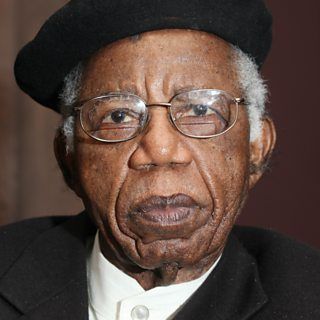
When the literary world speaks of the giants who reshaped global storytelling, few figures tower as luminously as Chinua Achebe (November 16, 1930 – March 21, 2013). Often celebrated as the father of modern African literature, a title he famously met with characteristic humility and critique, Achebe did not merely write books; he tore down the Eurocentric distortion of a continent and built a new, authentic vocabulary for African experiences.
From his groundbreaking debut Things Fall Apart to his tireless advocacy for post-colonial self-determination, Achebe's life was a masterclass in intellectual courage, artistic brilliance, and unyielding cultural pride.
Early Roots and Multicultural Foundations
Born Albert Chinụalụmọgụ Achebe in the Igbo village of Ogidi, Nigeria, Achebe grew up at a fascinating cultural crossroads. His parents, Isaiah Okafor Achebe and Janet Anaenechi Iloegbunam, were early converts to the Protestant Church Mission Society (CMS). His father worked as a missionary teacher, yet young Chinua was raised in a household deeply influenced by both the rising tide of British colonial Christianity and the vibrant, unyielding traditions of indigenous Igbo culture.
Storytelling was the lifeblood of Ogidi. While his father's library introduced him to English classics and adaptations like The Pilgrim's Progress, it was his mother and sister who fed his imagination with traditional folktales steeped in the rhythms of the land.
Achebe excelled academically. After attending local missionary schools, he was selected at age fourteen to study at the prestigious Government College in Umuahia, widely considered the finest secondary school in West Africa. In 1948, he entered the newly opened University College at Ibadan (an associate college of the University of London) initially on a scholarship to study medicine.
However, the trajectory of his life shifted dramatically during his university years. Disgusted by the overtly racist and patronizing depictions of Africans in European literature, such as Joyce Cary’s novel Mister Johnson and Joseph Conrad’s Heart of Darkness, Achebe abandoned medicine to study English, history, and theology. It was also during this period of rising Nigerian nationalism that he dropped his English name Albert in favor of his indigenous name, Chinua (short for Chinualumogo, meaning My spirit come fight for me or May God fight on my behalf).
Things Fall Apart and the Birth of a Literary Movement
After graduating in 1953, Achebe spent a brief stint teaching before moving to Lagos in 1954 to join the Nigerian Broadcasting Service (NBS), where he worked in the Talks Department. This radio background sharpened his mastery of spoken cadence and dialogue.
In 1956, a trip to London for a BBC training course gave him the distance and clarity to work seriously on his manuscript. Written in longhand and nearly lost due to an uncommunicative typing service in London (saved only by the fierce intervention of his boss, Angela Beattie), the manuscript was eventually accepted by Heinemann.
On June 17, 1958, Heinemann published Things Fall Apart. The novel was an immediate revelation. Set in the late 19th century, it traced the life of Okonkwo, a proud, uncompromising yam farmer and warrior in the fictional Igbo clan of Umuofia, whose life is upended by the arrival of British colonialism and Christian missionaries. Unlike previous Western texts that reduced Africans to savages or buffoons, Achebe’s masterpiece presented African society from the inside out, flawed, complex, rich in democratic traditions, and deeply tragic.
Things Fall Apart became a global phenomenon, selling over 20 million copies and translated into more than 50 languages. It formed the bedrock of what would become the African Trilogy, followed by No Longer at Ease (1960) and Arrow of God (1964), which collectively charted the arc of Nigeria's transition from pre-colonial independence to the pressures of colonial rule.
As the General Editor of Heinemann’s groundbreaking African Writers Series, Achebe leveraged his immense influence to open doors for a new generation of African literary titans, including Ngũgĩ wa Thiong'o and Flora Nwapa.
Political Turmoil, Biafra, and the Civil War
Achebe’s literary genius was matched by his civic conscience. His fourth novel, A Man of the People (1966), was a scathing satire tracking political corruption in an unnamed newly independent African state, ending ominously with a military coup. Eerily, the book was published right as a real military coup shook Nigeria in 1966, sparking ethnic tensions that led to the targeted massacre of thousands of Igbo people in the north.
As an ethnic Igbo, Achebe fled with his pregnant wife, Christie (whom he married in 1961), and their children back to the east. When the southeastern region seceded to form the Republic of Biafra in May 1967, Achebe threw his full support behind the new republic, serving as a foreign ambassador and traveling the globe to rally humanitarian aid for a population suffering from devastating war-induced famine.
The war took a heavy toll: his home was bombed, his close friend and fellow poet Christopher Okigbo was killed on the front lines, and his family endured immense hardship. During these dark years, Achebe turned primarily to poetry, producing searing, intimate verses collected in Beware, Soul Brother (1971).
Following the collapse of Biafra in 1970 and the reintegration of the region into Nigeria, Achebe returned to academia, co-founding the influential literary journal Okike and teaching at the University of Nigeria, Nsukka.
Academic Life, the Conrad Controversy, and Later Years
In the 1970s and 1980s, Achebe expanded his footprint internationally, taking up visiting professorships at the University of Massachusetts Amherst and the University of Connecticut.
It was during a lecture at Amherst in February 1975 that Achebe delivered one of the most consequential critiques in post-colonial literary history: An Image of Africa: Racism in Conrad's Heart of Darkness. Declaring Joseph Conrad a thoroughgoing racist, Achebe dissected how Heart of Darkness dehumanized Africans by reducing the continent to a silent, primordial foil for European psychological exploration. Though initially met with fierce resistance in Western academic circles, Achebe's essay permanently reconfigured how post-colonial literature and European classics are taught worldwide.
Achebe published his fifth novel, Anthills of the Savannah, in 1987, which was shortlisted for the Booker Prize. However, tragedy struck on March 22, 1990, when a car accident in Nigeria severely damaged his spine, leaving him paralyzed from the waist down. Refusing to let adversity dull his mind, Achebe accepted a professorship at Bard College in New York, where he taught for over fifteen years before moving to Brown University in 2009 as a professor of Africana studies.
In 2007, he was awarded the prestigious Man Booker International Prize in recognition of a lifetime of work that fundamentally altered global literature. His final book, There Was a Country: A Personal History of Biafra, was published in 2012, reigniting vital national conversations about the Nigerian Civil War.
Achebe passed away on March 21, 2013, in Boston, Massachusetts, at the age of 82, and was laid to rest in his hometown of Ogidi.
Legacy and Impact
Chinua Achebe remains an immortal icon because he successfully reclaimed the African narrative from centuries of external misrepresentation. As Nelson Mandela famously observed, Achebe was a writer in whose company the prison walls fell down.
By bending the English language to carry the proverbs, idioms, and philosophical worldview of the Igbo people, Achebe proved that stories rooted in local specificity possess universal resonance. His enduring legacy is written into every classroom where Things Fall Apart is taught, and in the empowered voices of generations of African writers who continue to write their own stories from the inside.