For centuries, European imperialists wielded history not as an objective record of human civilization, but as a weapon of conquest. To justify the plundering of a continent, Western philosophers and colonial administrators peddled a convenient, insidious lie: that Africa had no history before the arrival of the white man. Scottish scholar David Hume dismissed the Black race as incapable of arts or sciences, while German philosopher Georg Hegel infamously declared that Africa was no historical part of the world. Even into the mid-twentieth century, British academics like A.P. Newton and Margery Perham insisted that because much of pre-colonial Africa did not rely on European-style scripts, the continent was without writing and so without history.
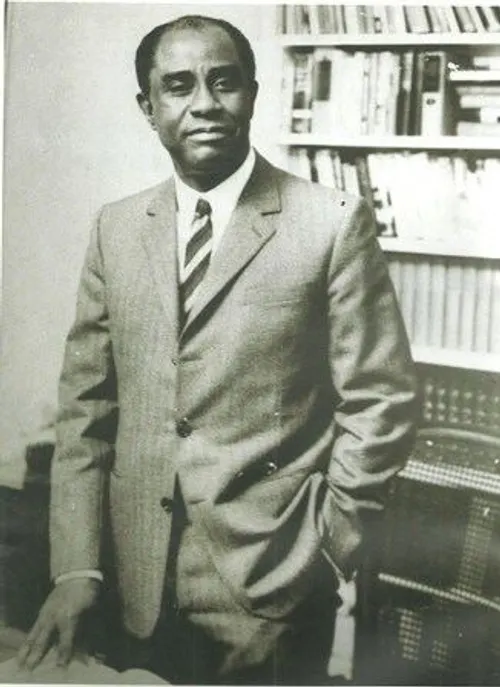
Then came Professor Kenneth Onwuka Dike (1917–1983).
Armed with a razor-sharp intellect, deep ancestral grounding, and uncompromising scholarly rigor, Dike did not merely argue with the British Empire, he dismantled its ideological foundations. Widely revered as the Father of Modern African Historiography, Dike proved to the world that African oral traditions, material culture, and indigenous institutions were every bit as valid as European paper archives. He took the pen from the colonizer, established the institutional backbone of Nigerian academia, and trained an entire generation of scholars to see Africans not as passive victims of European exploration, but as the sovereign architects of their own destiny.
Roots in Awka: The Making of an African Mind
Kenneth Onwuka Dike was born on December 17, 1917, in the historic town of Awka, in present-day Anambra State, Nigeria. He was the third son of Nzekwe Dike, an itinerant medicine man, trader, and Western-educated polygamist, and his mother, Nwudu Dike. Tragedy struck early when young Kenneth lost his father in 1922 and his mother just a year later.
Orphaned at the age of five, he was raised by his elder brother, George Dike, and his paternal grandfather, Chief Dike Nwancho, a wealthy Onitsha-based merchant and influential warrant chief in Awka. Rather than breaking him, this early upheaval immersed young Kenneth in the rich reservoir of Igbo indigenous knowledge. Shortly after his sixth birthday, he was apprenticed to a traditional itinerant medicine man operating between Awka and Onitsha. Walking from market to market, visiting ancestral shrines, and sitting at his grandfather's feet during village council deliberations, Dike absorbed the proverbs, oral histories, and diplomatic traditions of his people.
This deep traditional grounding was soon paired with a stellar Western education. Following his older brother's teaching postings, Dike attended schools across diverse cultural landscapes, including St. George’s Elementary School in Opobo (Ijaw territory) and the Hope Waddell Training Institution in Calabar (Efik and Ibibio territory), before enrolling at the prestigious Dennis Memorial Grammar School (DMGS) in Onitsha in 1933. At DMGS, his natural charisma and discipline saw him rise to the position of senior prefect before graduating in December 1936.
His academic journey then became truly Pan-African and global. After a brief stint as an Anglican catechist in Aba, he won a scholarship that took him to Achimota College in the Gold Coast (Ghana) in 1938, and then to Fourah Bay College in Freetown, Sierra Leone, where he earned a Bachelor of Arts degree in English, Geography, and Latin through Durham University. In 1944, on a British Council scholarship, he traveled to Scotland to attend the University of Aberdeen. He graduated in 1947 with a First-Class Honors Master of Arts degree in History, finishing at the very top of his class, an achievement so remarkable that his portrait was hung in the university's offices in eternal remembrance. Moving on to King’s College London, Dike made history in July 1950 by becoming the first African to earn a professionally trained Ph.D. in History from a British university.
Trade and Politics in the Niger Delta: Shattering the Colonial Myth
While studying in London, Dike refused to bow to the hostile Eurocentric environment around him. When Oxford don Margery Perham published claims denigrating African historical capacity, Dike fired back in West Africa magazine. He argued brilliantly that the absence of the mechanical wheel in tropical Africa was a practical adaptation to the continent's unique ecology, not a sign of human backwardness, and pointed out centuries of documented Arabic and oral records. So compelling was his rebuttal that Perham later confessed she did not know what had made her write the way she did.
Dike’s doctoral dissertation was published by Oxford University Press in 1956 under the title Trade and Politics in the Niger Delta, 1830–1885: An Introduction to the Economic and Political History of Nigeria. The book dropped like a thunderbolt across the global academic community, completely transforming how African history was written and understood.
Up to that point, books about Africa were essentially histories of Europeans in Africa, chronicling the exploits of British consuls, missionaries, and explorers while treating Africans as silent background scenery. Dike flipped the script entirely by centering African agency. He proved that nineteenth-century Niger Delta monarchs, merchant princes, and city-states like Bonny were sophisticated, calculating political actors who negotiated with British traders as equals and actively defended their sovereignty against imperial encroachment.
Furthermore, Dike revolutionized historical methodology by validating oral tradition. Restricted by the British colonial government’s 50-year rule, which barred him from accessing classified public documents, Dike circumvented the hurdle by traveling directly into the Niger Delta. He interviewed elders, chiefs, and local custodians, cross-referencing indigenous oral traditions with available European written records. By satisfying the rigorous standards of the University of London Senate using oral data, he legitimized oral historiography forever. In addition, by weaving together economic trade data, sociology, anthropology, and history, Dike birthed modern African Economic History and established the multi-disciplinary approach that scholars rely on today.
The Institution Builder: Ibadan, Archives, and Antiquities
Kenneth Dike understood a vital truth that echoes Cheikh Anta Diop’s life work: “True political development can only take place on a basis of profound self-knowledge; so long as the African is regarded as a man without a culture and without a history, doubts concerning his ability to govern himself will find credence”.
To liberate the African mind, Dike knew he could not just write books; he had to build permanent institutions on African soil. Upon returning to Nigeria, he embarked on an extraordinary campaign of institution-building. Beginning in 1951, Dike trekked across Nigeria to investigate the rotting, neglected state of government and historical documents. His 1953 Report on the Preservation and Administration of Historical Records in Nigeria led directly to the creation of the Nigerian Record Office in 1954, which was formalized as the National Archives of Nigeria in 1957, with Dike serving as its pioneer Director. Similarly, as Chairman of the Nigerian Antiquities Commission, he fought tirelessly to preserve West Africa’s priceless ancient art and sculptures, declaring them the most important surviving records of African civilization prior to European contact.
In 1955, he co-founded the Historical Society of Nigeria (HSN), Nigeria’s oldest academic professional body, and served as its first President, creating a dedicated forum and scholarly journal where African researchers could publish rigorous work without begging for European validation.
At the same time, returning to University College Ibadan, then an outpost of the University of London whose curriculum was stuffed with British and European history, Dike became the first African Professor of History and the first African Head of the History Department in 1956. He overhauled the curriculum to place Africa at the center, birthing the legendary Ibadan School of History. Under his mentorship and inspiration, a golden generation of Nigerian historians emerged, including Jacob Ade Ajayi, Ebiegberi Joe Alagoa, Tekena Tamuno, Adiele Afigbo, J.C. Anene, Obaro Ikime, and Emmanuel Ayandele.
In 1960, as Nigeria claimed independence, Dike was appointed the first Nigerian Principal of University College Ibadan. When the institution became a fully autonomous university in 1962, he became its first Indigenous Vice-Chancellor, transforming Ibadan into one of the most respected citadels of learning in the Commonwealth and founding its renowned Institute of African Studies and the International School Ibadan.
Crisis, Exile, and the Harvard Years
As a nationalist intellectual, Dike had championed Nigerian unity and integration through history. However, the bloody political crises of 1966, marked by two military coups, the assassination of Head of State Major-General Johnson Aguiyi-Ironsi, and horrific pogroms targeting Igbo citizens in Northern Nigeria, shattered the fragile post-independence peace.
Fearing for his safety in Western Nigeria as an Easterner, Dike resigned as Vice-Chancellor of the University of Ibadan in December 1966 and returned to the East. When the Eastern Region seceded to form the Republic of Biafra on May 30, 1967, Dike threw his weight behind the survival of his people. Throughout the agonizing thirty-month Nigerian Civil War from 1967 to 1970, he served as Biafra’s roving ambassador, traveling to Paris, Washington, and Abidjan to plead the Biafran cause and negotiate ceasefires.
When the war ended in January 1970, Dike went into exile in the United States. His brilliance was immediately sought after by the Ivy League. In 1971, he joined Harvard University, chairing its Committee on African Studies before being appointed the university's first Andrew W. Mellon Professor of African History in 1973. At Harvard, Dike proved that African scholars were not mere informants for Western academics, but master teachers capable of leading the world's most elite history departments.
Homecoming and Immortal Legacy
Despite the comforts of Cambridge, Massachusetts, Dike’s heart remained tethered to his homeland. Married since March 1953 to his devoted wife, Ona Patricia Olisa, with whom he raised five accomplished children: Chinwe, Nneka, Ona, Emeka, and Obi, Dike returned permanently to Nigeria in 1978.
By 1980, he answered the call to build once more, accepting the role of pioneer President of the newly established Anambra State University of Technology (ASUTECH) in Enugu, the institution that later birthed Nnamdi Azikiwe University in Awka. On October 26, 1983, after a brief illness, Professor Kenneth Onwuka Dike passed away in an Enugu hospital at the age of 65.
Today, the monuments to his genius stand tall across Nigeria, from the towering Kenneth Dike Library at the University of Ibadan to the Kenneth Onwuka Dike Centre in his hometown of Awka. Yet his greatest monument is invisible: it lives in the mind of every African student, writer, and historian who walks into a classroom knowing that Africa’s past is ancient, sovereign, and worthy of the highest intellectual respect. Kenneth Dike did not invent African history, he rescued it from the jaws of imperial erasure and returned it to its rightful owners.