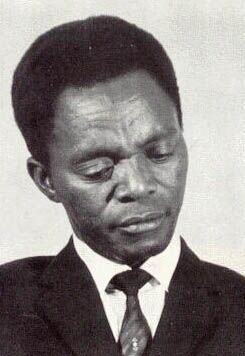
When Rwanda lowered the Belgian flag at midnight on July 1, 1962, the world witnessed the formal birth of an independent African republic. Standing at the helm was its thirty-eight-year-old first president, Grégoire Kayibanda. To the vast majority of peasant farmers who had lived for generations under layered feudal and colonial burdens, his ascent was heralded as a democratic triumph, the crowning victory of the 1959 Social Revolution that shattered centuries of monarchical rule.
Yet, history in the African Great Lakes is rarely simple. The presidency of Kayibanda was built on the scorched earth of colonial racial engineering, internal violence, and political polarization. He championed majority rule, but did so within the rigid, racialized categories codified by European administrators. Within a decade, the revolutionary leader found himself trapped by the very forces of exclusion and regional factionalism he had harnessed, ultimately meeting a desolate end at the hands of his own defense minister, Juvénal Habyarimana.
To examine the life of Grégoire Kayibanda is to confront the painful machinery of colonial divide-and-rule, the contradictions of early African republicanism, and the dangerous legacy of state-sponsored ethnic politics.
The Colonial Invention: How Belgium Weaponized Identity
To understand the rise of Grégoire Kayibanda, one must first dismantle the colonial mythology that distorted Rwandan society. In pre-colonial times, the Kingdom of Rwanda was organized around clans (ubwoko), shared ancestral traditions, a common language (Kinyarwanda), and the sacred authority of the Mwami (King). Categories such as Hutu (predominantly agriculturalists) and Tutsi (predominantly cattle pastoralists) existed alongside the Twa (potters and forest dwellers), but these identities were socio-economic and fluid. Through institutions like ubuhake (a patron-client cattle contract) and intermarriage, social mobility was possible; a successful farmer who acquired substantial cattle herds could undergo kwihutura and transition into the pastoral elite.
Colonial rule shattered this social cohesion. After Germany’s defeat in World War I, Belgium assumed control of Ruanda-Urundi under a League of Nations mandate. Armed with pseudoscientific racial theories, Belgian administrators and Catholic missionaries looked at the sophisticated centralized state and formulated the racist Hamitic hypothesis. They insisted that the Tutsi minority were not indigenous Africans, but a superior, civilizing race originating from the Horn of Africa, while the Hutu majority were labeled as an inferior Bantu peasant class.
Between 1926 and 1936, the Belgians overhauled the traditional administration, systematically stripping Hutu chiefs of authority and placing all administrative power into the hands of a Tutsi aristocracy. In 1935, the colonial administration took the fateful step of issuing mandatory identity cards that permanently categorized every Rwandan as Hutu, Tutsi, or Twa. In one bureaucratic stroke, fluid social roles were frozen into legal, biological castes, planting the seeds of generational catastrophe.
From the Seminary to the Printing Press
Grégoire Kayibanda was born on May 1, 1924, in Tare (near Kabgayi in the southern prefecture of Gitarama) to a modest peasant family. His father, Simon Kayibanda, was a devout catechist, and young Grégoire was raised within the strict embrace of the Catholic Church. Recognized for his sharp intellect, he attended the Saint Léon Minor Seminary of Kabgayi and completed his studies in philosophy and theology at the Major Seminary of Nyakibanda in 1947.
Though he opted not to be ordained into the priesthood, the Catholic mission network provided him with a powerful launchpad. Kayibanda worked as a schoolteacher, became an influential community organizer, and served as the personal secretary to Monseigneur André Perraudin, the influential Swiss Vicar Apostolic of Kabgayi. In 1954, he took over the editorship of Kinyamateka, the most widely circulated newspaper in the territory, transforming it into a platform for social commentary and popular dissent.
As winds of decolonization swept across Africa in the 1950s, the Tutsi monarchist elite began demanding immediate independence from Belgium to preserve their traditional authority. Sensing that an immediate handover would cement minority dominance, Kayibanda and a rising cohort of educated Hutu intellectuals mobilized.
On March 24, 1957, Kayibanda and eight other intellectuals published the historic Bahutu Manifesto (titled Note on the Social Aspect of the Native Racial Problem in Rwanda). The ten-page document laid out a radical demand for a double liberation: first, liberation from white Belgian colonial rule, and second, liberation from what it described as the domestic, social, and political monopoly of the Tutsi aristocracy. The manifesto became the ideological bedrock of Hutu nationalism.
The 1959 Revolution and the Fall of the Monarchy
In 1959, Kayibanda founded the Party of the Hutu Emancipation Movement, known as Parmehutu (later renamed the Mouvement Démocratique Républicain or MDR-Parmehutu). The political landscape quickly fractured into two hostile camps: the traditionalist, monarchist Union Nationale Rwandaise (UNAR) and the revolutionary, populist Parmehutu.
The simmering crisis exploded in July 1959 following the sudden death of Mwami Mutara III Rudahigwa and the irregular succession of his half-brother, Kigeli V Ndahindurwa. On November 1, 1959, the assault of a Hutu sub-chief by monarchist youth ignited a countrywide peasant uprising.
Seeing the demographic reality and facing an increasingly anti-Belgian monarchist elite, the Belgian colonial administration executed an abrupt strategic pivot. The colonial authorities abandoned their traditional Tutsi allies and threw their full administrative and military backing behind Kayibanda’s Parmehutu.
Communal elections held in 1960 resulted in an overwhelming sweep for Hutu candidates. On January 28, 1961, at a gathering of over three thousand civic leaders in Gitarama, Parmehutu leaders declared the abolition of the monarchy and proclaimed a republic, a bold political move ratified with Belgian consent. In September 1961, legislative elections and a United Nations-supervised referendum definitively rejected the monarchy, paving the way for Grégoire Kayibanda to be sworn in as President on October 26, 1961.
The First Republic: Freedom and Factionalism
When Rwanda celebrated its sovereignty on July 1, 1962, the young republic inherited immense structural challenges. As president, Grégoire Kayibanda oversaw a massive expansion of primary education, invested in rural development programs, and established agricultural cooperatives like the Trafipro collective.
However, the political philosophy of the First Republic remained anchored in the divisive logic of the colonial past. Rather than dismantling the concept of ethnic hierarchy, the regime inverted it. The state treated the Tutsi minority as an inherently foreign demographic, barring them from senior political offices and diplomatic posts.
Between 1962 and 1964, armed Tutsi monarchist exiles (Inyenzi) staged several cross-border guerrilla incursions from Uganda and Burundi. In response, the government unleashed severe internal crackdowns, leading to the massacre of thousands of Tutsi civilians and driving over 120,000 refugees into neighboring countries.
Domestically, Kayibanda consolidated absolute power. By 1965, MDR-Parmehutu was declared the sole legal political party. Kayibanda was re-elected unopposed in 1965 and 1969 with over ninety-eight percent of the vote. In 1970, the administration formalized an ethnic quota system (équilibre ethnique et régional) in secondary schools, universities, and public administration, restricting Tutsi access to correspond strictly with their percentage of the population.
Regional Fracture and the 1973 Coup
With Tutsi political resistance effectively crushed, the monolithic facade of Parmehutu began to crack along regional and geographic lines.
A bitter rivalry developed between the southern Hutu elite (centered around Kayibanda’s home district of Gitarama) and the northern Hutu from Gisenyi and Ruhengeri. Northern leaders complained bitterly that southern politicians monopolized high-paying ministries, public funds, state corporations, and military promotions. Charges of nepotism and institutional stagnation surrounded the presidency.
In 1972, catastrophic massacres in neighboring Burundi, where the Tutsi-dominated army killed over one hundred thousand Hutu civilians, reverberated into Rwanda. In early 1973, student-led vigilante committees began violently purging Tutsi students and civil servants from schools and public offices.
As social order unraveled, the military stepped in. On July 5, 1973, Defense Minister Major General Juvénal Habyarimana, a prominent northern officer, overthrew Kayibanda in a bloodless coup d'état.
The fall of the First Republic was brutal. Over fifty senior officials and ministers from Kayibanda’s administration were arrested, with many subsequently executed or starved to death in remote detention camps. Grégoire Kayibanda and his wife, Verediana Mukagatare, were placed under strict house arrest in Kavumu near Kabgayi. Deprived of adequate medical care and essential sustenance, both reportedly starved to death. Kayibanda died on December 15, 1976, at the age of fifty-two.
The Lessons of the First Republic
The life and presidency of Grégoire Kayibanda stand as a stark, cautionary chapter in the history of African nation-building.
He was a man who articulated the genuine grievances of an exploited peasant majority, dismantled a feudal aristocracy, and ushered in an independent republic. Yet, his fatal flaw was adopting the racial framework created by European colonizers. By defining majority rule not as universal citizenship and human rights, but as permanent ethnic retribution, his administration institutionalized the very divisions that would haunt Rwanda for decades to come.
True African liberation cannot simply exchange one form of ethnic hegemony for another. The legacy of the First Republic proves that real democracy must transcend the colonial borders drawn on our maps and the colonial categories carved into our minds.