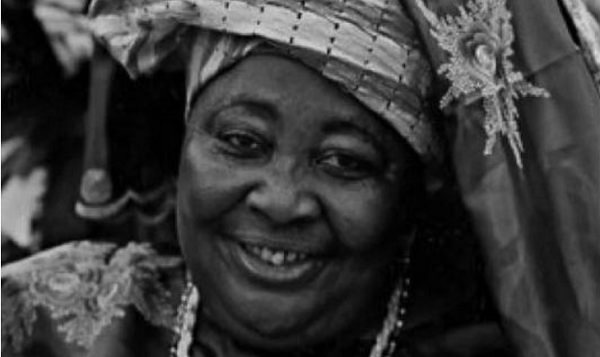
There is a legendary story whispered in the dusty, vibrant streets of Zaria that perfectly encapsulates the soul of Hajia Gambo Sawaba. Long before she became a political titan, she was a fierce little girl growing up in the 1930s who simply could not stomach injustice. Whenever she saw a weaker child being bullied in a street brawl, she would march right up to the fight, look the losing child in the eye, and declare: “OK, I have bought the fight from you”. She would then take over the scuffle, fighting with such ferocity that her clothes were constantly ripped to shreds. Exhausted by the sheer frequency of replacing her torn dresses, her mother eventually resorted to sewing her clothes out of heavy-duty tarpaulin.
That little girl in the tarpaulin dress would grow up to become the armor for millions of marginalized women across Northern Nigeria. Her life is a breathtaking African epic, a story of immense pain, undeniable grit, and a revolutionary spirit that neither the British colonial authorities nor local conservative elites could ever break.
A Childhood Forged in Fire
She was born Hajaratu Amarteifio on February 15, 1933, in the Sabon Gari area of Zaria. Her bloodline was a beautiful map of West African heritage. Her father, Isa Amartey Amarteifio, was a Ghanaian immigrant and a graduate of the Ghana School of Survey who had moved to Nigeria in 1910 to work for the Nigerian Railway Corporation. After settling in Zaria, he converted to Islam and married Fatima, a Nupe woman from Lavun in present-day Niger State, who already had three children from a previous marriage.
Hajaratu was the fifth of the couple's six children. Because she was born following a set of twins, she was given the traditional Hausa name Gambo.
From the very beginning, Gambo was remarkably empathetic. As a child, she had a deep, unusual affinity for the mentally ill and destitute, often speaking with them, giving them whatever money or food she could find, and even bringing them home. She attended the Native Authority Primary School in Tudun Wada, but tragedy struck early. Her father died in 1943 when she was just ten years old, and her mother passed away three years later.
Orphaned and stripped of her protective covering, her formal education came to a brutal halt. At the tender age of thirteen, she was married off to Abubakar Garba Bello, a World War II veteran. The marriage ended almost as soon as it began; Abubakar abandoned her during her first pregnancy and never returned. By sixteen, Gambo was a single mother to her only biological child, a daughter named Bilikisu. She would marry three more times in her life, including a tempestuous marriage to Hamidu Gusau that was marked by violent fights, but her ultimate devotion was always to the liberation of her people.
The Awakening of a Political Giant
In 1950, at just 17 years old, Gambo Sawaba stepped into the perilous arena of Nigerian politics. At the time, the political landscape of Northern Nigeria was dominated by the Northern People's Congress (NPC). The NPC was deeply conservative, wielding power with the backing of wealthy emirs and the British colonial administration.
Rejecting this elitist machinery, Gambo joined the Northern Elements Progressive Union (NEPU), an opposition party founded by the radical visionary Malam Aminu Kano. NEPU was the party of the talakawa (the common people), running on a platform of anti-colonialism, anti-corruption, and the empowerment of the poor.
Hungry to learn how to dismantle oppressive systems, Gambo traveled to Abeokuta in southern Nigeria to meet her idol, the legendary feminist Funmilayo Ransome-Kuti. She had read about how Ransome-Kuti mobilized women to protest unfair taxation, leading to the temporary exile of a powerful king. After three months of mentorship under Ransome-Kuti, Gambo returned to Zaria with a fire that could not be extinguished.
Her breakout moment came during a political lecture in Zaria. In a room packed exclusively with men who were too terrified of political victimization to speak up, the teenage Gambo confidently climbed onto the podium and took the microphone. Her audacity left the crowd spellbound. It was her political mentor, Aminu Kano, who bestowed upon her the name Sawaba, which translates to freedom or redemption. From that day forward, she was Hajia Gambo Sawaba, the redeemer of the Northern woman.
The House of Prison: A Price Paid in Blood
Gambo became a relentless crusader. She campaigned viciously against child marriage, forced and unpaid labor, and unfair taxes. She fought for women’s jobs, the education of girls, and full voting rights. Because many Northern women were in purdah (social seclusion), Gambo went door-to-door, entering their homes to educate and mobilize them politically.
This direct threat to the patriarchal and colonial order brought catastrophic retaliation. In 1952, she was hauled before a conservative magistrate court in Kano on charges of drawing out women who were in purdah and was sentenced to three months behind bars.
This was only the beginning. Gambo Sawaba was imprisoned a staggering sixteen times throughout her life. She became the most jailed female politician in Nigerian history, so accustomed to arrests that she kept a personal blanket with the words Prison Yard inscribed on it, grabbing it whenever the police came knocking.
The physical torture she endured is almost too horrific to comprehend. Opposing political thugs and police officers brutalized her repeatedly. On two separate occasions, she was stripped completely naked and given eighty lashes in the Zaria Central Prison. In a desperate bid to break her dignity, authorities subjected her to the agonizing pain of having her hair shaved off to the scalp using a broken glass bottle. In a later interview, she recalled being beaten by six men and left for dead in a bush. She revealed that her original front teeth were smashed out, and she bled from every opening in her body. Most tragically, the severe internal injuries she sustained from torture in 1957 required life-saving surgery to remove her womb, robbing her of the ability to bear more children.
Yet, she never broke. She wore her scars as badges of honor, famously declaring: “If I don't know books, I know rights... I have not been a member of any House of Assembly. I have not held any office except that I was a member of the House of Prison”.
Demanding the Franchise
While women in southern Nigeria had gained limited voting rights in the 1950s, the ruling NPC in the North declared that women would be given the franchise only in God’s time. Gambo refused to wait for a timeline dictated by male oppressors.
In 1956, she led the women's wing of NEPU on a march directly to the office of the regional premier, Sir Ahmadu Bello, in Kaduna, demanding the right to vote. Though Bello promised to look into it, the request was shelved. Gambo boldly stated that if it were not for the ban on women contesting, she would have run against the powerful premier in his own constituency. It took another two decades of relentless agitation before Northern Nigerian women finally won the right to vote in 1976.
The Mother of the Masses
When the military intervened and the First Republic crumbled, Gambo continued her work. During the Second Republic (1979–1983), she served as the Deputy National Chairman of the Great Nigeria People's Party (GNPP). Disillusioned by the loss of ideology in modern politics, she eventually retired in 1998, stating that politics had devolved into a game of self-aggrandizement.
In her later years, she devoted her life entirely to philanthropy. The woman whose womb was stolen by political violence became a mother to the masses. She operated an open-door policy at her home, adopting dozens of street children, orphans, and the elderly. Despite her towering political stature, she was known to refuse cooks, preferring to personally prepare traditional meals like Dukuno and Tuwon Shinkafa for her massive, adopted family. At the time of her death, over thirty adopted children were living in her home, including a newborn baby she had rescued from a hospital just days prior.
Hajiya Gambo Sawaba passed away on October 14, 2001, at the Ahmadu Bello University Teaching Hospital in Zaria, at the age of 68.
An Immortal Legacy
Today, her name is etched into the very soil she fought to liberate. The Gambo Sawaba General Hospital in Zaria and a hostel at Bayero University in Kano bear her name. In 2012, the Nigerian government proposed featuring her portrait on the 5000 Naira note, a fitting tribute to her monumental sacrifice.
Gambo Sawaba was not handed her freedom; she bled for it. She is the ultimate testament to the African woman’s capacity for endurance, radical love, and unapologetic resistance. She looked at a society that told her to be silent, invisible, and compliant, and she replied by buying the fight for the liberation of generations yet unborn.