History is rarely kind to the women who make it. When the story of African liberation is told, the spotlight almost universally falls on the men, the suit-wearing diplomats, the military generals, and the Fathers of the Nation. But the engine of the African independence struggle was powered by women who risked everything, organized relentlessly, and were subsequently erased from the very nations they helped birth.
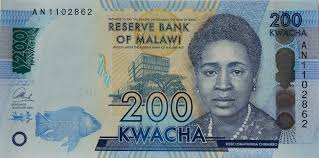
When you hold a 200 Kwacha banknote in Malawi today, a woman’s face looks back at you. But who is she? Why was she the only woman at the secret meeting that triggered a national emergency? Why was she arrested just two days after giving birth? And why, after securing her country’s freedom, was she forced into exile for thirty years?
Her name is Rose Chibambo, and her story is a masterclass in African resilience, political brilliance, and the heartbreaking reality of post-colonial betrayal.
A Child “Stolen from the Grave”
Born on September 8, 1928, in the village of Kafukule in the Mzimba District, her very survival was an act of defiance. Her mother experienced a brutally difficult labor; thus, her parents gave her the Tumbuka name Lomathinda, which translates to stolen from the grave.
Growing up in the British Protectorate of Nyasaland, the young Lomathinda was raised in a system designed to extract African labor and suppress African minds. She eventually married Edwin Chibambo, a teacher and civil servant whose father, Reverend Yesaya Chibambo, was one of the first Africans ordained as a Christian minister in the protectorate. It was Edwin who gave her the English name Rose.
But Rose was never meant to be a quiet civil servant’s wife. In 1948, while heavily pregnant with her first child, she completed her secondary education at a night school in Zomba, the capital of Nyasaland. She was preparing her mind for a war that was rapidly approaching.
The Awakening: Organizing the Unseen Army
The political climate in the early 1950s was explosive. The British colonial government decided to impose the Federation of Rhodesia and Nyasaland, a deeply racist political union designed to consolidate white settler rule across Malawi, Zambia, and Zimbabwe. African land was being seized to make room for European farmers, and Malawian men were being funneled into the deadly Wenela mining system in South Africa, where many perished.
The men of the Nyasaland African Congress (NAC) were resisting, but Rose quickly realized a glaring flaw: they were fighting with only half an army. In 1952, she began organizing the women of Zomba.
When the male leaders and tribal chiefs told her that politics was not for women, she ignored them entirely. She crashed a high-level meeting between local chiefs and pro-Federation agents, fiercely demanding autonomy for Malawi before a chief attempted to shut her down by reminding her of a woman's place.
In 1953, her husband was transferred to Blantyre, likely as a colonial punishment for his own political activities. There, Rose’s power only grew. She joined the local NAC branch and shattered the glass ceiling by becoming its treasurer, the very first woman to hold a senior position in the organization. Teaming up with another formidable activist, Vera Chirwa, she founded the Nyasaland African Women's League.
Rose was a master of grassroots mobilization and psychological warfare. Under her leadership, the Women’s League began wearing matching outfits made from the same fabric to public events, transforming a group of marginalized women into a highly visible, unified political bloc. She organized massive protests, including a fierce demonstration in 1956 when NAC leaders were arrested for sedition. Her women marched to the High Court in Zomba, singing powerful, repurposed traditional songs:
“War! War! War today! / We are going to have war. / We don't want, we don't want, we don't want federation. / We want freedom today!”
She fundamentally understood that the fight for national liberation must be inseparable from the fight for women’s liberation. As she stated years later: “I had this feeling... women should be part and parcel of the whole movement, even of running the country. Women should be involved in decision-making. That was my aim.”
The Bush Meeting and the Prison Yard
By 1958, Dr. Hastings Kamuzu Banda had returned to Nyasaland to lead the NAC. Rose organized the League of Malawi Women, using the profits from a monopoly on the sale of millet beer to fund the independence movement's activities. The colonial government was terrified.
In January 1959, the NAC held a highly secretive conference known as the Bush Meeting. Out of the entire political leadership, Rose Chibambo was the only woman in the room. Rumors quickly spread through the panicked white settler community that the NAC was planning an armed uprising to wipe out the colonists.
On March 3, 1959, British Governor Robert Armitage declared a State of Emergency (Operation Sunrise). Armored trucks rolled in from Rhodesia, and heavily armed colonial troops swept through the country, arresting Hastings Banda and hundreds of other NAC leaders.
Rose was initially spared the brutal midnight raids because she was heavily pregnant with her fifth child. Did she use this reprieve to hide? Absolutely not. While under heavy colonial surveillance, she continued to coordinate the resistance, visiting political prisoners and keeping the movement alive.
On March 21, 1959, she gave birth to a baby girl at a mission hospital in Thyolo. Just two days later, on March 23, two white colonial officials arrived. Accompanied by nine jeeps packed with heavily armed soldiers, they arrested Rose and her two-day-old infant. She was thrown into Zomba Prison for thirteen months. As a testament to the grim reality of her surroundings, Rose named her newborn baby Gadi (Guard).
Independence and the Great Betrayal
The British Empire could not break the will of the Malawian people. In 1960, recognizing that independence was inevitable, they released the political prisoners. In 1961, Nyasaland held democratic elections, and the Malawi Congress Party (MCP) swept the legislature.
When Malawi officially gained its independence in July 1964, Prime Minister Hastings Kamuzu Banda appointed Rose Chibambo as the Parliamentary Secretary for Community and Social Development, making her the first woman in the new cabinet.
She had sacrificed her freedom and raised a child in a prison cell for this moment. Yet, within exactly two months, the dream turned into a nightmare.
In September 1964, the infamous Cabinet Crisis erupted. The younger, radical ministers, including Rose, were horrified by Banda’s rapid descent into authoritarianism. Banda had aligned himself with the apartheid regime of South Africa, recognized the Portuguese colonizers occupying neighboring Mozambique, and imposed harsh new healthcare fees (the tickey) on the impoverished Malawian public.
Rose and her colleagues confronted Banda, threatening to resign. Banda retaliated ruthlessly. On September 8, 1964, Rose heard on the radio that she had been dismissed from the cabinet.
The following day, on her 36th birthday, she stood up in Parliament to defend her integrity. I was Rose Chibambo before [Kamuzu] came here, she declared, cutting through the jeers of the male politicians who had once relied on her organizing power. When she raised her voice, the Speaker of Parliament arrogantly told her, You cannot shout. This is our House.
Once again, a man was trying to tell her her place. But this time, the threat was lethal. Banda declared the dissenting ministers traitors to the state, unleashing his security forces against them. Facing constant harassment and the very real threat of death, Rose and Edwin Chibambo were forced to flee into exile in neighboring Zambia in 1965.
The Return of the Matriarch
For thirty years, the woman who built the grassroots foundation of Malawian independence lived as an exile, while Hastings Banda ruled as a ruthless dictator. Her husband Edwin died in exile in 1968.
It was not until 1994, when democracy was finally restored in Malawi, that Rose Chibambo returned home. By then, an entire generation of Malawians had been born and raised under a heavily censored history that deliberately erased her name. She settled in Mzuzu, becoming a prominent businesswoman and dedicating her later years to church activities and assisting HIV/AIDS orphans.
Slowly, the truth began to resurface. In 2009, President Bingu wa Mutharika honored her by naming a street in Mzuzu after her. On January 1, 2012, her portrait was placed on the 200 Kwacha banknote.
When Rose Lomathinda Chibambo passed away on January 12, 2016, at the age of 87, she was buried at the newly established Heroes Acre in Mzuzu.
Rose Chibambo’s legacy is a fierce, unapologetic reminder that revolutions are not won by men alone. She fought the British Empire; she survived a colonial prison with a newborn baby, and she refused to bow to an African dictator. She is the mother of Malawian independence, and her name will never be erased again.