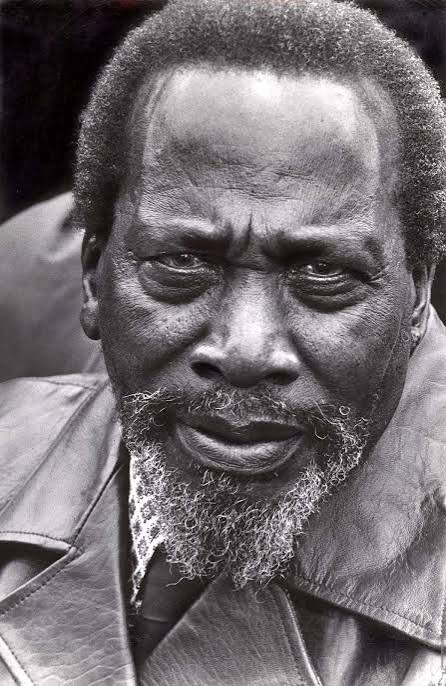
The history of post-colonial Africa features a prominent group of founding fathers who steered their nations from the shackles of European imperialism into sovereign statehood. Among these towering icons, few possess the monumental, multi-layered legacy of Jomo Kenyatta. Affectionately known to his compatriots as Mzee, a Swahili term of profound reverence meaning “wise elder” or “father”, Kenyatta was a complex blend of anti-colonial revolutionary, scholarly anthropologist, and pragmatically conservative statesman.
Over his fifteen years as the first prime minister and subsequently the first Kenyatta president of independent Kenya, he oversaw a dramatic transition. He transformed a colony deeply fractured by decades of white-settler dominance and brutal counter-insurgency warfare into one of the most politically stable and economically dynamic republics on the continent.
His life was a grand, sweeping odyssey that bridged two distinct worlds. Born into a traditional Kikuyu homestead before the formal boundaries of Kenya were even drawn, he rose to the highest echelons of Western academia, co-organized the global Pan-African movement, survived nearly a decade of colonial imprisonment, and ultimately emerged to hold absolute authority over a modern nation-state. This is the exhaustive history of Jomo Kenyatta, the man whose name became synonymous with the birth of Kenya.
The Crucible of Kikuyuland: Early Life and Mission Impact
The man who would be known as the “Father of the Nation” entered the world with the name Kamau in the small rural village of Ngenda, southwest of Mount Kenya in the East African highlands. Because formal birth records were not kept among the Kikuyu at the time, his exact date of birth remains unknown, though historical consensus points to approximately 1894 to 1898. He was born to Mūigai, a local farmer, and his wife Wambūi, growing up in a traditional homestead where he was taught the skills needed to herd the family's flock of sheep and goats.
When he was around ten years old, a severe jigger infection in his feet and one leg altered the trajectory of his life. He underwent successful surgery at a newly established Church of Scotland mission at Thogoto, marking his very first contact with white Europeans. Fascinated by the literacy and technology he witnessed during his recuperation, Kamau ran away from his traditional home to become a resident pupil at the mission. He spent years studying the Bible, English, mathematics, and carpentry, paying his school fees by working as a domestic houseboy and cook for a white European settler. In August 1914, he was formally baptized into the Christian faith, adopting the name Johnstone Kamau. He was one of the earliest of the Kikuyu people to deliberately leave the confines of his traditional culture.
Like many ambitious young mission graduates, Johnstone Kamau was soon drawn away from rural mission life by the urban attractions of Nairobi. In the capital, he secured a lucrative position as a stores clerk and water-meter reader for the Public Works Department under Nairobi's municipal council. Earning a high wage for a native African, he achieved financial independence and adopted a lavish urban lifestyle, enjoying cinemas, football matches, and imported British fashions. During this time, he adopted a fancy, traditionally beaded Maasai belt known as a kĩnyata. He took to calling himself “Kenyatta” after this garment, permanently changing his name to reflect his self-fashioned identity.
The Awakenings of Dissent: The KCA and the Land Grievance
The structural foundations of colonial Kenya were deeply fractured across racial lines. Following its official designation as a British crown colony in 1920, the colonial government systematically dispossessed indigenous Africans of their ancestral lands, establishing vast “native reservations” and restricting property ownership in the fertile highlands exclusively to white European settlers. To the Kikuyu, land was not merely an economic asset; it was the sacred matrix of life and spiritual communion. Taking the land was viewed as an existential sentence to starvation and social death.
In 1921, an educated young Kikuyu named Harry Thuku organized the East Africa Association (EAA), the country's first organized African political protest movement against the settler-dominated regime. Jomo joined the EAA the following year. Under intense political pressure from the colonial state, the EAA disbanded in 1925, but its members immediately re-formed as the Kikuyu Central Association (KCA). Recognizing his exceptional command of the English language and his organizational skills, the KCA appointed Kenyatta as its general secretary in 1928.
Kenyatta Jomo threw himself into full-time politics. In May 1928, he launched a monthly Kikuyu-language newspaper called Mwigithania (“He Who Brings Together”), aimed at unifying the different factions of the Kikuyu and raising funds for the anti-colonial struggle. While the paper took a cautious, legalistic tone to evade immediate government censorship, it vigorously championed self-improvement and literacy.
However, a massive political crisis loomed. A British imperial commission recommended a closer administrative union between Kenya, Uganda, and Tanganyika. White settler leaders enthusiastically supported the proposal, expecting it would lead to an independent, minority-ruled dominion. Terrified that this scheme would permanently solidify white minority rule and trap the Kikuyu in overcrowded reserves, the KCA dispatched Kenyatta to London in February 1929 to lobby directly against the plan.
The Years of Exile: London, Moscow, and the LSE
Arriving in Britain, Kenyatta found himself completely ignored by the mainstream colonial establishment. The Secretary of State for the Colonies flatly refused to grant him a formal audience. Undeterred, he bypassed official channels and appealed directly to British public opinion. In March 1930, he published an eloquent, historic letter in The Times of London, clearly outlining the foundational demands of the KCA:
- The total security of land tenure and the immediate return of ancestral lands allotted to European settlers.
- The massive expansion of educational facilities for indigenous African children.
- The immediate repeal of punitive hut taxes placed on single African women.
- Direct African representation on the colonial Legislative Council.
- Complete non-interference by colonial authorities and missionaries with traditional African customs.
He concluded his letter with a prophetic warning: the continued denial of these basic civil rights “must inevitably result in a dangerous explosion, the one thing all sane men wish to avoid”.
Seeking alternative global allies, Kenyatta traveled to the Soviet Union in 1932, spending nearly two years studying political economy, natural science, and Marxist-Leninist history at the Communist University of the Toilers of the East in Moscow. Although heavily influenced by his time in the USSR, he grew alienated by Joseph Stalin's rigid insistence on prioritizing global class struggle over indigenous anti-colonial racial liberation movements. He left Russia and returned to England, where he enrolled at the London School of Economics (LSE) to study social anthropology under the world-renowned professor Bronisław Malinowski.
In 1938, he compiled his academic research into a seminal book, Facing Mount Kenya. The landmark ethnographic study was a powerful weapon against the colonial project. By utilizing a functionalist framework to demonstrate the sophisticated cohesion, legal order, and moral rectitude of traditional Kikuyu society, he completely dismantled the paternalistic Eurocentric myth that Africans were primitive savages in need of a British “civilizing mission”. The publication marked his formal adoption of the name "Jomo", a symbolic Kikuyu term meaning “Burning Spear”.
During World War II, when the colonial authorities in Kenya banned the KCA as a subversive organization, Kenyatta remained stranded in England. He sustained himself by working as an agricultural farm laborer in Sussex and delivering public lectures. In May 1942, he married an Englishwoman, Edna Grace Clarke, who bore him a son, Peter Magana.
In October 1945, Jomo Kenyatta joined Kwame Nkrumah, W.E.B. Du Bois, and George Padmore in organizing the historic Fifth Pan-African Congress in Manchester. The congress marked a turning point in world history, passing resolutions that demanded immediate, total independence for all African colonies and openly declaring that Africans would resort to force as a last resort if their peaceful appeals were ignored.
The Mau Mau Emergency and the Kapenguria Trial
In September 1946, Jomo Kenyatta returned to Kenya to take up the mantle of national leadership, being elected President of the newly formed Kenya African Union (KAU) in June 1947. He traveled across the colony, addressing massive crowds and building a unified nationalist front. But he faced an unyielding, far-right white settler community that completely dominated the local legislature and flatly refused to grant any major political concessions to the Black majority.
As peaceful avenues for reform were systematically blocked, rural land hunger and urban unemployment reached a boiling point. Frustrated young militants in the central highlands began organizing a clandestine guerrilla insurgency known as the Mau Mau Uprising. Beginning in 1952, the Mau Mau launched an aggressive campaign of targeted sabotage and panga attacks against white settlers and Kikuyu loyalists who collaborated with the colonial administration.
Kenyatta found himself caught in a dangerous political crossfire. Ideologically a gradualist, he publicly denounced the Mau Mau at mass rallies, telling a crowd of 30,000 in Kiambu that the movement was an evil that must perish. But for the young guerrilla fighters, he was an immortal symbol of freedom, and his name was invoked in the secret, binding oaths they swore in the forests.
On October 21, 1952, the colonial government declared a State of Emergency and arrested him, charging him with being the mastermind behind the Mau Mau terrorist organization. The subsequent trial, held in the remote outpost of Kapenguria to prevent mass public demonstrations, became a worldwide political sensation.
The state's judicial process was entirely rigged. The government paid the presiding judge a massive bribe of £20,000, and the key prosecution witness was systematically coached to commit perjury. Despite the prosecution failing to present a single piece of credible evidence linking Kenyatta to Mau Mau violence, he was found guilty in April 1953 and sentenced to seven years of hard labor in the remote prison of Lokitaung, to be followed by indefinite restriction in Lodwar.
His lengthy imprisonment permanently transformed him into a transcendent political martyr. He became a powerful unifying symbol for all Kenyan tribes. In 1960, nationalist leaders organized a new political party, the Kenya African National Union (KANU), and elected the detained Kenyatta as their president in absentia, flatly refusing to participate in the new constitutional government until he was a free man. Faced with relentless domestic boycotts and mounting international pressure, the British government finally capitulated, releasing him from detention in August 1961.
Harambee: The Rebirth of an Independent Nation
Upon his release, Kenyatta assumed full command of KANU and led the Kenyan delegation in the Lancaster House negotiations in London to draft a new independent constitution. KANU won a landslide victory in the May 1963 pre-independence elections, and on December 12, 1963, he stood before a roaring crowd in Nairobi as the British flag was lowered and the new flag of independent Kenya was raised. He assumed office first as prime minister, and exactly one year later, following a constitutional amendment that transformed Kenya into a republic, he became its first executive president.
The defining hallmark of his presidency was his profound emphasis on national reconciliation. In a spectacular display of political magnanimity, the man who had been called the leader of darkness by his colonizers chose a path of absolute non-rancor. He famously traveled to Nakuru to meet with hundreds of anxious white settlers, begging them to stay and help build the country by promising that their property rights would be fully respected. His national motto became Harambee, a Swahili phrase meaning “let us all pull together”, which transformed into a national economic philosophy where local communities collectively raised funds to build their own schools, clinics, and roads.
Kenyatta chose a robustly capitalist, externally oriented economic model. He flatly rejected radical socialist demands for the wholesale nationalization of property, choosing instead to encourage heavy foreign direct investment from Western nations.
To settle the burning grievance of land distribution, his government collaborated with Great Britain to initiate the “Million Acre Scheme,” buying out white farmers on a peaceful “willing buyer, willing seller” basis and redistributing the plots to landless Africans and ex-Mau Mau veterans. Under his firm direction, the Kenyan economy experienced a golden era of growth, with the national gross product expanding fivefold between 1971 and 1981, making Kenya one of the most stable and prosperous economic centers on the continent.
Centralization and Tribal Polarization
While the macro-economic indicators painted a picture of a Kenyan economic miracle, his domestic rule faced severe, mounting criticism from left-wing nationalists and minority ethnic groups. Over time, his administration systematically centralized absolute power in the executive office. He stripped away the autonomy of the regional provincial assemblies to crush any potential localized resistance bases, and he utilized constitutional amendments to detain political opponents without trial.
A profound rift emerged between Kenyatta and his Luo Vice President, Oginga Odinga. Odinga accused the government of betraying the revolution by establishing a neo-colonial, “black capitalist” system that merely replaced a white elite with a wealthy African elite. Odinga resigned from KANU in 1966 to form the opposition Kenya People's Union (KPU). The government responded ruthlessly, systematically harassing the KPU until officially banning the party in October 1969, plunging Kenya into a de facto one-party state.
The centralization of power coincided with a growing perception of ethnic favoritism. Kenyatta relied heavily on an inner circle of wealthy Kikuyu politicians from his home district. Vast tracts of fertile land bought back from European settlers ended up concentrated in the hands of his family and close political associates, creating immense disparities of wealth.
The simmering tribal polarization exploded into the open on July 5, 1969, when Tom Mboya, a brilliant, charismatic young Luo politician who was widely tipped as an eventual successor, was assassinated by a Kikuyu gunman in broad daylight. The murder shattered the fragile illusion of national unity, sparking bloody anti-government riots in Nairobi and exposing a deep divide between the Kikuyu and Luo communities.
Death and a Peaceful Succession
By the mid-1970s, the aging Kenyatta president had grown increasingly feeble, suffering a series of minor strokes and heart failures that left him largely insulated from the active day-to-day governance of the country. Total executive control fell into the hands of his inner circle, who attempted to mount a constitutional amendment to prevent Vice President Daniel arap Moi, a Kalenjin from a minority tribe, from automatically assuming the presidency upon his demise. However, this plot collapsed under intense parliamentary opposition.
On August 22, 1978, while staying at the State House in Mombasa, Jomo Kenyatta suffered a final heart attack and passed away in his sleep at the age of approximately 84.
The Kenyan state, which had meticulously planned for the day with British administrative assistance, executed a grand, solemn state funeral modeled explicitly on that of Sir Winston Churchill. Attended by global dignitaries, including Britain's Prince Charles and African heads of state, his body was entombed in a magnificent classical mausoleum beside the Parliament Buildings in Nairobi.
In an orderly transition of power that stunned international observers who predicted an immediate ethnic civil war, Daniel arap Moi was peacefully sworn in as the second President of Kenya, promising to walk strictly in the footsteps of the fallen giant.
An Unresolved Assessment
The historical assessment of Jomo Kenyatta remains deeply contested and polarized. To his left-wing critics and younger generations of intellectuals, his legacy is one of profound disappointment. They argue that he turned a vibrant anti-colonial liberation movement into an authoritarian, neocolonial one-party state, institutionalized systemic corruption, and normalized ethnic favoritism in the distribution of state resources.
Yet, his monumental achievements cannot be erased. He was the master craftsman who successfully prevented the total collapse of the Kenyan state during the highly volatile transition to majority rule. Through his powerful philosophy of Harambee, he built thousands of schools and hospitals across the interior, expanding literacy and healthcare to millions of previously neglected citizens.
He broke the back of colonial segregation without triggering a racial bloodbath, leaving behind a stable, prosperous, and economically modern nation that remains the undisputed hub of East Africa. He was, with all his internal contradictions, the burning spear that broke the empire, the immortal Mzee who taught his people to hold their heads high and pull together toward the future.