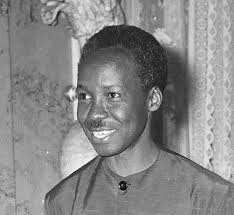
The history of post-colonial Africa is populated by larger-than-life figures who stood up against foreign domination, but few retained the lifelong moral authority and enduring affection of their people like Julius Nyerere. Known affectionately throughout Tanzania and the wider world as Mwalimu (the Swahili word for "teacher"), Nyerere was a visionary political theorist, anti-colonial revolutionary, and a key architect of Pan-African unity. He steered his country from a British trusteeship into a unified independent republic without the catastrophic bloodshed that plagued many of its neighbors.
This Julius Nyerere biography provides an exhaustive, narrative-driven exploration of his life, tracing his journey from a modest village childhood to the world stage, where he championed African socialism (Ujamaa), battled international financial institutions, and voluntarily walked away from power.
Early Life, Ancestry, and a "Rain Spirit" Name
Julius Kambarage Nyerere was born on April 13, 1922, in Mwitongo, an area within the village of Butiama in the Mara Region of what was then the British colony of Tanganyika. He was born into the Abhakibhweege clan of the Zanaki people, which was one of the smallest of the 120 distinct ethnic groups in the territory. His father, Chief Nyerere Burito, had been born in 1860 and was appointed as a chief by German imperial administrators in 1915, a position later endorsed when the British assumed colonial control after World War I. Chief Burito had 22 wives; Julius's mother, Mugaya Nyang'ombe, was the fifth wife and raised her son in the polytheistic belief system of the Zanaki.
At birth, the future leader was given the personal name "Mugendi" (meaning "Walker"), which was quickly changed to "Kambarage" on the advice of a traditional diviner. The name Kambarage represented a female rain spirit because a remarkably heavy rain fell on the day he was born. As a young boy, Kambarage lived in his mother’s compound, assisting in the communal farming of millet, maize, and cassava, while also taking part in herding goats and cattle with other local youth. This early immersion in a deeply communal lifestyle heavily structured his later socio-economic philosophies regarding collective responsibility and human interdependence.
The Academic Journey: From Musoma to Edinburgh
Because the British colonial administration encouraged the education of chiefs' sons to perpetuate the traditional chieftain system, Kambarage was sent to school. In February 1934, at the age of 12, he began his formal education at the Native Administration School in Mwisenge, Musoma, located approximately 35 kilometers from his home. Learning in Swahili, a language he had to acquire upon arrival, Kambarage proved to be an exceptionally brilliant and hardworking student. He skipped a grade within six months and regularly achieved the highest exam scores in his region. While at Mwisenge, he underwent the traditional Zanaki tooth-filing ritual to sharpen his upper-front teeth into triangular points, and he also began exploring Roman Catholicism.
In 1937, his academic excellence earned him a government scholarship to the elite Tabora Government School. Fellow pupils remembered him as an ambitious, competitive reader who excelled in the school's debating society and advanced his command of the English language. In December 1943, following his father's death and a long period of religious study, he was baptized into the Roman Catholic Church, choosing the baptismal name "Julius".
Makerere and the Seeds of "African Socialism"
In January 1943, Nyerere entered Makerere College in Kampala, Uganda, on a teacher-training bursary. At Makerere, he deeply immersed himself in reading, studying the Papal Encyclicals alongside the liberal philosophies of John Stuart Mill. It was during this period that his radical political consciousness began to mature. In July 1943, Nyerere wrote a letter to the Tanganyika Standard arguing that capitalism was inherently alien to Africa and that the continent must intentionally turn to "African socialism" led by its educated class. After graduating with a diploma in education, he returned to Tabora to teach at the mission-run St. Mary’s School, choosing it over a higher-paying state school post.
The Scottish Transformation
With the encouragement of the Roman Catholic missionaries at St. Mary's, Nyerere successfully passed the University of London's matriculation exam. In April 1949, he secured funding through the Colonial Development and Welfare Scheme and traveled to the United Kingdom to study at the University of Edinburgh in Scotland. Nyerere was the first Tanzanian to study at a British university and only the second to gain a university degree outside of Africa.
At Edinburgh, he pursued an Ordinary Degree of Master of Arts, taking diverse courses in English literature, political economy, social anthropology, British history, and constitutional law. He later noted that he evolved the entirety of his political philosophy while studying in Scotland, where his exposure to Fabian socialist thinking and classical liberal texts blended smoothly with his appreciation for traditional African communalism. He graduated with his Master of Arts degree in July 1952.
Founding TANU and the Non-Violent Fight for Independence
Upon returning to his homeland in October 1952, Nyerere married his fiancée, Maria Gabriel Majige, a primary school teacher, on January 24, 1953. They relocated to Pugu near Dar es Salaam, where Julius accepted a position teaching history, English, and Kiswahili at St. Francis' College. In April 1953, he was elected president of the Tanganyika African Association (TAA), which he rapidly began transforming from a civic welfare group into an explicitly political organization.
On July 7, 1954, Nyerere, along with key associates like Oscar Kambona, formally overhauled the TAA into a legitimate political party: the Tanganyika African National Union (TANU). Nyerere was elected the first president. Heavily inspired by the non-violent protest tactics of Mahatma Gandhi and the successful independence campaigns of Kwame Nkrumah in Ghana, Nyerere preached a message of peaceful anti-colonial resistance, social equality, and multi-racial harmony.
THE EVOLUTION OF TANZANIAN LEADERSHIP
1953: Elected President of the TAA
1954: Transforms TAA into TANU (Elected first President of TANU)
1960: Becomes Chief Minister after a landslide election victory
1961: Becomes the first Prime Minister of Independent Tanganyika
1962: Elected the first President of the Republic of Tanganyika
1964: Proclaimed President of the newly unified United Republic of Tanzania
The colonial authorities under Governor Sir Edward Twining viewed Nyerere with immense vigilance, fearing his anti-colonial rhetoric would spark a violent uprising similar to the Mau Mau rebellion in neighboring Kenya. Forced by his employers to choose between his teaching career and his pro-independence political work, Nyerere chose to sacrifice his financial security, resigning from his teaching post to dedicate himself full-time to campaigning for Uhuru (Freedom).
The UN Petitions and Landslide Elections
Financed by indigenous entrepreneurs like John Rupia, Nyerere traveled to the United Nations in New York City in 1955 and 1956 to speak before the Trusteeship Council, where he demanded a definitive target date for Tanganyika's independence. He toured the country almost continuously in a TANU Land Rover, building a massive mass-membership base that grew to 500,000 members by 1957.
Despite structural voting rules implemented by the British to divide representation equally among ethnic minorities, TANU won a sweeping victory in the 1958–1959 legislative elections. Under the more cooperative administration of the incoming British governor, Sir Richard Turnbull, a mutual trust developed. In the general elections of August 1960, TANU won an astonishing 70 out of 71 seats, and Nyerere was officially called to form an internal self-government as Chief Minister.
From Independence to Republic: The Unification of Tanzania
On December 9, 1961, Tanganyika officially achieved full independence from British rule. Julius Nyerere was sworn in as the country's first prime minister. However, just six weeks later, in January 1962, he took the highly unusual step of resigning from the premiership, handing over the government to his trusted ally Rashidi Kawawa so that he could focus entirely on restructuring TANU and defining a truly indigenous pattern of democracy.
In November 1962, after a new constitution converted the state into a republic, Nyerere was elected as the first President of Tanganyika with 98.1% of the popular vote. His administration immediately focused on domestic decolonization, including the "Africanization" of the civil service and the abolition of the statutory jobs and salaries of hereditary chiefs. In January 1964, a localized military mutiny over troop wages forced Nyerere into temporary hiding, but the rebellion was swiftly suppressed with British military assistance.
The Union with Zanzibar
In April 1964, following the bloody Zanzibari Revolution that overthrew the island's Arab Sultan, Nyerere negotiated a political union with the island's new leader, Abeid Karume. Eager to preserve regional stability and prevent the islands from becoming a Cold War proxy battleground for the United States and the Soviet Union, the two leaders announced the political unification of their territories. In October 1964, the unified state was officially named the United Republic of Tanzania, with Julius Nyerere serving as its executive president.
Ujamaa: The Arusha Declaration and African Socialism
With his authority firmly consolidated across Nyerere, Tanzania, Mwalimu turned his complete focus toward economic decolonization and humanitarian development. On February 5, 1977, he oversaw the historic merger of TANU and Zanzibar's Afro-Shirazi Party to form a single, centralized ruling party: Chama Cha Mapinduzi (CCM; "Party of the Revolution").
The defining blueprint for his ideological vision was unveiled in February 1967: The Arusha Declaration. This monumental manifesto officially committed Tanzania to a unique, non-capitalist path of development rooted in the concept of Ujamaa (meaning "familyhood" or collective brotherhood in Swahili). Nyerere explicitly rejected the Marxist-Leninist concept of class struggle, arguing that traditional pre-colonial African societies were already classless, egalitarian, and deeply socialist in spirit.
The Economic Reality of Villagization
Under the banner of rural development, the government accelerated a massive "villagization" program, moving approximately 10 to 13 million peasants into organized communal villages. While the creation of these concentrated hubs allowed the government to rapidly expand social services, more than doubling rural healthcare dispensaries and expanding primary schools until Tanzania achieved an 80% literacy rate, the collective farming program proved to be an absolute economic catastrophe.
The state-run agricultural communes met with widespread resistance from local peasants. Productivity plummeted, food production collapsed, and inflation soared. Within a decade, Tanzania slipped from being one of the largest food exporters in Africa to an economically hollow state heavily dependent on foreign food aid and loans. Corruption, embezzlement, and a massive national debt burden began to riddle the state bureaucracy, creating severe economic hardships for ordinary citizens.
Foreign Policy: The Front Line States and the Uganda War
While his domestic economic experiments foundered, Nyerere's international foreign policy won him immense, unrivaled moral authority across the globe. Maintained firmly within the Non-Aligned Movement, he successfully balanced friendly diplomatic relations with both the Western powers and the Eastern Bloc, developing close personal links with Mao Zedong's China.
Nyerere transformed Dar es Salaam into the vital logistical heart of the campaign against white-minority rule and European imperialism in southern Africa. His government provided training camps, weapons, and sanctuary to prominent liberation movements, including:
- The African National Congress (ANC) and Pan-African Congress (PAC) were fighting apartheid in South Africa.
- FRELIMO in its armed struggle to overthrow Portuguese colonial rule in Mozambique.
- ZANLA and Robert Mugabe in their campaign to unseat the white regime in Southern Rhodesia (Zimbabwe).
As the prominent chairman of the "Front Line States," Nyerere consistently utilized his international stature to demand severe economic sanctions and arms embargoes against the racist regimes of southern Africa.
The War to Topple Idi Amin (1978–1979)
In January 1971, General Idi Amin seized power in neighboring Uganda via a military coup, overthrowing Nyerere's close ally Milton Obote. Nyerere flatly refused to recognize the legitimacy of Amin’s brutal regime and offered Obote political asylum in Tanzania. Tensions reached a boiling point in October 1978, when Amin's forces launched a sudden invasion across the border, annexing the Kagera Salient of Tanzania.
Nyerere responded with decisive, uncompromising military force. Mobilizing a massive force of 20,000 regular soldiers alongside tens of thousands of civilian-soldier volunteers and Ugandan rebel groups, the Tanzanian army successfully pushed the invaders back and launched a full-scale counter-invasion into Uganda. In April 1979, Tanzanian forces successfully captured the capital city of Kampala, forcing Idi Amin into permanent exile and briefly restoring Milton Obote to power. This war cost Tanzania an estimated US$500 million, pushing the country’s fragile economy into absolute bankruptcy, but it won Nyerere widespread popular acclaim as a rare example of an African state successfully policing its own region to remove a tyrannical dictator.
Voluntary Retirement and the Transition to Multi-Party Democracy
By 1985, Nyerere was forced to confront the clear, undeniable failure of his economic policies. Recognizing that his socialist models had completely failed to spur economic development, and refusing to lead his nation down a free-market capitalist path he did not personally believe in, Mwalimu executed an act that was virtually unheard of among 20th-century African heads of state: he voluntarily chose to stand down.
At the general elections of 1985, he gracefully handed over the presidency to his chosen successor, Ali Hassan Mwinyi, who quickly began reversing Nyerere's nationalizations and transitioning the country into a free-market era.
POST-PRESIDENTIAL CHRONOLOGY
1985: Voluntarily steps down as President of Tanzania
1987: Appointed Chairman of the International South Commission
1990: Steps down as Chairman of Chama Cha Mapinduzi (CCM)
1992: Successfully lobbies for the return of multi-party democracy
1996: Appointed chief mediator for the Burundian Civil War
October 14, 1999: Passes away from leukemia in London, UK
Nyerere remained the highly influential chairman of the ruling CCM party until 1990. Observing the global collapse of the Eastern Bloc and the domestic rot within his own single-party system, he used his massive political clout to advocate for a peaceful transition to a multi-party democracy, famously telling his party, "We must manage our own change – don't wait to be pushed." Following his efforts, Tanzania officially restored multi-party politics in 1992.
The Final Years, Death, and Cause for Canonization
During his final decade, Nyerere retreated to his childhood mud-brick home village of Butiama, where he spent his days reading, farming, and translating the Christian Gospels into the Zanaki language. He remained a highly active global elder statesman, serving as the chairman of the South Centre in Geneva and working tirelessly on an international campaign to demand the complete cancellation of Third World debt owed by impoverished nations. His final high-profile diplomatic mission occurred in 1996, when he served as the chief mediator attempting to broker a peace settlement to end the Burundian Civil War.
By 1998, Nyerere discovered he had terminal leukemia. In September 1999, his health deteriorated rapidly, and he was flown to St. Thomas' Hospital in London, United Kingdom, for emergency medical treatment. On October 14, 1999, with his wife Maria and six of his children sitting by his bedside, Julius Kambarage Nyerere passed away at the age of 77.
Tanzanian President Benjamin Mkapa proclaimed a thirty-day period of national mourning, while neighboring African countries like Rwanda, Mozambique, Kenya, and Zambia declared days of state mourning to honor the fallen icon. Following a series of massive state funerals at the National Stadium in Dar es Salaam, where hundreds of thousands of weeping citizens passed by his body lying in state, he was flown back to Butiama and buried in his family's graveyard.
The Path to Sainthood
Nyerere’s profound personal piety, humility, and spartan lifestyle left an indelible mark on the Roman Catholic Church. He had attended early morning Mass daily throughout his public life, fasted frequently, and refused to enrich himself or his family at his country’s expense. In January 2005, the Catholic Diocese of Musoma officially opened a formal cause for the beatification of Julius Nyerere, awarding him the title of Servant of God. Today, Tanzanian Catholics eagerly await the Vatican's final determination on his potential canonization.
A Complex, Enduring Legacy
The historical judgment on Julius Nyerere remains complex and deeply divided. Western economists and political critics have heavily criticized his regime for its severe economic mismanagement, pointing to how his forced villagization program crippled national food security and left a legacy of state dependency on foreign aid. Furthermore, his creation of a rigid one-party state and his tactical use of the Preventive Detention Act to lock up certain political opponents without trial have drawn sharp accusations of authoritarian governance.
Yet, for millions of Tanzanians and Pan-African scholars, he remains the undisputed Father of the Nation. In stark contrast to almost all of its volatile neighbors, Nyerere successfully forged a genuine, stable national identity out of a hotchpotch of 120 disparate ethnic groups. He left his country entirely free of the devastating tribal warfare and systemic corruption that fractured other post-colonial states. His integrity, his profound humility, and his absolute commitment to human dignity ensure that Mwalimu Julius Nyerere stands forever as an immortal beacon of moral leadership for the African continent.