A Global African Story
When we tell the history of Africa, we cannot stop at the shores of the continent. The African story is a global tapestry, woven with the resilience, brilliance, and revolutionary spirit of the Diaspora. Across the Atlantic, the Caribbean was built by the descendants of enslaved Africans who carried the heartbeat of the motherland across the waters. Their fight to reclaim their sovereignty, identity, and dignity on foreign soil is a direct, unbreakable extension of the Pan-African struggle.
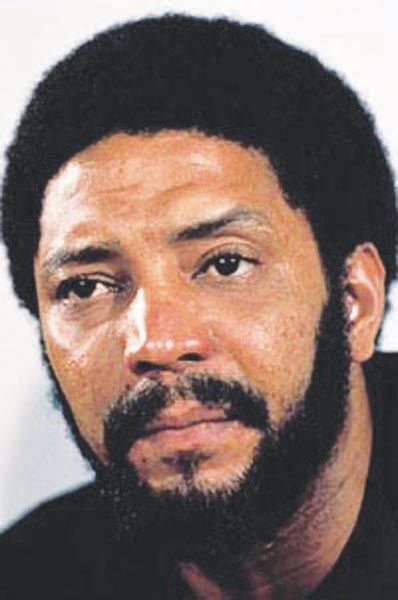
To understand the liberation movements of Africa, we must also look to the islands where the descendants of Africa dared to defy the empires of the West. Few figures embody this global Pan-African spirit more fiercely than Maurice Bishop. Like Burkina Faso's Thomas Sankara or the Congo's Patrice Lumumba, Bishop envisioned a society built on Black self-sufficiency, unapologetic independence, and fierce anti-imperialism. And tragically, just like those continental revolutionaries, he would ultimately be betrayed from within. This is not just Caribbean history; it is a vital chapter in the global African story.
The Spark in St Georges
In the spring of 1979, a quiet revolution sent tremors across the Caribbean and re-shaped the geopolitics of the Western Hemisphere. A tall, articulate, thirty-four-year-old barrister with an infectious smile and an electric command of language stepped up to a microphone in St. George's to declare that a new day had dawned. His name was Maurice Bishop.
For years, the small island nation of Grenada had groaned beneath the autocratic, eccentric, and violent reign of Prime Minister Eric Gairy. Gairy maintained power through political intimidation, rigged elections, and the terror of his personal paramilitary squad, the Mongoose Gang. But on March 13, 1979, while Gairy was away addressing the United Nations in New York, Bishop and his comrades in the New JEWEL Movement executed a swift, bloodless overthrow.
Maurice Bishop became Prime Minister, establishing the People's Revolutionary Government. He promised food, decent housing, free healthcare, and genuine worker participation in government. For four brief, glowing years, Grenada became the epicenter of a bold social experiment. Yet, the very fire that lit the revolution would ultimately consume it from within through an ideological betrayal engineered by his closest political deputy, Bernard Coard.
From Aruba to Notting Hill and Back
To understand the magnetic force of Maurice Bishop, one must trace his journey across the Atlantic world. He was born on May 29, 1944, on the island of Aruba to Grenadian parents, Rupert and Alimenta Bishop. His father worked in Aruba’s oil refineries before bringing the family back home to Grenada in 1950. Raised as an only son, Maurice was pushed relentlessly by his father to pursue academic perfection. He won a prestigious government scholarship to Presentation Brothers' College, where he served as student council president and won the Principal's Gold Medal for outstanding ability.
Even as a teenager, Bishop was fascinated by Caribbean nationalism, the West Indies Federation, and the anti-colonial writings of Frantz Fanon and Julius Nyerere. In 1962, he teamed up with a brilliant young student from a rival secondary school, Bernard Coard, to form the Grenada Assembly of Youth Fighting for Truth. The two boys organized bi-weekly public political debates in the central market square, forging an intellectual partnership that would later determine the destiny of their nation.
In 1963, Bishop traveled to England to study law at the University of London and Gray's Inn. In London, his political consciousness crystallized. He worked as a postman and vegetable packer while immersing himself in Pan-African organizing, the West Indian Standing Conference, and campaigns against racial discrimination. He co-founded a free legal aid clinic for West Indian immigrants in Notting Hill, defending the marginalized while devouring the revolutionary philosophies of Marx, Lenin, and Mao Zedong.
When Bishop returned to Grenada in December 1970, he was no longer just an educated lawyer. He was a trained advocate determined to build a political instrument capable of taking power.
The Fire of the Mongoose Gang and the Blood on the Streets
Bishop immediately threw himself into defending striking workers and organizing progressive political movements. In 1972, he helped found the Movement for Assemblies of the People, which merged in 1973 with the Joint Endeavour for Welfare, Education and Liberation to create the New JEWEL Movement. The party condemned the rising cost of living, political corruption, and police brutality under Eric Gairy's regime.
Gairy's response to the rising opposition was brutal. On November 18, 1973, a day remembered in Grenadian history as Bloody Sunday, Bishop and eight other New JEWEL leaders were ambushed in Grenville by police and members of the Mongoose Gang. The men were beaten nearly to death. In prison, when guards shaved Bishop's beard, they exposed a severely fractured jaw.
Just two months later, on January 21, 1974, known as Bloody Monday, security forces attacked a massive anti-government demonstration. As tear gas filled the air and bottles flew, Maurice Bishop's father, Rupert Bishop, was shot in the back and killed while heroically escorting women and children to safety.
The murder of his father deeply traumatized Maurice, but it also solidified his resolve. Recognizing that public protests alone could not dislodge a dictator backed by armed gangs, the New JEWEL Movement turned inward, establishing tight underground party cells and building alliances with progressive movements across the Caribbean and Latin America.
The March Thirteen Revolution and the Dawn of the PRG
When the New JEWEL Movement seized power in 1979, the People's Revolutionary Government moved with astonishing speed to remake Grenadian society. Bishop's administration suspended the colonial constitution and set out to build a non-capitalist path of development centered on human dignity.
The accomplishments of the revolution were remarkable. Illiteracy plummeted from thirty-five percent to five percent through the work of the Centre for Popular Education. Free public healthcare was established, and secondary school education was made completely free. Unemployment dropped from a crushing fifty percent down to fourteen percent. Women were granted equal pay for equal work, paid maternity leave was enshrined into law, and sex discrimination was outlawed. Organizations like the National Women's Organization and National Youth Organization gave ordinary citizens a direct voice in social policy.
To stimulate agriculture and tourism, Bishop initiated the construction of Grenada's first modern international airport at Point Salines. Because Western banks refused loans, Bishop turned to his close friend Fidel Castro, who supplied Cuban technicians, engineers, and construction workers to build the runway.
The Cold War Shadow and the Capitalist Critique
The growing intimacy between Maurice Bishop, Cuba, and the Soviet Union sent shockwaves through Washington. US President Ronald Reagan seized upon the Point Salines airport construction, claiming the long airstrip was not designed for commercial tourists, but as a strategic refueling base for Soviet military aircraft.
Bishop passionately defended Grenada's right to self-determination. In international addresses, including a speech at Hunter College in New York, he condemned imperialist aggression and insisted that the Caribbean must remain a zone of peace free from military intimidation. He argued that Washington's hostility stemmed from fear that a small, English-speaking, predominantly Black island could demonstrate a successful alternative socioeconomic model for the developing world.
In his speeches, Bishop delivered sharp critiques of global capitalism. He pointed out the hypocrisy of industrialized nations that slashed social welfare, closed hospitals, and reduced pensions for their poor citizens while spending trillions of dollars on a nuclear arms race. For Bishop, true human rights were not merely formal voting rituals every five years, but the fundamental rights to food, decent housing, healthcare, and employment.
The Implosion and Treachery at Fort Rupert
While foreign pressure mounted from the outside, the terminal blow to the Grenada Revolution came from within. By 1983, a bitter, secretive factional feud erupted within the Central Committee of the New JEWEL Movement.
Deputy Prime Minister Bernard Coard, who served as Minister of Finance, led a hardline ultra-leftist faction inside the party. Coard and his supporters criticized Bishop for being pragmatically flexible, overly popular, and vacillating in his application of Marxist-Leninist orthodoxy. In September 1983, the Coard faction demanded a formal power-sharing agreement, proposing that Coard handle party structure and ideology while Bishop remained the public face of the government.
Bishop initially weighed the proposal, but ultimately rejected it as an unworkable subversion of collective leadership. On October 13, 1983, Bernard Coard and the military leadership placed Maurice Bishop under house arrest.
The news that their beloved leader had been imprisoned enraged the Grenadian people. On October 19, 1983, a massive, spontaneous crowd of over thirty thousand citizens, nearly a third of the island's entire population, marched to Bishop's residence, broke through the military guards, and triumphantly freed him.
The jubilant crowd escorted Bishop to the military headquarters at Fort Rupert. Realizing he was losing control, Coard dispatched armored personnel carriers and specialized units of the People's Revolutionary Army from Fort Frederick to retake the fort. Gunfire erupted at Fort Rupert, killing several civilians.
Bishop and his most loyal cabinet ministers surrendered to avoid further bloodshed. They were marched into the courtyard, lined up against a wall, and executed by a military firing squad. Shot dead alongside Bishop were his partner Jacqueline Creft, who was Minister of Education, Foreign Minister Unison Whiteman, and several trade union leaders. After the execution, their bodies were moved to a military camp and partially burned in a pit. To this day, the exact location of Maurice Bishop's remains remains unknown.
The Aftermath and an Unextinguished Flame
The brutal murder of Maurice Bishop destroyed the moral foundation of the People's Revolutionary Government and left the nation paralyzed in shock. Just six days later, on October 25, 1983, US President Ronald Reagan ordered a full-scale military invasion of Grenada, code-named Operation Urgent Fury. Over seven thousand American troops landed on the island, easily crushing the fractured Grenadian military forces and foreign workers, bringing a swift end to the revolutionary era. Bernard Coard and his conspirators were arrested, tried, and initially sentenced to death, sentences that were later commuted to life imprisonment.
Despite the tragic, violent collapse of his government, Maurice Bishop remains a deeply revered national hero across the Caribbean. His pragmatism, his devotion to social justice, and his unwavering commitment to Black liberation left an indelible mark on the region's consciousness.
In a fitting tribute to his enduring legacy, on May 29, 2009, the Grenadian government officially renamed Point Salines International Airport to the Maurice Bishop International Airport. The facility he fought so hard to build now stands as a permanent monument to a leader who dared to dream that a small island nation could stand tall and sovereign in its own backyard.