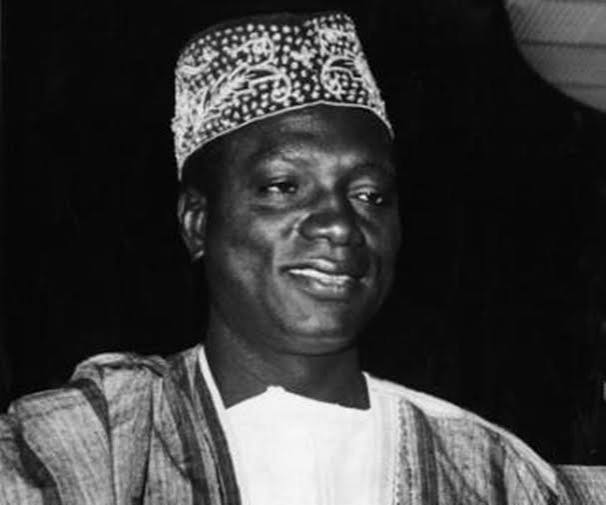
Imagine a man standing in the heart of West Africa with nothing but a teacher’s salary, a worn-out suit, and an idea so dangerous that the world’s most powerful nations held quiet, emergency meetings to stop it. Imagine a leader who looked directly at the sprawling French Empire, the same empire that had carved up Africa like furniture wood, and calmly declared that his people would no longer be economic tenants on their own soil.
To look back at the life of Modibo Keïta is to step into a vortex of radical hope, unyielding principle, and the brutal terrain of Cold War geopolitics. While names like Kwame Nkrumah, Patrice Lumumba, and Thomas Sankara ignite instant recognition across the global South, Modibo Keïta is often forgotten as the quiet fire of African liberation. Yet, if history were fair, his name would erupt from our lips with the same gravity. He was a soft-spoken scholar, a stubbornly principled visionary, and a giant whose revolutionary heart beat beneath the robes of a Malian schoolteacher.
Imperial Contradictions
The story of modern Mali begins long before the declarations of independence shattered the colonial air of 1960. Modibo Keïta was born on June 4, 1915, in the Bamako-Coura neighborhood of Bamako, which was then the capital of a heavily policed territory known as French Sudan. His family was devout Malian Muslims who claimed direct, unbroken lineage from the ancient Keita dynasty, the legendary founders of the medieval Mali Empire. This deep historical ancestry was not just a point of family pride; it would later serve as a powerful wellspring of political legitimacy for a nation trying to remember who it was before European gunboats arrived.
As a child, young Modibo, nicknamed “Modo” by his classmates, moved through the colonial education system with remarkable ease. He completed his primary schooling in Bamako before earning a spot at the prestigious École Normale William-Ponty in Dakar, Senegal. Ponty was the undisputed crucible of the West African elite, an intellectual hothouse where the children of the colonized were trained to run the bureaucratic machinery of the empire. Keïta didn't just get by; he graduated at the very top of his class.
When he returned home in 1936 to begin his career as a schoolteacher, working in Bamako, Sikasso, and Timbuktu, he was a young man quietly absorbing the glaring contradictions around him. He saw a cold, hyper-efficient foreign bureaucracy extracting the wealth of his homeland while leaving the African population illiterate and structurally impoverished. He quickly realized that teaching math and language in a colonial classroom was itself an act of political navigation. Every lesson he crafted became a subtle masterclass in human dignity.
In September 1939, he married Mariam Travélé, a fellow teacher who shared his deep intellectual curiosity and commitment to social justice. Like many traditional African Muslim men of his standing, Keïta would eventually become polygamous, later marrying his second wife, Fatoumata “Didi” Haïdara, in 1952, and his third, Fatoumata Diallo, in 1959. But it was Mariam Travélé who would stand by his side during his earliest entry into anti-colonial activism, eventually becoming the foundational First Lady of a free Mali.
Radical Underground
By the early 1940s, Keïta’s quiet anger against the structural violence of colonialism evolved into active resistance. He co-founded the Union of French West African Teachers, an organization that bypassed simple labor demands to advocate fiercely for the working conditions and human worth of African educators. He slipped into the secretive world of the Communist Study Groups in Bamako, turning over radical texts at night and dissecting the mechanics of imperial exploitation.
In 1943, he took a step that put him squarely in the crosshairs of the French secret service. He founded L'oeil de Kénédougou (The Eye of Kénédougou), a highly critical, anti-colonial magazine that pulled no punches in exposing the corrupt abuses of the local colonial administrators. The empire's response was swift and predictable. In 1946, Modibo Keïta was arrested, flown across the Mediterranean, and locked away for three agonizing weeks in the notorious Prison de la Santé in Paris.
Far from breaking his spirit, the damp walls of the French prison only crystallized his resolve. He returned to Bamako as an emancipated nationalist leader. In 1945, alongside his close political ally Mamadou Konaté, he founded the Bloc soudanais, which rapidly expanded into the Sudanese Union (US). By October 1946, radical delegates from every corner of French Africa gathered at a historic conference in Bamako to form a massive coalition called the African Democratic Rally (RDA). Keïta assumed the high-stakes post of RDA Secretary-General in French Sudan, turning the local US-RDA branch into an unstoppable anticolonial juggernaut.
His exceptional oratorical power and sheer organizational brilliance made it impossible for the French authorities to suppress him through standard police actions. He began winning elections within the colonial system itself. In 1948, he was elected general councilor; by 1956, he became the Mayor of Bamako and won a prominent seat as a deputy in the National Assembly of France. He made history by becoming the assembly's very first African Vice President, even serving as Secretary of State in successive French governments. He had successfully infiltrated the highest political chambers of the occupying power, using their own legal architecture to advance the total emancipation of his people.
Broken Dreams
As the late 1950s thundered with the unstoppable wave of global decolonization, Modibo Keïta’s eyes turned toward a grander vision: a unified, federated Africa. He was an uncompromising Pan-Africanist who understood that the tiny, artificial borders carved up by European mapmakers at the Berlin Conference were spiritual wounds designed to keep individual African states weak, fragmented, and permanently dependent on foreign patrons.
In January 1959, he successfully brought his boldest dream to life: the Mali Federation. Initially intended to bring together multiple former French colonies, the federation ultimately narrowed down to a union between Senegal and its own Sudanese Republic. Keïta became the Premier of this promising new state, visualizing it as the powerful blueprint for a singular African nation.
But the marriage was doomed from the start. The federation ran headfirst into a massive wall of deep ideological and personality clashes. Keïta was an unyielding Marxist-nationalist who wanted a radical, clean break from French economic control. Across the table sat Senegal’s Léopold Sédar Senghor, a brilliant poet-politician who favored a highly conciliatory, gradual approach that preserved close cultural and financial ties with France. Senghor looked at Keïta’s plans and saw a dangerous, destabilizing radicalism; Keïta looked at Senghor and saw a leader willing to violate his own conscience to appease a former colonial master.
By August 1960, after just a few turbulent months, the internal fractures shattered the union. Senegal abruptly withdrew from the federation, leaving Keïta heartbroken but completely unbroken. On September 22, 1960, a historic congress of the US-RDA formally proclaimed complete independence, casting away the colonial designation of French Sudan forever. The Republic of Mali was born, and Modibo Keïta stepped into history as its inaugural President.
Sovereign Defiance
Modibo Keïta took the wheel of a nation that was stunningly poor and landlocked, but his response to the challenge was a masterclass in absolute sovereign defiance. He immediately declared Mali a single-party state under the US-RDA, nationalizing every vital sector of the economy. He established the Malian Import and Export Company (SOMIEX), giving the state an absolute monopoly over external trade and the internal distribution of basic food staples like sugar, tea, and milk. He launched collective farms and a hyper-centralized cooperative system in the countryside, attempting to transform traditional agrarian labor into an engine of autonomous African growth.
His socialism was not a lazy carbon copy imported from Moscow or Beijing. It was deeply rooted in the ancient traditions of communal labor, collective land ownership, and moral governance that had guided the old West African empires centuries before the European footprint ever touched the soil. He kicked out French military forces, demanding the immediate evacuation of their colonial bases in 1961.
Then, in July 1962, Keïta took the most dangerous sovereign step an independent country could take. He pulled Mali completely out of the French-controlled CFA franc zone and launched the independent Malian franc. He understood that political freedom was an empty, decorative illusion if your currency was ultimately managed by a central bank in Paris.
On the global stage, his active, principled diplomacy turned the young capital of Bamako into a major epicentre of Pan-African solidarity. When the Algerian Revolution was waging its bloody war of liberation against French occupation, Keïta didn't just offer empty statements. He provided the Algerian National Liberation Army (ALN) with full military barracks in northern Mali, creating a secure sanctuary where revolutionary fighters could plan actions and transport arms across the desert.
He traveled to the United States in September 1961, meeting with President John F. Kennedy at the White House to deliver the common anti-colonial positions of the historic Non-Aligned Movement summit. He won the prestigious Lenin Peace Prize for his monumental efforts in constructing an alternative, socialist economic order. Along with Ghana’s Kwame Nkrumah and Guinea’s Ahmed Sékou Touré, he formed the Union of African States, while playing a critical role in co-drafting the foundational charter of the Organization of African Unity (OAU). When a frontier conflict known as the Sand War exploded between Morocco and Algeria in 1963, Keïta successfully gathered the warring leaders in Bamako, negotiating the historic Bamako Accords that brought peace to the region.
Gathering Storm
But the hard economic realities of the global financial system began to close in on his socialist experiment like a vice. Mali’s monetary independence triggered immediate, hostile retaliation from Western markets. The country faced severe trade blockades, credit restrictions, and aggressive financial manipulation from former colonial interests. Without access to international loans or favorable trade terms, the Malian franc suffered massive, spiraling inflation.
Shortages of basic goods became part of daily life, and the state's slow bureaucratic apparatus began to deeply frustrate ordinary merchants and traditional farmers who resented the rigid price controls. By 1967, facing absolute economic isolation, Keïta was forced to make a painful compromise: he reopened negotiations with France to devalue the Malian franc by 50 percent and stabilize the currency.
This sudden pivot triggered a wave of shockwaves through his own party. Radical supporters screamed betrayal, while conservative factions accused him of total economic mismanagement. In a desperate, frantic attempt to regain control of the narrative and purge the state of corruption, Keïta launched a Maoist-inspired “Active Revolution” in August 1967. He suspended the constitution, dissolved the National Assembly, and handed absolute security power to the party’s popular youth militias.
It was a catastrophic miscalculation. The overzealous militias began running wild, harassing army officers, targeting local merchants, and intimidating ordinary citizens in the streets. The atmosphere of paranoia and authoritarian tactics completely alienated the population. When an exceptionally poor harvest hit the countryside in 1968, leaving ordinary families struggling to put food on the table, the government found itself standing entirely alone.
Silent Desert
On November 19, 1968, the final blow came from within. A group of junior military officers, led by Lieutenant Moussa Traoré, launched a swift, bloodless coup d'état. Exhausted by economic hardship and the constant surveillance of the militias, the masses did not take to the streets to defend the regime. Mali's founding father was quietly arrested and flown far away into the remote, blistering desert town of Kidal, locked away in a harsh colonial-era cell without ever receiving a single day of trial.
For nine long years, Modibo Keïta sat in total isolation, watching the state he built systematically dismantled. In February 1977, under the guise of an action toward national reconciliation, the military regime transferred him back to the capital of Bamako. But he would never taste freedom. On May 16, 1977, Modibo Keïta died in custody at the age of sixty-one. The military government issued a cold statement claiming he had succumbed to food poisoning, but the streets knew better. Fearing a total explosion of public anger, his funeral was met with spontaneous, massive popular protests that shook the military regime to its core, proving that the radical ideas of the schoolteacher-president remained deeply alive within the Malian consciousness.
Following the ultimate overthrow of Traoré’s dictatorship in 1992, Keïta’s legacy was completely rehabilitated. A majestic public monument was dedicated to his memory in Bamako on June 6, 1999, restoring him to his rightful place as a foundational architect of African independence.
Today, global internet trends reflect an interesting modern digital memory. Thousands of users run searches across West Africa, tracking the foundational history of Modibo, the enduring evolution of Mali, and the political philosophy of Modibo Keïta. Even when tracking specific search strings like Modibo Keita Mali or checking for geographic global variations like Madibo Qatar, the digital footprint underscores a profound historical truth. His life remains an urgent, living sermon on the price of dignity. He taught Africa that political independence without monetary and economic control is a decorative fiction. To understand the current struggles of the African continent, we must first look back at the giants who were punished for daring to break the chains of dependency.