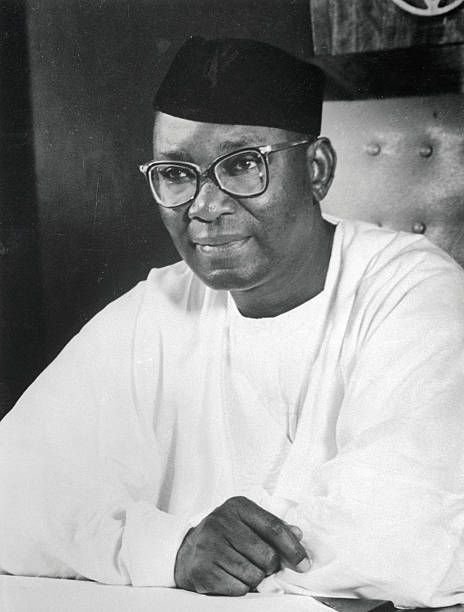
In the history of African liberation, few figures stand as tall or as complex as Benjamin Nnamdi Azikiwe. Widely revered as Zik of Africa, he was the towering intellectual and fiercely combative journalist who became the foremost father of Nigerian nationalism, the first indigenous Governor-General, and the first President of the Federal Republic of Nigeria.
But long before his face was minted on the ₦500 banknote, Azikiwe was a young man who understood that to defeat an empire, you must first decolonize the mind.
A Cosmopolitan Upbringing
Born on November 16, 1904, in Zungeru (in present-day Niger State) to Igbo parents from Onitsha, Azikiwe’s early life was a masterclass in the diversity of the Nigerian experience. Because his father was a clerk in the British colonial administration, young Nnamdi moved frequently across the country.
This nomadic upbringing was an inadvertent gift. It exposed him to the myriad cultures of the territory, and by the time he was a young man, he was fluent in the three major languages of the region: Hausa, Igbo, and Yoruba. This cosmopolitan foundation forged in him a profound sense of pan-Nigerian solidarity that would later define his political philosophy, one that sought to transcend the rigid ethnic and regional divisions encouraged by the British colonial government.
The Stolen Education: From Coal Miner to Scholar
Azikiwe recognized early on that education was the ultimate weapon against colonial subjugation. Inspired by the teachings of Jamaican civil rights activist Marcus Garvey and the life story of U.S. President James A. Garfield, Azikiwe set his sights on America.
His journey was arduous. After an aborted attempt to stow away on a ship, his father finally gathered enough money to send him to the United States in 1925. Azikiwe arrived in America during a time of intense racial segregation. To survive and fund his education, he worked grueling, menial jobs, washing dishes, laboring as a kitchen hand, and even toiling as a coal miner in Pennsylvania.
He was as physically formidable as he was intellectually brilliant. He was a champion boxer, a cross-country runner, and a gold-medal high jumper. Academically, he was a powerhouse. He earned a bachelor's degree from Lincoln University, followed by master's degrees from both Lincoln and the University of Pennsylvania in religion, philosophy, anthropology, and political science. By 1933, he was an accomplished scholar, teaching African history to American students and writing for prominent African-American newspapers like the Baltimore Afro-American.
The Power of the Press: Revolutionizing West Africa
Azikiwe returned to Africa in 1934, not as a compliant colonial subject, but as a radical, highly educated visionary. He first settled in Accra, Ghana (then the Gold Coast), where he became the founding editor of the African Morning Post. His bold, American-style journalism was a shock to the colonial system; he fiercely attacked imperialism and preached the doctrine of a Renaissance Africa. His uncompromising stance earned him a sedition trial and a six-month prison sentence (later overturned on appeal).
Returning to Nigeria in 1937, Azikiwe built a media empire. He founded the West African Pilot, a daily newspaper that would become the most crucial single precipitant of the Nigerian awakening. Under the motto Show the light and the people will find the way, the Pilot bypassed the traditional, conservative African elites and spoke directly to the working class and the youth.
He expanded the Zik Group to include over a dozen daily newspapers across the country, revolutionizing English-language journalism in West Africa. The Pilot did not just report the news; it advocated for African independence, championed labor strikes (such as the 1945 general strike), and instilled a profound sense of Black pride. The colonial authorities were so threatened by his influence that they banned the Pilot in 1945.
Zikism and the Political Struggle
Azikiwe's ideology, known as Zikism, was a philosophy of mental emancipation. He argued that true freedom required spiritual balance, social regeneration, and, crucially, economic determinism, the understanding that political freedom meant nothing without economic power.
To this end, he did not just write; he built. In 1944, he founded the African Continental Bank (ACB) to break the financial monopoly of colonial banks that refused to lend to Africans, thereby fostering a new class of Nigerian entrepreneurs.
Politically, Azikiwe became the nation's most formidable organizer. In 1944, alongside Herbert Macaulay, he co-founded the National Council of Nigeria and the Cameroons (NCNC), uniting a vast array of trade unions, market women, and cultural groups into a unified nationalist front.
However, the path to independence was deeply fractured by the very tribalism and regionalism the NCNC sought to oppose. In a 1959 political rally speech, Azikiwe explicitly condemned the Action Group for inciting minority groups against majority neighbors to exploit tribalism for political ends. He argued that extreme regionalism would divide rather than unite Nigerians and asserted that the NCNC's goal was to crystallise common nationality and thereby evolve one country under the rule of law and respect for human rights. He was highly critical of the Action Group's tactics, stating they had previously forced the United Middle Belt Congress to renounce a manifesto supporting a united regional legislature, only to later incite them to demand a separate Middle Belt State. Azikiwe vehemently opposed this Yorubanization of the West, noting that Yoruba elements within the NCNC who opposed this regionalism were unfairly branded as traitors to their tribe.
The First President of the Republic
Despite these intense regional rivalries, the NCNC emerged as a dominant force. From 1954 to 1959, Azikiwe served as the Premier of the Eastern Region, where he focused on industrialization and education. Believing that mental emancipation required indigenous institutions of higher learning, he founded the Nnamdi Azikiwe University's predecessor, the University of Nigeria, Nsukka, in 1955. It opened in 1960 as the first fully-fledged indigenous university in the country.
When Nigeria achieved independence on October 1, 1960, Azikiwe was appointed the first indigenous Governor-General, succeeding the British colonial administrator. Three years later, when Nigeria severed its final ties to the British monarchy to become a republic, Nnamdi Azikiwe was sworn in as the first President of Nigeria.
While the presidency was a largely ceremonial role, with executive power resting with Prime Minister Abubakar Tafawa Balewa, Azikiwe used the position symbolically. He consistently wore traditional Nigerian attire, sending a quiet but powerful statement of cultural independence to the world.
The Tragic Coup and the Civil War
The unity Azikiwe had fought so hard to build was fragile. The turbulent 1964 elections and deep-seated ethnic and regional tensions culminated in Nigeria's first military coup on January 15, 1966, which ousted Azikiwe from the presidency.
The ensuing crisis led to the horrific Nigeria-Biafra War (1967–1970). Azikiwe’s role during the civil war was agonizing and complex. Initially, outraged by the massacres of Igbo people in the north, he supported the secessionist Republic of Biafra, traveling extensively to secure international recognition for the breakaway state. However, by 1969, recognizing the devastating humanitarian toll and the hopelessness of the war, he shifted his stance, urging the Biafran leadership to surrender to the Federal Government in the interest of a united Nigeria.
A Legacy of Emancipation
After the war, Azikiwe returned to public life, serving as Chancellor of the University of Lagos and making two final, unsuccessful bids for the presidency during the Second Republic. Following the military coup of 1983, he retired from active politics.
Nnamdi Azikiwe passed away on May 11, 1996, at the age of 91.
The biography of Nnamdi Azikiwe is the story of a man who used the sheer force of his intellect to challenge an empire. He was a builder, a controversial politician, and a peerless nationalist. While the Nigerian nation he helped forge remains complex and deeply divided, his foundational vision, a decolonized, mentally emancipated, and self-reliant Africa- remains as vital today as it was when he first put pen to paper.