The history of the Caribbean is rarely told from the perspective of the people who bled into its soil. For centuries, colonial records and Eurocentric historians have framed the Caribbean solely as a theater of European power, a place where the British, French, and Spanish battled for sugar profits during the Seven Years' War. But the true story of the Caribbean is one of relentless African resistance.
In 1760, Jamaica was the crown jewel of the British Empire, generating unimaginable wealth through a brutally efficient, heavily militarized system of chattel slavery. The British thought they had absolute control. But they did not account for the fact that the people they enslaved were not docile laborers; many were highly trained military veterans, political leaders, and warriors captured during internal African conflicts.
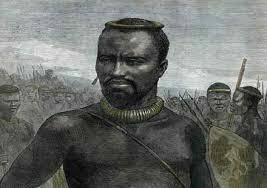
Among them was Tacky, a Fante royal and former warlord from the Gold Coast (modern-day Ghana). His uprising, known as Tacky’s War or Tacky's revolt, was not a spontaneous riot. It was a sophisticated, coordinated military campaign designed to completely overthrow British rule and establish an independent Black nation.
Here is the unfiltered African truth of Tacky's rebellion, the most significant slave uprising in the 18th-century Caribbean.
The Architect of Rebellion: Chief Tacky
Before he was enslaved, Tacky (or Takyi) was a paramount chief in Eguaafo in the Central region of Ghana. He was a man deeply familiar with the brutal realities of war, having previously sold prisoners of war from rival states into slavery to British traders. After being defeated in battle by a rival state and their Dutch allies, he was captured, sold into slavery, and transported to the sugarcane fields of Jamaica.
Tacky did not forget his military training. He spoke fluent English and utilized his royal status to organize a secret network of Coromantee (Akan people from the Gold Coast) across the island.
Tacky and his lieutenants, Quaw Badu, Sang, Sobadou, Fula Jati, and Quantee, understood the vulnerability of the British Empire. They strategically timed their insurrection to coincide with the Seven Years' War, knowing that British naval and military forces would be stretched thin fighting the French and Spanish. The rebellion was also planned around the Easter holidays, a time when enslaved people were granted a brief reprieve from the fields, allowing for greater freedom of movement and communication.
The Offensive: Easter Monday, 1760
Sometime before daybreak on Easter Monday, April 7, 1760, Tacky and his highly trained followers struck. They launched a coordinated, ruthless assault in St. Mary Parish, rapidly seizing the Frontier and Trinity plantations and killing the white overseers who managed the brutal regime.
The rebels did not aimlessly loot; they executed tactical military objectives. Bolstered by their initial success, hundreds of self-liberated Africans marched on Fort Haldane to secure the munitions necessary to sustain a prolonged war. They killed the storekeeper, captured the town of Port Maria, and commandeered four barrels of gunpowder and forty firearms.
As the rebels marched onward, their ranks swelled to over 400 fighters. Their morale was incredibly high, fortified by the spiritual leadership of Obeahmen, traditional African spiritual leaders, who dispensed protective powders and declared that the warriors could not be killed in battle.
For a brief, terrifying moment, the British realized that they might lose their most profitable colony to an African army.
The British Counter-Insurgency and the Maroon Alliance
The colonial response was immediate and merciless. Lieutenant Governor Sir Henry Moore declared martial law and deployed the 74th regiment of the British Army. But regular British troops, unfamiliar with the dense, mountainous terrain of the Jamaican interior, were severely disadvantaged against Tacky's guerrilla tactics.
To turn the tide, the British called upon a controversial ally: the Jamaican Maroons.
The Maroons were communities of self-emancipated Africans who had fought the British to a standstill during the First Maroon War of the 1730s (led by the legendary Queen Nanny). Under the treaties signed in 1739 and 1740, the Maroons were granted autonomy and land, but in exchange, they were legally bound to hunt runaway slaves and suppress uprisings.
The British deployed Maroon contingents from Moore Town, Charles Town, and Scott's Hall. The involvement of the Maroons, experts in jungle warfare and tracking, fundamentally altered the balance of power.
On April 14, a combined force of Maroons and colonial militia engaged Tacky’s army in a fierce battle at Rocky Valley. Tacky’s forces were routed. While retreating through the woods, Tacky was pursued by Davy, a legendary Maroon marksman from Scott's Hall. Running at full speed, Davy shot Tacky dead and decapitated him.
In a gruesome display of colonial terror, Tacky’s severed head was placed on a pole in the capital, Spanish Town, until an unknown follower bravely removed it in the dead of night. Facing inevitable capture and brutal torture, many of Tacky’s remaining men fled to a cave near what is now Tacky Falls and committed mass suicide rather than return to slavery.
The War Continues: Apongo and the Western Front
While British authorities celebrated Tacky’s death, the war was far from over. The sophisticated communication networks established by the rebels ensured that the insurrection spread across the island.
On May 25, 1760, the western phase of Tacky's war began. Another Coromantee leader, Apongo (also known as Wager), launched a massive uprising in Westmoreland Parish. Apongo’s forces exhibited the same tactical brilliance as Tacky’s, timing their revolt to coincide with the departure of a British naval escort from the coast.
Apongo’s army quickly overran plantations, capturing significant caches of gunpowder, clothing, and supplies. They repelled multiple counter-attacks from the Westmoreland Militia, causing panic and mass desertions among the white colonists. The rebellion forced the British to deploy naval sailors, regular infantry, and additional Maroon forces to the western parishes.
In early June, the combined British and Maroon force finally stormed Apongo’s barricaded encampment. The ensuing battle was a slaughter. Hundreds of rebel men, women, and children were killed, captured, or driven over a steep canyon precipice to their deaths. Apongo was captured and sentenced to a horrific execution: he was hung in chains for three days and was scheduled to be burned alive, but he died in his cage before the final part of his sentence could be carried out.
Despite the fall of Apongo, smaller guerrilla bands under leaders like Simon continued to raid plantations from the impenetrable Cockpit Country until late 1761, forcing the British to maintain martial law for months.
The Legacy of Tacky’s War
The British retaliation was unimaginably cruel. Captured rebels were burned at the stake, hung in iron cages to starve to death, or transported (sold into slavery in other colonies like Belize and Cuba). The colonial Assembly passed draconian new laws banning unauthorized gatherings, outlawing the possession of weapons, and strictly criminalizing the practice of Obeah.
Yet, the British could not legislate away the fear that Tacky had instilled in them. As historian Trevor Burnard noted, the shock of Tacky's War to the British imperial system was surpassed only by the American Revolution in the 18th century.
The rebellion cost the Jamaican colony over £100,000 (roughly £25 million today) and exposed the extreme fragility of the plantation economy. Tacky’s War proved that enslaved Africans possessed the military acumen, strategic foresight, and unyielding courage to dismantle the colonial state. It shifted the psychological landscape of the Atlantic world and laid the crucial groundwork for the massive uprisings that would eventually force the British Empire to abolish slavery in 1834.
The men and women who fought in Tacky's War did not die in vain. They were not mere commodities; they were soldiers in a long, bloody, and ultimately successful war for African liberation.