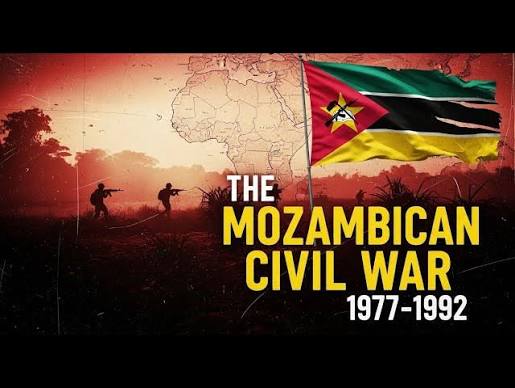
A Nation Born in Fire
In the heart of southern Africa lies a country defined by breathtaking coastlines, vibrant cultures, and a history marked by profound struggle. The story of modern Mozambique cannot be told without confronting the devastating shadow of the Mozambique civil war, a brutal 15-year conflict that erupted mere years after the nation fought its way out of colonial subjugation. To understand the deep scars and the remarkable resilience of this country, one must step back into the volatile geopolitical theater of the 1970s.
For over a decade, the Mozambique Liberation Front (FRELIMO) fought a bitter and successful war of independence against Portuguese colonial rule. FRELIMO, originally formed in exile, drew its support from migrant workers, expatriate intellectuals, and the Makonde people in the north. By 1974, a military coup in Lisbon dismantled Portugal's longstanding Estado Novo regime, paving the way for the total collapse of the empire. On June 25, 1975, Mozambique formally gained independence, and FRELIMO leader Samora Machel became the first President of the People's Republic of Mozambique.
However, the euphoria of liberation was short-lived. Independence triggered a massive exodus of the white Portuguese population, stripping the country of essential administrative and technical professionals and plunging the economy into chaos. Worse still, FRELIMO's immediate transformation of the state into a Marxist-Leninist one-party system set the stage for an explosive ideological collision.
The Rise of RENAMO and the Proxy Battleground
The civil war in Mozambique officially ignited on May 30, 1977. While it was ostensibly a domestic conflict, it quickly morphed into a deadly proxy war fueled by Cold War politics and regional white minority regimes.
On one side stood FRELIMO, which controlled the central government, the major cities, and vital transportation corridors. They received substantial military and developmental aid from the Soviet Union, East Germany, and eventually other international powers.
On the other side emerged the Mozambican National Resistance (RENAMO). This anti-communist insurgent force was not an entirely grassroots movement; it was fundamentally nurtured by the white minority government of neighboring Rhodesia (now Zimbabwe). Rhodesian intelligence agencies actively sought to destabilize the FRELIMO government because Mozambique was providing a haven for Zimbabwean nationalist guerrillas.
RENAMO's early ranks were filled with political exiles and FRELIMO defectors. In 1976, Rhodesian troops crossed into Mozambique and freed an imprisoned ex-FRELIMO official named André Matsangaissa. He was given military training and quickly rose to lead the fledgling rebel movement. After Matsangaissa was killed in a 1979 attack, Afonso Dhlakama took control.
When Rhodesia transitioned to black majority rule and became Zimbabwe in 1980, the new government threw its support behind FRELIMO. However, RENAMO did not collapse; instead, the apartheid regime of South Africa stepped in as its primary sponsor, ensuring the Mozambican civil war would continue to rage across the countryside.
The Brutal Tactics of a Shattered Land
As the 1980s progressed, the Mozambique war descended into unspeakable brutality. Unable to capture major urban centers, RENAMO operated out of remote camps and waged a terrifying campaign of rural destabilization.
The insurgents systematically targeted infrastructure, mining roads, destroyed schools, and attacked health centers to stall the economy and erode public confidence in the central government. To swell its ranks, RENAMO resorted to mass abductions, infamously turning kidnapped children into child soldiers. They imposed a draconian system known as Gandira, forcing villagers to produce food, transport ammunition over long distances, and subjecting women to horrific sexual violence.
FRELIMO, struggling to defend a vast territory, resorted to strategies echoing the colonial past. They created fortified communal villages called aldeamentos comunais, forcibly relocating much of the rural population in an attempt to protect them and fulfill ambitious agricultural goals. This system deeply alienated many peasants, who were traditionally accustomed to living in dispersed households.
The combination of systematic infrastructure destruction, forced relocations, and the indiscriminate use of landmines by both sides transformed the conflict into a nightmare for civilians.
The Tragedy of Famine and a Mysterious Death
The war in Mozambique was not fought with bullets alone; hunger became one of its deadliest weapons. The deliberate disruption of agriculture and transport networks, coupled with adverse weather conditions, triggered devastating famines. Hundreds of thousands of Mozambicans died from starvation, particularly during the horrific famine of 1984, a crisis significantly worsened by the ongoing military conflict.
In the midst of this devastation, tragedy struck the highest levels of government. On October 19, 1986, President Samora Machel died when his presidential aircraft crashed near the South African border. While a South African-sponsored investigation blamed flight crew errors, the crash remains shrouded in conspiracy theories regarding potential sabotage. Machel was succeeded by Joaquim Alberto Chissano, who slowly began shifting Mozambique’s political and economic orientation away from strict Marxism and towards the West.
The Road to Peace and an Uneasy Future
By 1990, the geopolitical winds that had fanned the flames of the civil war suddenly shifted. The Soviet Union was collapsing, and apartheid was crumbling in South Africa. With both FRELIMO and RENAMO losing their major international backers, the military stalemate forced them to the negotiating table.
In a monumental step forward, Mozambique adopted a new constitution in 1990, paving the way for a multiparty democratic system. Direct peace talks, mediated by the Community of Sant'Egidio and the Italian government, finally culminated in the Rome General Peace Accords, signed on October 4, 1992. A massive United Nations peacekeeping force (UNOMOZ) arrived to oversee the transition, effectively bringing the 15-year conflict to a close.
The human cost was staggering: an estimated one million people had died, over five million were internally displaced, and 1.7 million became refugees out of a total population of roughly 14 million.
In 1994, Mozambique held its first free elections. FRELIMO won a majority, but RENAMO successfully transitioned into a legitimate political party and secured a significant portion of the vote.
While the brutal civil war of the 20th century ended, the legacy of the conflict continues to shape the nation. Tensions between the two parties flared into renewed, low-level insurgencies between 2013 and 2018, underscoring the fragile nature of post-conflict reconciliation. Yet, despite the scars, the people of Mozambique continue to demonstrate incredible resilience, slowly rebuilding a nation that was once defined by its destruction.