Origins of the Shilluk Kingdom
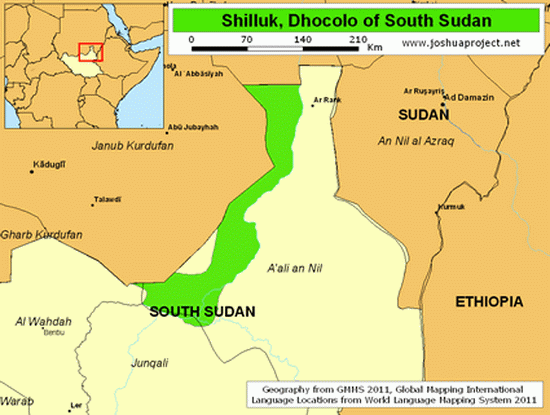
The history of the Shilluk kingdom begins with a blend of rich oral tradition and deep spiritual mythology. Located along the banks of the White Nile in present-day South Sudan and southern Sudan, this centralized state was established by a Nilotic people known as the Shilluk. According to local legends and historical accounts, the kingdom was founded around the year 1490 by a legendary hero named Nyikang.
Nyikang was a figure of immense mythical proportions. He was believed to be half-crocodile and possessed supernatural powers over the rain. Tradition states that he was the son of a king named Okwa, who ruled a land far to the south. Following Okwa's death, a bitter succession feud erupted between Nyikang and his half-brother Duwadh. Refusing to swear allegiance to his brother, Nyikang fled with his followers, migrating northeast until he settled near the confluence of the Sobat River and the White Nile. It was here that he laid the foundations for a powerful new nation, before eventually vanishing in a whirlwind in the middle of a battle, cementing his status as an eternal spirit.
The Sacred Monarchy and the Reth
The political and spiritual heart of the Shilluk kingdom was its monarch, known as the Reth. Early British anthropologists, including Charles Seligman, famously described the Shilluk form of government as a “sacred kingship”. The Reth was not merely a secular political leader; he was the living incarnation of the nation's founder, Nyikang, and was intimately connected to the supreme creator-god, Juok.
Because of this profound spiritual connection, the health and vitality of the Reth were believed to be directly intertwined with the health and prosperity of the entire nation. The king served as the sacred protector of the land, the crops, the cattle, and the people. To harm the Reth was to harm the spirit of the nation itself, which is why the Shilluk people fiercely defended their leaders and resisted outside influence for centuries. The selection and installation of a new Reth involved complex rituals, including a mock battle between representatives of the northern and southern halves of the kingdom, converging at the royal capital of Fashoda.
Geography and Daily Life
The kingdom thrived on a flat, grassy strip of land stretching from Lake No up to about 12 degrees north latitude along the White Nile and the Sobat River. This geography perfectly supported the lifestyle of the Shilluk tribe, who practiced a mix of semi-nomadic cattle breeding and sedentary agriculture. Because the land along the White Nile was incredibly fertile, they became relatively prosperous farmers, cultivating a variety of sorghum known as durra, alongside maize, beans, and sesame.
The Shilluk were also adroit fishermen and aggressive hunters. They utilized the rich resources of the Nile by catching fish with specialized nets and spears, and they frequently organized hunting parties to pursue hippopotamuses, antelopes, and buffalo. The society was egalitarian in many respects, yet structured around distinct hamlets and lineages. The smallest social unit was the family homestead, known as a gol, while groups of homesteads formed larger hamlets and federations designed for mutual defense.
A Highly Structured Society
Despite their egalitarian daily practices, the Shilluk recognized four broad, hierarchical social classes.
The highest tier was the Kwareth, the royal clan consisting of the direct descendants of Nyikang. Members of this rural aristocracy held prestigious titles and provided candidates for the throne.
Below them were the Ororo, a branch of the royal line that had been stripped of its succession rights following a historic military massacre, but who still performed special ritual functions for the royalty.
The vast majority of the population belonged to the Chollo class, which encompassed the commoners and most of the standard clans.
Finally, the Bang Reth consisted of the people owned directly by the king, including royal wives, widows of past kings, and descendants of captured slaves or individuals seeking royal protection.
The Golden Age and Territorial Expansion
The Shilluk kingdom reached its absolute zenith during the late 18th and early 19th centuries. This golden age coincided with the political decline of their northern neighbors, the Funj Sultanate of Sennar. Seizing the opportunity, the Shilluk expanded their northern borders and established a strict monopoly on river trade.
Using dugout canoes, Shilluk warriors became notoriously successful raiders, dominating the White Nile and amassing great wealth. They expanded their territory all the way up to the confluence of the Blue and White Niles, where the modern city of Khartoum now stands. During this era, King Tugo officially established the town of Fashoda as the permanent, sacred residence of the Shilluk kings.
Decline and the Modern Era
The prosperity of the kingdom was violently disrupted in the 19th century. In 1820, the Viceroy of Egypt began a brutal southern campaign to conquer the Sudan, bringing Turkish-Egyptian forces right to the borders of the kingdom. By 1826, devastating slave raids by northerners began to ravage the territory.
Facing relentless military assaults and incursions from both Ottoman forces and neighboring Dinka and Nuer groups, the centralized kingdom was functionally destroyed as an independent political entity in the early 1860s.
However, the resilient spirit of Nyikang never faded. Today, the lands of the historic kingdom remain a vital part of South Sudan. While the Reth is no longer an independent, sovereign political ruler, he remains a deeply revered traditional chieftain within the modern governmental framework. Since 1993, Reth Kwongo Dak Padiet has held the sacred throne, ensuring that the legacy, rituals, and profound cultural identity of his ancestors continue to survive in the modern world.