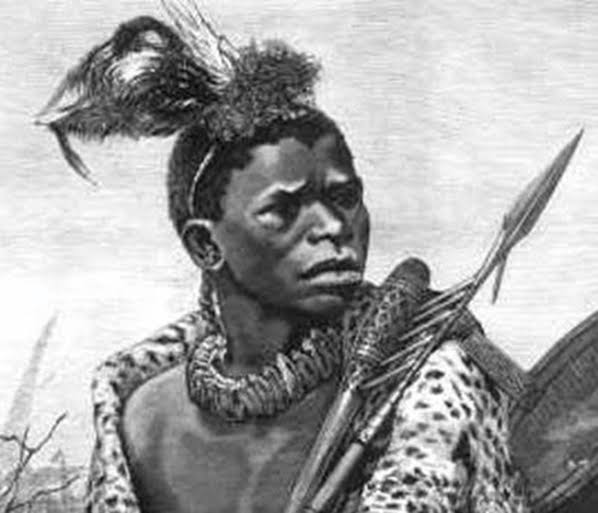
When European historians wrote the early colonial accounts of Central Africa, they frequently painted a picture of a continent waiting to be conquered. What they deliberately obscured was the reality that Portuguese forces were often completely outmatched by indigenous military structures. In the late 16th and early 17th centuries, the Portuguese colonial project in Angola was failing. To survive, they had to rely on one of the most highly disciplined, elite, and terrifying military societies the continent had ever seen: the Imbangala of Angola.
Also known as the Mbangala, this warrior group emerged from the central highlands of Angola and completely altered the balance of power in the region. To understand the Imbangala, we must strip away the sensationalized, hypocritical narratives penned by early European sailors and look at the undeniable military genius and political strategy that allowed this group to carve out an empire.
The Mysterious Rise of a Military Vanguard
The exact origins of the Imbangala remain a subject of historical debate. While some oral traditions suggest they broke away from the Lunda Empire in the present-day Democratic Republic of Congo, others trace their roots to the Bié Plateau in southern Angola. Regardless of where their first steps were taken, what is certain is that by the time they appeared on the geopolitical stage, they had shed traditional ethnic structures to create something entirely new: a society built exclusively on merit, initiation, and warfare.
Unlike traditional African societies that were organized around kinship and bloodlines, the Imbangala operated purely as a militarized vanguard. You were not born an Imbangala; you became one.
This strict meritocracy was forged in the kilombo, heavily fortified, temporary towns surrounded by formidable wooden palisades. Life inside the kilombo was intensely regimented. To prevent bloodlines from superseding loyalty to the military brotherhood, traditional family structures were abandoned. Children born to the group were often not recognized as Imbangala until they had passed through grueling initiation rites. Instead, the society replenished its ranks by capturing adolescent boys from rival groups and putting them through a Spartan-like training program, molding them into elite, fearless fighters.
The Kilombo and the Ngunza: A Strategic Masterclass
The military organization of the Imbangala was breathtaking in its precision. The fighting men, known as ngunza, were not a disorganized horde, but a highly structured army utilizing advanced tactical formations.
Their military prowess was defined by several key components:
- The Twelve Squadrons: Each kilombo featured exactly twelve gates, corresponding to twelve highly disciplined squadrons, each commanded by a captain known as a musungo.
- The Horn Formation: Long before the Zulu famously utilized the bull horn formation, the Imbangala were dominating open battlefields with a three-pronged attack. They used a right horn (mutanda), a left horn (muya), and a central vanguard (muta ita) to encircle and crush their enemies.
- The Yijila Code: Warriors lived by a strict martial code (yijila) that demanded absolute courage. Cowardice was punishable by death.
- Psychological Warfare: Warriors coated themselves in a special salve known as maji a samba, which they believed granted them invulnerability in battle, provided they strictly adhered to the yijila.
European accounts from the 1600s, such as those by the English sailor Andrew Battell, heavily sensationalized the Imbangala, focusing obsessively on claims of cannibalism and human sacrifice. While ritualistic warfare and psychological intimidation were certainly employed to strike terror into the hearts of their enemies, the European obsession with savagery was a convenient smokescreen designed to hide their own sinister motives.
The European Hypocrisy and the Fall of Ndongo
By the early 1600s, the Portuguese were locked in a stalemate, suffering humiliating defeats at the hands of the Kingdom of Ndongo. Unable to conquer the indigenous populations themselves, the Portuguese colonial administration swallowed their supposed disgust for Imbangala customs and hired them as mercenaries.
Armed with superior organization, the Imbangala partnered with the Portuguese to lay siege to the Ndongo capital of Kabasa in 1618. However, this alliance was purely transactional. The Imbangala used the Portuguese just as much as the Portuguese used them. By trading war captives to the Europeans, the Imbangala acquired vast wealth and advanced weaponry, turning their military society into an absolute powerhouse. The transatlantic slave trade was fueled largely by these proxy wars, with the Portuguese eagerly purchasing the captives the Imbangala provided, showcasing the profound hypocrisy of a European power that decried African customs while profiting immensely from their military success.
From Nomads to Empire Builders
The Imbangala were too powerful and independent to remain mercenaries for long. Realizing their own strength, many factions broke away from Portuguese influence. A visionary leader named Kasanje led a massive group of these elite warriors to the upper Kwango River valley.
In 1620, they transitioned from a nomadic military camp into a settled, formidable state: the Kasanje Kingdom. Unlike hereditary monarchies, Kasanje retained its meritocratic roots. Successors to the throne were chosen from the highest ranks of warriors who had exhibited the greatest bravery and passed all initiation rites. By 1780, this kingdom boasted a population of over 300,000 and commanded a standing army of 150,000 ngunza warriors, serving as one of the most important trading hubs in Central Africa.
The legacy of the Mbangala is not merely one of ancient warfare. It is a story of African adaptability, strategic brilliance, and survival. Their bloodlines and fighting spirit did not just shape Angola; they crossed the Atlantic. One of the most famous descendants of the Imbangala warriors was Zumbi dos Palmares, the legendary Black hero who led the Quilombo dos Palmares in Brazil, fiercely resisting Portuguese enslavement in the Americas.
The history of the Imbangala reminds us that the African continent was never a passive victim in the global theater. It was a land of brilliant tacticians, fierce independence, and unyielding power.