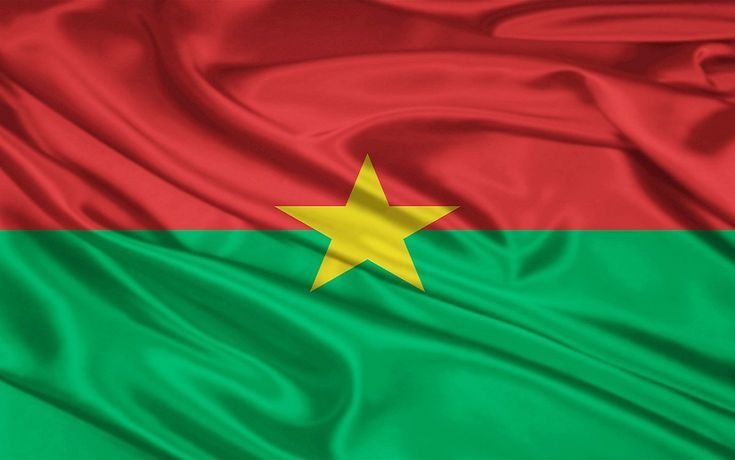
Before the French ever drew their arbitrary lines across West Africa, the land we now call Burkina Faso was home to advanced, highly structured African civilizations.
The largest ethnic group, the Mossi people, arrived in the region between the 8th and 11th centuries. By the Middle Ages, they had established powerful, separate kingdoms, including Ouagadougou, Tenkodogo, and Yatenga. These were not disorganized tribes; they were formidable military and economic states. The Mossi cavalry was legendary, conducting deep raids into enemy territory and famously defeating the formidable forces of the Songhai Empire at the Battle of Kobi in 1483.
For over 800 years, the Mossi maintained their religious beliefs, societal structures, and territorial sovereignty against countless external threats. We were already whole, functioning, and prospering long before the European civilizing mission arrived to supposedly save us.
The French Invasion and the Humiliation of Colonialism
During the ruthless European Scramble for Africa in the 1890s, French military forces invaded the region. The African kings did not surrender quietly. The Mogho Naaba Wogbo, leader of the Mossi, fiercely resisted French overtures to turn his land into a labor reserve. However, the French seized Ouagadougou by military force in 1896, and by 1898, the territory was subjugated as a French protectorate.
The French colonial era was an epoch of staggering indignity and exploitation. The region, eventually named the colony of Upper Volta by the French (after the Black, White, and Red Volta rivers), was treated as a bottomless reservoir of forced labor. Thousands of Burkinabè were conscripted into the French military to fight in Europe's World War I, and thousands more were forced into brutal labor on cotton fields to feed the French textile industry.
The indigenous population was subjected to deeply humiliating, state-sanctioned racism. To understand the sheer arrogance of the colonial masters, look at their local laws: African children were strictly forbidden from riding bicycles or picking fruit from trees; these were deemed privileges reserved exclusively for the children of white colonists. If an African child broke these rules, their parents could be thrown in jail.
But resistance was constant. From early anti-tax marches in Ouagadougou in 1908 to the massive, armed Volta-Bani War (1915–1916), the people fought back so fiercely that France had to deploy the largest expeditionary force in its colonial history just to suppress the uprising.
A False Dawn: The 1960 Independence
After World War II, the winds of decolonization swept across Africa. On August 5, 1960, the Republic of Upper Volta gained its full independence from France. But independence on paper did not mean liberation in practice.
The country’s first president, Maurice Yaméogo, simply replaced the white colonial masters with a corrupt black elite. Yaméogo established a one-party dictatorship, banned all political opposition, and governed with a shocking disregard for the suffering of his people.
While Upper Volta was one of the poorest nations on earth, Yaméogo lived like a French aristocrat. He spent more than half the year vacationing in luxury villas and thermal spas in Europe, while his wife draped herself in expensive fur coats. By 1965, his financial mismanagement had ballooned the national deficit. His solution? He slashed the salaries of the country's civil servants by 20 percent while simultaneously cutting family allowances and subsidies for schools.
The people had had enough. On January 3, 1966, over 100,000 citizens, students, and trade unionists flooded the streets of Ouagadougou. The military, refusing to fire on the protesters, intervened and forced Yaméogo to resign, leading to a long era of military rule.
The Upright Man: Thomas Sankara and the True Revolution
The true soul of Burkina Faso was not forged in 1960, but in 1983. Following decades of reactionary coups, a 33-year-old visionary army captain named Thomas Sankara seized power on August 4, 1983.
Sankara realized that the post-colonial state was still mentally and economically enslaved to France. On the first anniversary of his revolution in 1984, he wiped the colonial name Upper Volta off the map forever. He renamed the country Burkina Faso, combining the Mooré word for upright and the Dyula word for fatherland to create the Land of Incorruptible People or Land of the Upright People.
Sankara did not just change a name; he launched one of the most radical, successful socio-economic programs ever seen in African history.
- Self-Reliance: He fiercely rejected foreign aid and the predatory loans of the IMF and World Bank, famously declaring that he who feeds you, controls you.
- Women's Liberation: He championed women's rights, appointing women to high government positions and completely outlawing female genital mutilation, forced marriages, and polygamy.
- Health & Environment: His government vaccinated 2.5 million children against meningitis, yellow fever, and measles within weeks. Long before climate change was a global buzzword, he spearheaded the planting of 10 million trees to halt the desertification of the Sahel.
- Absolute Integrity: Sankara sold off the government's fleet of luxury Mercedes cars, reduced his own salary to $450 a month, and rode a bicycle to work. He nationalized the land, redistributed it to the peasants, and within three years, the historically starving country became entirely food self-sufficient.
The Price of Defiance
Sankara’s unapologetic dismantling of neo-colonialism terrified the West and the corrupt traditional elites. On October 15, 1987, Thomas Sankara was brutally assassinated in a coup orchestrated by his closest friend, Blaise Compaoré. Evidence strongly suggests that the French foreign ministry backed the assassination to protect its imperial interests.
Compaoré took power, immediately reversed Sankara's revolutionary policies, returned the country to the IMF's suffocating grip, and ruled as a dictator for 27 years. But the seeds of integrity Sankara planted could not be destroyed. In October 2014, the Burkinabè people rose again, storming the parliament and forcing Compaoré to flee the country.
Today, Burkina Faso continues to fight a complex battle against insurgencies and neo-colonial interference. But the blood of the Mossi cavalry and the spirit of Thomas Sankara still run deep in the soil. They are the Upright People, and their history is a masterclass in African resilience, pride, and the eternal fight for true liberation.