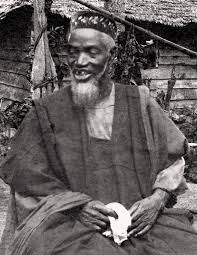
Imagine an empire that spans the globe, backed by the most sophisticated military academies, modern weaponry, and boundless wealth, completely neutralized by a single man hiding in a thick West African swamp. It sounds like the plot of an epic cinematic thriller, but this is the real history of northern Sierra Leone. In 1898, the British Empire met its match in a brilliant, fiercely independent ruler who weaponized the terrain and outmaneuvered decorated generals. It proved that the human spirit cannot be taxed or colonized without a ferocious fight.
His name was Bai Bureh.
To the British administrators in Freetown, he was an infuriatingly stubborn rebel who destabilized their carefully laid colonial plans. But to his people, and to the history of African resistance, he remains one of the greatest military strategists the continent has ever produced. He was a leader who blended deep spiritual traditionalism with a razor-sharp understanding of asymmetric warfare. The story of Bai Bureh is not just a tale of guns and spears; it is an exploration of dignity, ancestral sovereignty, and the absolute refusal to pay a foreign power for the right to live in your own home.
The Making of Kebalai One Who Never Tires of War
Long before he was a king, he was a student of validation through valor. Born in 1840 in the village of Kasseh, near Port Loko in Northern Sierra Leone, he entered a world defined by rich cultural intersections and shifting political tides. His father was an influential Loko war-chief and Muslim cleric, while his mother was a Temne trader from the region of Makeni. This dual lineage granted him a unique fluidity, anchoring him within the deep wells of multiple indigenous traditions.
When he was just a young man, his father sent him to the village of Gbendembu, a renowned training ground for young fighters. It was here, amidst rigorous physical trials and tactical lessons, that his true nature emerged. He didn't just learn to fight; he mastered the art of endurance. His exceptional focus and unstoppable stamina earned him the nickname Kebalai, a phrase that translates beautifully as "one who doesn’t tire of war" or "one whose basket is never full", meaning his basket for collecting the spoils of defeated adversaries was never satisfied.
When Kebalai returned to his home region, his reputation preceded him. He quickly became the premier warrior of Port Loko and the wider northern territory, successfully fighting to establish traditional and correct Islamic practices while defending local communities. His crowning glory during this early era came in 1882, when the Susu people from French Guinea invaded the town of Kambia. Kebalai organized his fighters, decisively defeated the invaders, pushed them back across the border, and handed the land back to its rightful inhabitants. His popularity exploded. The people recognized that they had found a shield. In 1886, he was formally crowned as the Chief of Northern Sierra Leone, taking on the prestigious royal title of Bai Bureh.
A Monarch of Uncompromising Independence
The British authorities in Freetown quickly discovered that Bai Bureh was not a ruler they could easily manipulate. Unlike some leaders who felt intimidated by European encroachment, Bai Bureh operated from a place of absolute equality. When the British unilaterally negotiated a peace treaty with the Limba people without consulting him, he simply refused to recognize it. On another occasion, demonstrating his complete disregard for arbitrary European borders, he led his warriors on a daring raid directly into French Guinea.
What the British failed to understand was that Bai Bureh did not view himself as a colonial subject. For a long time, he even considered himself a sovereign ally of the colony, even assisting the British administration in 1892 to capture the troublesome town of Tambi when their own regular forces suffered embarrassing setbacks. He assumed that cooperating to keep the peace meant mutual respect.
However, colonial empires do not look for partners; they look for subordinates. When Great Britain officially declared a Protectorate over the Sierra Leonean hinterland in 1896, it did so without the consent of the people living there. They shattered the fragile peace by imposing an alien legal framework designed to strip traditional chiefs of their judicial authority, their revenue, and their autonomy.
The Audacious Injustice of the Hut Tax
The match that set the entire region ablaze was lit by the economic greed of the British Governor, Sir Frederic Cardew. Looking for a way to fund the construction of colonial infrastructure, railways, roads, and administrative offices, Cardew decided that the indigenous people should pay for their own colonization. On January 1, 1898, the infamous hut tax went into effect.
The concept was intentionally exploitative. Every household or hut was taxed based on its size. A home with four or more rooms was charged ten shillings, while smaller huts were charged five shillings. In a society operating largely outside of a European cash economy, this was a devastating blow. If a family could not afford the tax in coin, they were forced to pay in grain, livestock, or through hard, manual labor. It effectively turned free African citizens into indentured laborers on their own ancestral lands.
Bai Bureh was deeply insulted by this decree. He argued passionately that his people should never be forced to pay tribute to foreign rulers merely for the right to exist in the homes they had built with their own hands. He joined twenty-four other traditional chiefs in signing petitions to protest the tax, but Cardew callously dismissed them.
When the colonial tax collectors arrived in Port Loko, the local people met them with complete apathy and resistance. Desperate to force compliance, the British District Commissioner, Captain Wilfred Sharpe, aggressively deposed the local chief and installed a pro-British puppet named Sori Bunki. Sori Bunki began fabricating frantic, exaggerated rumors that Bai Bureh was organizing a massive, violent rebellion across the entire north. Without waiting for concrete proof of hostility, the British administration issued an arrest warrant for Bai Bureh. They drew first blood when an arrest party opened fire on a crowd of locals in the town of Romani, and Bai Bureh’s men fired back. The Hut Tax War of 1898 had officially begun.
The Genius of Asymmetric Guerrilla Warfare
On paper, the conflict looked like absolute madness. The British forces were a highly disciplined, well-equipped machine, led by officers trained in Western military academies. Bai Bureh’s men, by contrast, lacked formal military training and were armed primarily with spears, bows, swords, and obsolete muskets. Yet, what the Bai bureau warriors lacked in modern weaponry, they more than made up for in psychological brilliance and masterly coordination.
Bai Bureh pioneered guerrilla tactics that are still studied in military circles today. He understood that a direct, open-field battle against British Maxim guns would be suicide. Instead, he transformed the dense, swampy Sierra Leonean bush into an invisible fortress. His forces constructed brilliant, camouflaged "war fences" made of heavy logs, tightly bound with wild vines and reinforced by massive boulders. The British troops would march down narrow jungle paths, only to be hit by a sudden, punishing volley of gunfire from an enemy they could not see. Before the smoke could even clear, Bai Bureh's men would melt away seamlessly into the thick undergrowth.
For the first four months of the war, Bai Bureh held the complete strategic initiative. By February 1898, his forces had entirely severed the vital lines of communication and transport between Freetown and Port Loko, effectively placing the colonial forces under a state of siege. He blocked the river routes, controlled the roads, and completely stymied every attempt at his capture.
His ability to evade British capture was so uncanny that it birthed a wave of supernatural lore. Rumors rippled through the hinterland that Bai Bureh possessed magical powers, that he was entirely bulletproof, could become completely invisible at will, or could live underwater for days at a time.
But perhaps the most beautiful aspect of his military genius was his humanity and sense of humor. Even in the savagery of war, Bai Bureh strictly ordered his warriors to spare civilians, women, and missionaries. And when Governor Cardew, desperate and humiliated, put out a public reward of £100 for Bai Bureh’s head, the chief famously retaliated by offering an astonishing £500 reward for the capture of the Governor.
The Scorched Earth and the Bittersweet Surrender
Unable to defeat the legendary chief in direct combat, the British military resorted to a brutal, desperate strategy: total economic destruction. They initiated a scorched-earth policy, moving through northern villages, burning homes, destroying ancestral pastures, and torching rice barns to intentionally starve the indigenous population into submission.
By November 1898, the devastation of his people’s livelihood became too heavy a burden for the king to bear. On November 11, 1898, after ten months of valiant resistance, Bai Bureh voluntarily walked out of the dense vegetation and surrendered to a patrol of the West African Regiment. As local oral history records, he calmly looked at his captors and stated simply, "De war done-done".
When the British brought him under heavy guard to Freetown, they expected the public to look at him as a defeated criminal. Instead, massive, adoring crowds blocked the streets day and night, desperate just to catch a glimpse of the living legend. He was treated as a celebrity prisoner of war.
The colonial administration desperately wanted to hang him for treason, but British crown law officers intervened with a fascinating legal reality: because the Protectorate was technically considered "foreign land," Bai Bureh owed no formal allegiance to Queen Victoria, and therefore could not legally commit treason. Fearing that keeping him in Sierra Leone would spark an immediate secondary uprising, the British exiled him to the Gold Coast (modern-day Ghana) in 1899, alongside other iconic resisting chiefs like Nyagua and Kpana Lewis.
The Enduring Footprints of a Giant
Unlike many of his contemporaries who tragically died in foreign lands, the story of Bai Bureh has a triumphant third act. In 1905, the British finally brought the aging lion back home to Sierra Leone. In 1906, he was officially reinstated as the Chief of Kasseh, spending his final days looking out over the very lands he had fought so valiantly to protect. He passed away peacefully in 1908 at the age of 68.
Today, the spirit of the man who never tired of war is woven tightly into the fabric of modern Sierra Leone. Walk through the center of Freetown, and you will see a massive, majestic statue erected in his honor. Look at the local currency, and his proud face gazes back at you from the banknotes. Step onto a soccer field in Port Loko, and you will hear the roaring chants of the fans cheering on the Bai Bureh Warriors, a premier professional football club named entirely in his honor.
Bai Bureh’s life is a masterclass in ancestral pride. He reminded the world that true leadership lies in defending the vulnerable, respecting the land, and knowing that no empire, however vast, can ever truly conquer a soul that refuses to yield its freedom.