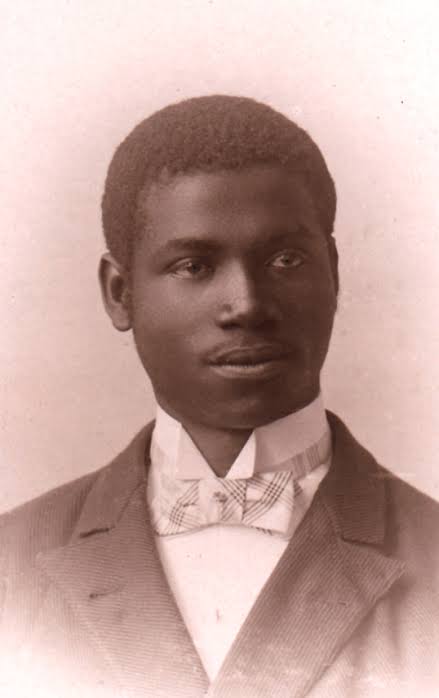
In the complex tapestry of African colonial resistance, few figures stand as tall and resolute as the legendary King Rudolf Duala Manga Bell. Born around the year 1873 in the Douala region of what was then the German colony of Kamerun, he was destined for leadership. He was the grandson of King Ndumbe Lobe Bell, the very leader who had signed the 1884 protection treaty that officially granted the German Empire colonial control over Cameroon. Raised to appreciate both African and European ways of life, the young prince was groomed to navigate two vastly different worlds.
His education was extensive and culturally diverse. During the 1890s, he traveled to Europe, where he attended the Gymnasium of Ulm in Germany. German authorities funded his education in exchange for his family's continued support of colonization. He lived as a foster son with a German family in the town of Aalen, where he converted to Christianity and was baptized. Returning to Kamerun, he was regarded as one of the most highly educated men in the colony by Western standards. He married Emily Engome Dayas, the daughter of a European trader and a Duala woman, further cementing his cosmopolitan identity.
On September 2, 1908, following the passing of his father, Manga Ndumbe Bell, he succeeded as the king of the Duala Bell lineage. He inherited considerable wealth, including an 8,000-mark pension, valuable cocoa and timber interests in the Mungo River valley, and a lucrative position as the head of an appeals court. However, his father also left him a substantial debt of 7,000 marks, which forced the new king to rent out buildings to European interests and move his offices inland. Initially, Rudolf Manga Bell styled himself after European rulers and maintained a positive, collaborative relationship with the German colonial authorities.
The Great Douala Land Theft
The peaceful collaboration between the Duala leadership and the German Empire began to unravel drastically in 1910. Governor Theodor Seitz and the German Reichstag approved a highly controversial plan to forcibly relocate the indigenous Duala people inland, away from the Wouri River. The colonizers intended to create segregated, European-only zones, accusing the native population of spreading malaria.
This massive expropriation threatened all the Duala lineages except Bonaberi, prompting the notoriously divided clans to form a united front for the first time in their history. Given his exceptional education, financial independence, and supreme position as the head of the dominant Bell clan, Douala Manga Bell became the natural leader of this pan-Duala resistance. He fiercely argued that the German plan was a direct violation of the original 1884 treaty, which had explicitly promised that the cultivated lands and towns would remain the property of the present owners and their successors.
Fighting the Empire with the Pen
Because he had studied in German schools and universities, Manga Bell initially attempted to use the legal tools of his oppressors to fight the injustice. In November 1911 and again in March 1912, he and other Duala chiefs sent formal letters and petitions of protest directly to the German Reichstag. The German administration ignored these pleas and pushed forward with its relocation plan on January 15, 1913.
Determined to protect his people, the king enlisted the help of Hellmut von Gerlach, a German journalist who successfully managed to secure a temporary suspension order from the Reichstag Budget Commission. Unfortunately, this victory was short-lived, as Colonial Secretary Wilhelm Solf convinced politicians and businessmen to rally behind the expropriation. In retaliation for his relentless advocacy, the German authorities stripped Manga Bell of his civil service position and his annual 3,000 mark pension in August 1913, attempting to prop up his brother, Henri Lobe Bell, in his place. Undeterred, the king secretly dispatched an envoy named Adolf Ngoso Din to Germany to hire a lawyer and pursue the matter in European courts.
The Call for Pan-African Unity
When it became clear that legal arguments and peaceful petitions were failing, Rudolf Duala Manga Bell was forced to search for other avenues of resistance. He began reaching out to other European governments and dispatched representatives to the leaders of various other Cameroonian ethnic groups, suggesting the overthrow of the German regime. His secret envoys traveled extensively, reaching leaders in Bali, Balong, Dschang, Foumban, Ngaoundéré, Yabassi, and Yaoundé.
In the Bulu lands, resistance leader Martin-Paul Samba agreed to contact the French for military support. The king also found refuge and support from his relative and best friend, King Ekandjoum Joseph of the Moungo people. However, this vast network of resistance was tragically compromised. In Foumban, Sultan Ibrahim Njoya of the Bamum people rejected the rebellion plan. On April 27, 1914, Njoya reported the king's actions to the Basel Mission, and the missionaries subsequently alerted the German colonial authorities.
A Rushed Trial and a Martyr's Death
With the outbreak of World War I imminent, the panicked German administration sought to crush all internal rebellion before facing Allied invasions. At the urging of Colonial Secretary Solf, the Germans arrested King Rudolf Duala Manga Bell and his envoy Adolf Ngoso Din, officially charging them with high treason.
The trial was held in a rushed summary fashion on August 7, 1914, just as the global war was beginning. The colonial regime claimed the king had admitted to contacting foreign countries for military aid, though later accounts suggest he maintained his innocence throughout the ordeal. Despite desperate pleas for his life from the Catholic Pallottine Mission, the Basel Mission, and the Baptist Mission, Governor Karl Ebermaier firmly rejected all requests for clemency.
On the night before his execution, the king was granted permission to have his chains removed to say a final goodbye to his family. Although he could have fled, he courageously chose to stay and face death. On August 8, 1914, Rudolf Duala Manga Bell was hanged alongside Adolf Ngoso Din and Martin Paul Samba. His defiant last words echoed through history as he declared that they were hanging innocent blood and beseeched God that Germans might never again set foot on his soil.
The Eternal Echoes of Manga Bell
The execution of Manga Bell immediately transformed him into a profound martyr in Cameroonian eyes. His ultimate sacrifice represented the climax of extreme colonial oppression and cemented the Duala as a heroic, resisting people. Just seven weeks after his hanging, the Allied forces captured Douala, effectively ending German rule in the territory.
His legacy laid the crucial groundwork for early Cameroonian nationalism. Following the war, his son Alexander Ndoumbe Duala Manga Bell inherited the royal position and became Cameroon's first elected representative to the French National Assembly. The memory of the martyred king remained fiercely alive in the hearts of his people, celebrated in the popular 1929 hymn "Tet'Ekombo". In 1935, his body was honorably exhumed and reburied behind his house in Douala, where an obelisk was erected on the 20th anniversary of his execution.
Today, his heroic story continues to be a powerful symbol of resistance against tyranny. His life has inspired numerous cultural works, including Azanwi Nchami's historical novel Footprints of Destiny. In 2019, a highly acclaimed short film titled "The German King" depicted the end of his life, winning awards at the Fisheye Film Festival and the Rhode Island International Film Festival. The theater world also honored him through the play "Rudolphe Ngum A Jémea," adapted by Max Mbakop from the writings of David Mbamga Eyombwan.
Global recognition of his sacrifice continues to grow. In 2018, the Berlin-Mitte district in Germany announced the renaming of Nachtigalplatz to honor Emily and Rudolf Duala Manga Bell. Furthermore, from 2021 to 2022, the Museum am Rothenbaum in Hamburg hosted a comprehensive multimedia exhibition dedicated to his life, challenging modern society to confront its colonial heritage. Through these enduring tributes, the unbreakable spirit of the great Duala king lives on forever.