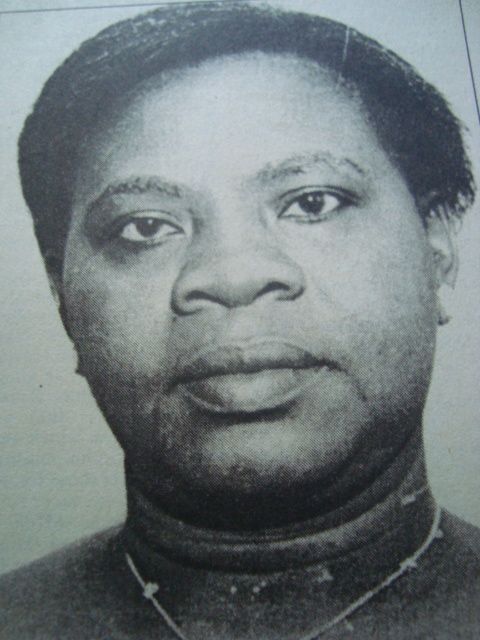
A terrifying power lives in the voice of a woman who has been told all her life to remain silent. When European colonizers wrote the history of African independence, they almost exclusively centered the narrative around suited, Western-educated men. They wanted the world to believe that freedom was negotiated in polite boardrooms. But the truth, the unfiltered, unapologetic African truth, is that nations are built in the streets, in the courtyards, and by the relentless, often uncredited labor of women.
When we talk about the independence of Tanganyika (now Tanzania), the world immediately praises Mwalimu Julius Nyerere as the founding father. While his brilliance is undeniable, he would have been a leader without a movement if not for the force of nature that was Bibi Titi Mohammed. She was a woman with only a few years of primary education, yet she built the very machinery of Tanzanian independence. She mobilized thousands, stared down British colonial authorities, and fundamentally redefined the role of the African woman in politics.
This is the story of Tanzania’s true heroine, her revolutionary triumph, and the devastating betrayal that almost erased her from history.
The Girl Who Was Never Meant to Speak
Born in June 1926 in Dar es Salaam, Bibi Titi Mohammed was raised in a Muslim family within the Matumbi tribe. Like countless African girls of her era, she was not groomed for leadership or public life; she was groomed for domestic compliance. Her father, a businessman, initially refused to send her to school, terrified that Western education would corrupt her Islamic faith. It was only after his sudden death that her mother, recognizing the vital importance of literacy, insisted she receive a minimal primary education.
The societal expectations placed upon her were suffocating. At puberty, she was placed in purdah (social seclusion). By the tender age of fourteen, she was married off to an older man. The marriage was short-lived, ending in divorce shortly after the birth of her only child, a daughter named Halima. Determined to break the cycle of early marriage and denial of education, Bibi Titi swore that her daughter would finish school before ever considering marriage, a radical stance for the time.
Bibi Titi’s entry into public life did not come from a university debate hall or a political manifesto. It came from her voice. She became the lead singer in an ngoma (a traditional dance and music society). These ngoma groups were the lifeblood of urban Swahili women’s culture, parallel worlds where women gathered to celebrate the birth of the Prophet Muhammad, organize financially, and support one another. Within these courtyards, women were the undisputed leaders, managing funds, coordinating massive events, and building networks that stretched across ethnic lines.
Bibi Titi did not know it yet, but she was training to command an army.
The Awakening: Turning Dance into Defiance
By the early 1950s, the anti-colonial fever sweeping across Africa had reached Tanganyika. In 1954, Julius Nyerere, a young Catholic schoolteacher with a master’s degree from Edinburgh University, formed the Tanganyika African National Union (TANU) to fight for self-rule. But Nyerere faced a massive problem: men were terrified to join. They feared losing their colonial public-sector jobs and faced severe retaliation. TANU needed numbers, and it needed them fast.
In 1954, introduced to Nyerere by a family cab driver, Bibi Titi saw an opportunity. She recognized that the ngoma groups she sang in were actually perfect, ready-made political networks. When Nyerere asked her to help organize women in 1955, she went straight to work.
Her strategy was pure grassroots genius. She bypassed the terrified men and went directly to the female leaders of the ngoma societies. “I talked to Mama Swaleh Kubunju, leader of the Tongakusema... I went to ‘British Empire,’ and to ‘Ratu Sudan’, and to the ‘Sahina’ group; I went to all these groups,” she later recalled.
Because colonial officials, blinded by their own sexism, viewed these women’s groups as harmless social clubs, they completely ignored them. Under the very noses of the British, Bibi Titi transformed these dance societies into the financial and mobilization engine of TANU. The women organized rallies, smuggled information, and even pawned their own jewelry to fund Nyerere’s international trips.
Within just three months of being named the chairperson of the Umoja wa Wanawake wa Tanzania (UWT), the women’s wing of TANU, Bibi Titi had successfully enrolled over 5,000 women into the party. She took to the stage at rallies, a Muslim woman who had barely finished primary school, speaking with such electrifying charisma that she became just as famous among the masses as Nyerere himself.
It was Bibi Titi and the women of TANU who taught Nyerere how to speak Swahili effectively and how to truly connect with the common people. When Tanganyika finally won its independence on December 9, 1961, without firing a single shot, it was a victory built squarely on the backs of the women Bibi Titi had mobilized.
The Pinnacle of Power and the Price of Integrity
Following independence, Bibi Titi stood at the absolute center of the new nation. She shared the stage with Nyerere as freedom was declared, served as the junior minister for women and social affairs, and was instrumental in drafting the 1964 national constitution. Her advocacy guaranteed that gender equality and the rights of women were explicitly recognized in the founding documents of TANU and the new republic. Furthermore, she co-founded the All African Women's Conference, extending her Pan-African vision beyond Tanzania’s borders.
But African politics in the post-colonial era was a treacherous space, and revolutionaries are rarely rewarded for maintaining their integrity.
In 1965, Bibi Titi lost her parliamentary seat, signaling the beginning of a rapid, brutal fall from grace. The real fracture occurred in 1967 over the Arusha Declaration, President Nyerere’s sweeping blueprint for African socialism (Ujamaa). The declaration included a strict leadership code that banned central committee members from renting out property.
For the highly educated, male political elite, this was a minor inconvenience. But for unschooled women like Bibi Titi, whose only means of independent financial security was renting out rooms in their homes, it was economic ruin. True to her nature, Bibi Titi refused to be silent. She vocally protested the policy, arguing that it disproportionately devastated uneducated women, and resigned from the party’s central committee in protest.
The House of Prison: Betrayal and Exile
In newly independent nations, dissenting against the Father of the Nation was dangerous. In October 1969, the state she had helped birth turned against her. Bibi Titi Mohammed, along with former Labour Minister Michael Kamaliza and four military officers, was arrested and charged with treason for allegedly plotting to overthrow Nyerere’s government.
The woman who had sung Tanzania into existence was subjected to a grueling 127-day trial, the first treason trial in the nation's history. The allegations shocked the country. Many believed the charges were entirely fabricated, a calculated political maneuver by Nyerere’s administration to eliminate a highly influential rival who dared to question his socialist vision.
Bibi Titi maintained her absolute innocence throughout the ordeal. The psychological torture was immense. Her political comrades abandoned her, her friends looked the other way, and her husband, overcome by the social shame of her arrest, divorced her while she sat in a cell. She was convicted and sentenced to life imprisonment.
After enduring two years of harsh confinement, Nyerere commuted her sentence, and she was released in 1971. (Some sources cite her release in 1972). But the damage was catastrophic. Stripped of her dignity, her marriage, and her political standing, Bibi Titi vanished into obscurity. She relocated to Johannesburg, South Africa, living out her remaining years in quiet isolation, far from the nation she had sacrificed everything to build.
The Resurrection of a Heroine
For decades, the Tanzanian government remained dead silent about the contributions of Bibi Titi Mohammed. Her erasure was a glaring example of how patriarchal history attempts to delete the foundational labor of women.
However, the truth is too loud to be buried forever. Thanks to the relentless work of feminist historians, particularly Susan Geiger, whose interviews in the 1980s documented the indispensable role of the ngoma women, Bibi Titi’s legacy was dragged back into the light. In 1991, on the 30th anniversary of independence, the ruling party finally officially recognized her as a Heroine of the Uhuru (Freedom) Struggle.
Bibi Titi passed away on November 5, 2000, at Net care Hospital in Johannesburg, South Africa, at the age of 74.
Today, one of the busiest major arteries in Dar es Salaam proudly bears the name Bibi Titi Mohammed Road. She has been featured in textbooks, animated history projects by Deutsche Welle, and documentaries. But her true monument is not made of asphalt or ink. Her monument is the unshakeable truth that African liberation was not just won by men in suits negotiating in Europe; it was won by the fearless, singing, organizing women of the continent.
Bibi Titi Mohammed lost her freedom, her marriage, and, temporarily, her place in history. But she never lost her voice. And today, that voice rings louder than ever.