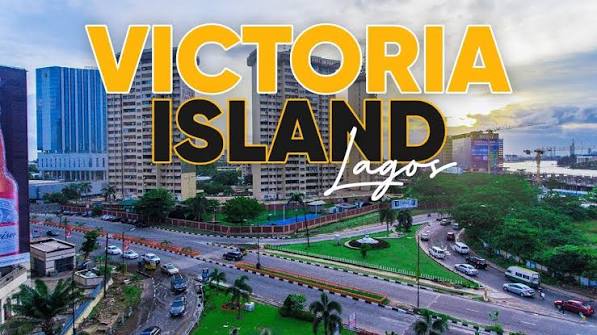
When you drive past the glittering skyscrapers, luxury hotels, and high-end restaurants of Victoria Island, Lagos, Nigeria, it is easy to be blinded by the wealth. Today, it stands as the financial beating heart of the nation, a peninsula overflowing with multinational corporations, diplomatic missions, and the Nigerian elite.
But beneath the concrete and the opulence lies a history of naval bombardment, forced displacement, and colonial arrogance. The name Victoria was not gifted to this land because of its beauty or glamour. It was branded onto the soil as a symbol of absolute conquest.
To understand why the most expensive real estate in Victoria Island, Nigeria, bears the name of a foreign monarch, we must strip away the colonial whitewashing and look at the brutal 19th-century subjugation of Lagos.
The 1851 Bombardment: Conquering Lagos by Fire
The story of Victoria Island begins with the violent dismantling of indigenous Lagosian sovereignty. By the mid-19th century, British imperialists were eyeing the lucrative coastal trade routes of West Africa.
In November and December of 1851, the British Navy launched a massive, unprovoked assault on Lagos Island. To force the region into submission, Britain sent four formidable warships: the HMS Bloodhound, HMS Teazer, HMS Water Witch, and HMS Sampson. For five devastating days, these warships rained artillery shells upon Lagos.
The indigenous Lagosians did not surrender quietly; they fought back fiercely, inflicting heavy casualties on the invading British troops. Ultimately, however, the sheer firepower of the British Empire overwhelmed the defenders. The reigning monarch, Oba Kosoko, was violently ousted and forced to flee. In his place, the British installed Oba Akitoye, a ruler they knew would be more submissive to their imperial and economic demands.
A decade later, in 1861, the British finalized their theft. Under the threat of force, King Dosunmu was coerced into signing the Lagos Treaty of Cession, officially transforming Lagos into a British colony. The British were no longer just trading partners; they were masters of the land.
The Name of a Conqueror
Having conquered the territory by force, the British colonial administrators began mapping, dividing, and renaming the land to suit their imperial tastes.
Just across the water from Lagos Island sat a quiet, undeveloped coastal strip of swamps and mangrove forests. The British claimed this land as a residential zone for European expatriates and senior colonial officers, deliberately segregating themselves from the African population. They named this enclave Victoria Island in honor of Queen Victoria, the British monarch who reigned for over 63 years.
We are often taught to view this naming as a polite historical tribute, but it was nothing of the sort. Naming African land after a British Queen was a deliberate display of ownership and dominance. It was a psychological tool to remind the indigenous population exactly who was in charge.
This was the same Queen Victoria whose forces invaded, bombarded, and burned the Great Benin Kingdom to the ground in 1897, looting the priceless Benin Bronzes that currently sit in Western museums. The audacity of colonial entitlement was so absolute that in 1899, a British administrator named George Goldie practically sold the administrative rights of the Nigerian territory to the British Empire for £865,000.
The Erasure of the Oniru Family and the Maroko Tragedy
Before the British decided to transform the area into a European haven, the land was not empty. A large portion of the island was under the rightful jurisdiction of the indigenous Oniru chieftaincy family, populated by their tenants and filled with sacred traditional shrines.
To clear the way for colonial development, the Lagos Executive Development Board initiated a forced buyout in 1948. The board paid £250,000 as compensation for the land acquired from the Oniru family, and an additional £150,000 for the inhabitants displaced and the ancestral shrines destroyed.
The indigenous people were uprooted and pushed into a nearby swampy settlement called Maroko village. Meanwhile, the colonial government began extensive engineering projects on Victoria Island. Originally surrounded by water, the British filled in the eastern swamps to reduce mosquito breeding grounds, inadvertently creating a land bridge to the Lekki Peninsula and ending Victoria's status as a true island.
The tragedy of the displaced people did not end in the colonial era. After Nigeria gained independence, Victoria Island, Lagos, rapidly commercialized. The wealthy elite and multinational corporations moved in, while the descendants of the displaced lived in the adjacent Maroko slum. Deeming the slum an eyesore to the affluent residents of Victoria Island, the military Governor of Lagos State, Raji Rasaki, ordered a brutal forced eviction on July 14, 1990. Armed security forces demolished Maroko, displacing as many as 300,000 residents, many of whom held legal titles to their properties, leaving them homeless and without redress.
The newly cleared land was swiftly rebranded as Victoria Island Annex and sold off to wealthy residential buyers.
A Legacy Set in Concrete
Today, the swamps are gone, replaced by the headquarters of Guaranty Trust Bank, multinational oil companies, and luxury hubs like the Silverbird Galleria. The elite sip cocktails in high-end nightclubs along Adeola Odeku Street, while monumental projects like Eko Atlantic City are being built on reclaimed land right next door.
Yet, the name remains. Every time we navigate the traffic of Victoria Island, we are invoking the name of the empire that shelled Lagos into submission. The true history of Victoria Island is not a story of royal glamour; it is a story of African resilience, the violent displacement of the Oniru people, and a colonial brand that we have yet to wash from our maps.