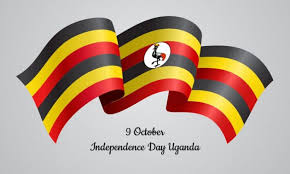
The story of the independence of Uganda is one of the most remarkable and intricate chapters in the decolonization of the African continent. Unlike nations that were forced to wage bloody, protracted guerrilla wars to break free from their colonial masters, Uganda’s march toward self-rule was defined by a complex mosaic of peaceful negotiation, sophisticated constitutional maneuvering, and delicate ethnic balancing. Dubbed the "Pearl of Africa," the nation managed to navigate intense domestic rivalries to achieve sovereign statehood.
However, the peaceful nature of the transition did not mean the process was simple. The legacy of colonial administration, paired with deep-seated traditional monarchical hierarchies, created an incredibly fragile foundation. To understand modern Uganda, one must trace the intricate political maneuvers that culminated in the Uganda independence 1962 milestone, a moment that fundamentally reshaped the geopolitical landscape of East Africa.
The Colonial Context and Early Resistance
British involvement in the region began in the late 19th century. The explorer Henry Stanley arrived in 1875, describing a region divided primarily into two powerful indigenous kingdoms. By 1888, the British government chartered the Imperial British East Africa Company to negotiate trade agreements and manage commercial operations in the area. Seeking to secure the strategically vital trade route to the source of the Nile and suppress growing sectarian conflicts fueled by competing conversions to Christianity, the British government officially annexed the Buganda kingdom and its surrounding territories to form the Uganda Protectorate in 1894.
The mid-20th century brought structural shifts to the British Empire. Weakened significantly by its exhaustive involvement in World War II and facing a massive wave of nationalism sweeping across Africa, the United Kingdom began evaluating exit strategies for its territories. In Uganda, the path forward was unique. Native Ugandans were gradually permitted to serve within the colonial administration, and by 1955, half of the positions on the regional Legislative Council were occupied by Africans.
The Cohen Reforms and the Crisis of the Kabaka
The structural blueprint for statehood was heavily shaped by Sir Andrew Cohen, who served as Governor of Uganda after a tenure as the undersecretary for African affairs in Britain’s Colonial Office. Governor Cohen introduced a series of progressive economic and political initiatives to prepare the protectorate for a stable parliamentary system.
- Economic Restructuring: Cohen established the Ugandan Development Corporation to finance and cultivate new industrial projects. He systematically dismantled price-discriminatory policies that negatively affected African-grown coffee, actively encouraged cooperative farming models, and reversed long-standing colonial regulations that frowned upon indigenous cotton ginning operations.
- Political Africanization: He radically reorganized the Legislative Council, stripping away the undue influence previously held by European settlers and significantly increasing the direct participation of African representatives elected from individual districts.
Despite his progressive intentions, Cohen’s vision of a highly centralized, integrated state collided directly with traditional ethnic politics. The central point of contention was the Kingdom of Buganda—a powerful, wealthy indigenous monarchy occupying the southeastern portion of the territory.
Tensions escalated dramatically when Britain's Secretary of State for the Colonies delivered a speech in London hinting at the creation of a massive East African Federation encompassing Kenya, Uganda, and Tanganyika. Remembering the white minority settler domination that plagued the Central African Federation of Rhodesia and Nyasaland, Ugandan natives experienced deep anxiety.
Sensing a severe threat to his traditional authority over the largest ethnic group in the region, the King of Buganda, Edward Mutesa II (known affectionately as Kabaka Freddie), flatly refused to cooperate with Cohen's centralization plans. He demanded that Buganda be severed from the rest of the protectorate and transferred entirely to the jurisdiction of the British Foreign Office.
In an attempt to crush this growing separatist movement, Governor Cohen took the radical step of deporting Kabaka Freddie into exile in London in 1953. This move backfired severely. The forced departure transformed the Kabaka into an instant anti-colonial martyr. Separatist agitation intensified across Buganda, and because Cohen was completely unable to find or recruit an acceptable alternative leader to replace the monarch, the colonial government was forced to reinstate Kabaka Freddie two years later.
The Rise of Multi-Party Politics and Factional Alliances
The triumphant return of the Kabaka fundamentally altered the landscape of the independence movement. As part of the conditions for his reinstatement, the monarch committed to supporting the broader march toward independence, gaining the authority to appoint his own representatives to the nascent government. His homecoming led to the formation of a powerful political faction of royal loyalists known as the "King’s Friends".
This royalist ascendancy sparked a sharp counter-reaction from other segments of society. Roman Catholics, feeling systematically marginalized by the predominantly Protestant base of the King's Friends, organized themselves under the leadership of Benedicto Kiwanuka to found the Democratic Party (DP). The DP grew rapidly, earning a stellar reputation as a highly structured, cross-ethnic political party. Simultaneously, to counter potential Bugandan hegemony, a savvy political organizer named Milton Obote, hailing from the Langi ethnic group, established the Uganda People’s Congress (UPC). The UPC served as a unified front consolidating the interests of outlying minority groups and northern populations who feared a post-colonial state dominated exclusively by the Buganda kingdom.
This multi-party dynamic created intense friction as the formal Uganda independence date approached. In March 1961, preparatory national elections were organized for eighty-two National Assembly seats. Outraged by a lack of explicit guarantees regarding their autonomy, the King’s Friends instituted a total boycott of the elections within Buganda. Kiwanuka’s Democratic Party braved immense public criticism, participated in the boycotted region, and swept twenty of the twenty-one seats allotted to Buganda. This structural distortion awarded the DP a majority of seats nationwide, and Benedicto Kiwanuka was officially elevated to become the first Prime Minister of Uganda.
The Tactical Coalition: Obote’s Masterstroke
Stunned by their sudden loss of power to the DP, the King's Friends rapidly reorganized their political machinery into a formal party called Kabaka Yekka (KY), which translates to "King Only". The KY modified its stance, conceding to a British commission’s proposal for a federal form of government where Buganda would retain its traditional internal autonomy in exchange for participating in the central government.
Recognizing a golden opportunity to unseat the DP administration, UPC leader Milton Obote executed a masterstroke of political pragmatism. He approached the Kabaka and negotiated a fragile, highly tactical alliance between the socialist-leaning UPC and the royalist KY.
Under the terms of this deal, Obote promised to preserve Buganda’s special autonomous relationship to the rest of Uganda, guaranteed that the Kabaka could personally appoint the region's representatives to the National Assembly, and agreed that the Kabaka would become the ceremonial head of the new independent state.
This formidable coalition successfully crushed the DP in the final pre-independence elections of 1962. The UPC claimed forty-three seats, the KY took twenty-four, and the DP was reduced to twenty-four. This sealed the political arrangements for the historic transition: Milton Obote would assume office as Prime Minister and head of government, while the Kabaka was positioned to become the head of state on independence day.
The Historic Day: October 9, 1962
To formalize these delicate arrangements, the British colonial administration organized the historic Ugandan Constitutional Conference in London in September 1961. The conference successfully hammered out a complex federal constitution that granted federal status and a degree of internal autonomy to the kingdoms of Buganda, Ankole, Bunyoro, and Toro.
The official independence day of Uganda arrived on October 9, 1962. On this historic Uganda Independence Day, British direct rule was permanently terminated. The country initially emerged as a parliamentary democratic monarchy and a Commonwealth realm, retaining Queen Elizabeth II as the nominal head of state. Her constitutional executive duties were largely delegated to the newly appointed Governor-General, Sir Walter Coutts, while Milton Obote took total command of the government as Prime Minister.
Exactly one year later, on October 9, 1963, the nation took a final, decisive step away from the British Crown. Uganda adopted a new constitution that severed its formal links to the British monarchy, transitioning the country into a federal elective monarchy known as the State of Uganda. Parliament elected the Kabaka of Buganda, Sir Edward Mutesa II, to the new office of President of Uganda, creating a highly unusual governance structure where a traditional tribal king served as the head of state of a modern, multi-ethnic federal entity.
The Modern Observance: A Legacy Remembered
Decades later, the significance of this transition remains a central pillar of Ugandan national pride. As communities observed the milestone of Uganda Independence Day 2025, the foundational events of 1962 were re-examined by a new generation. The modern holiday is celebrated as a major state public holiday on October 9 every year.
The primary national celebrations feature an annual military parade that includes a spectacular Trooping the Colour ceremony, traditionally hosted at the historic Kololo Ceremonial Grounds in Kampala. The festivities are attended by the President of Uganda, who takes the national salute while the national anthem, "Oh Uganda, Land of Beauty," is played by massed military bands. The flag is raised, and religious leaders join the podium to offer prayers for national unity—a continuing necessity for a state whose early days were defined by sharp internal fractures.
The Long Shadow of Colonial Splitting
The unique march toward the independence of Uganda was highly significant because it proved to a global audience that self-rule could be negotiated peacefully, standing in sharp contrast to the violent, bloody insurrections seen in neighboring territories like the Mau Mau Uprising in Kenya. It demonstrated that disparate ethnic groups could successfully cooperate to achieve a common national objective.
However, the fragile alliance between Prime Minister Obote and President Mutesa II carried the seeds of its own destruction. Built entirely on political convenience rather than shared ideological values, the partnership rapidly collapsed over control of the national military, the centralization of state assets, and deep-seated regional disputes.
In May 1966, Obote shattered the constitutional framework entirely. He deployed the army under the direct command of his military protégé, General Idi Amin, to launch a brutal assault on the Kabaka’s palace. The Kabaka was forced to flee into permanent exile in London, and Obote subsequently promulgated a new republican constitution that formally abolished all traditional tribal kingdoms. By turning Uganda into a highly centralized, authoritarian one-party state and using the military as a blunt instrument to terrorize and suppress political dissent, Obote set in motion a tragic cycle of military coups and state-sponsored violence that would plunge the nation into some of the darkest chapters of its post-colonial history.
Nevertheless, the complexities of that initial 1962 transition remain an indispensable narrative. It highlights the profound challenges of state-building in post-colonial Africa, where modern democratic institutions must somehow be woven into the fabric of ancient, proud, and independent cultural traditions.