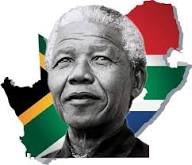
Every year on July 18, the world pauses to celebrate the legacy of Nelson Mandela. But beneath the bronze statues and the global mythos of a "secular saint" lies a far more complex reality. We know him as Madiba, the grandfatherly peacemaker and architect of a multiracial democracy. Yet, history often sanitizes the fire that forged him.
Long before he was a Nobel laureate, Mandela was a militant commander, a master of disguise, and an aristocratic intellectual who loved bespoke suits and ballroom dancing just as much as he loved justice. This is the detailed story of the man who brought the apartheid regime to its knees, not just through peace, but through unyielding, strategic defiance.
The Making of a "Troublemaker"
Nelson Mandela was born on July 18, 1918, in the small village of Mvezo in South Africa's Cape Province. His father named him Rolihlahla, a Xhosa term that colloquially translates to "troublemaker." It was a fitting prophecy.
Mandela was born into African royalty. His patrilineal great-grandfather was Ngubengcuka, the ruler of the Thembu Kingdom. Because Mandela descended from a so-called "Left-Hand House," he was ineligible to inherit the throne, but he was recognized as a hereditary royal councillor. His upbringing was not sheltered by palace walls, however. His father, Gadla Henry Mphakanyiswa, a local chief, was sacked for corruption after standing up to the unreasonable demands of a white magistrate. This introduced young Nelson early to the biting reality of white minority rule.
The name "Nelson" held no deep philosophical meaning; it was casually assigned to him by a teacher, Miss Mdingane, on his first day of school, a reflection of the British bias of the education system. After his father died when Mandela was about nine years old, he became the ward of the Thembu regent, Chief Jongintaba Dalindyebo, and was raised at the "Great Place" palace. Influenced by the tales of anti-imperialist chiefs who visited the royal court, he grew up dreaming of contributing to his people's freedom.
From Ballroom Dancer to Radical Lawyer

Intending to gain the skills needed to become a privy councillor, Mandela attended elite institutions like Clarkebury, Healdtown, and the University of Fort Hare. But his path shifted drastically. In 1940, he was expelled from Fort Hare for participating in a student boycott. Shortly after, to escape an arranged marriage orchestrated by the regent, Mandela fled to Johannesburg with his cousin.
Arriving in the sprawling metropolis in 1941, Mandela found work as a night watchman at a gold mine, his first real exposure to South African capitalism in action. He was soon fired, but he connected with Walter Sisulu, a real estate agent and activist who helped him secure a job as an articled clerk at a law firm.
Impeccably dressed and highly charismatic, Mandela navigated Johannesburg's elite Black middle class. In 1944, he joined the African National Congress (ANC) and helped co-found its Youth League, pushing the older generation toward more radical action. By 1952, alongside his close friend Oliver Tambo, he established Mandela & Tambo, South Africa’s first Black-owned law firm, operating in downtown Johannesburg. The firm became a haven for aggrieved Black citizens dealing with cases of police brutality and the crushing weight of apartheid laws.
The "Black Pimpernel" and the Spear of the Nation

For years, Mandela advocated for peaceful resistance, becoming the National Volunteer-in-Chief of the 1952 Defiance Campaign. But the turning point came on March 21, 1960. Police opened fire on unarmed protesters in Sharpeville, killing 69 people.
In response, the government declared a state of emergency and banned the ANC. Mandela realized that polite, non-violent resistance against a state willing to slaughter its citizens was futile. Influenced by Marxist thought and guerrilla warfare tactics, he secretly co-founded Umkhonto we Sizwe ("Spear of the Nation," abbreviated MK) in 1961.
Operating entirely underground, Mandela became a master of disguise, frequently posing as a chauffeur. The press dubbed him the "Black Pimpernel" as he slipped past police blockades, organizing a sabotage campaign to bomb military installations and power plants at night. He even slipped out of South Africa, traveling across Africa and to London to secure military training and funding from leaders in Ethiopia, Egypt, and Guinea.
"Prepared to Die": The Rivonia Trial
The state finally caught up with him. On August 5, 1962, shortly after returning to South Africa, Mandela was captured at a police roadblock near Howick. (Decades later, a former American diplomat revealed that the CIA had actually tipped off the South African police to his location).
While serving a five-year sentence for leaving the country without permission, police raided an MK hideout at Liliesleaf Farm in Rivonia, uncovering documents that tied Mandela to the sabotage campaigns.
In October 1963, Mandela and several comrades were brought to the Pretoria Supreme Court for the infamous Rivonia Trial, facing the death penalty for conspiracy to overthrow the government. Instead of pleading for mercy, Mandela turned the courtroom into a global political stage. On April 20, 1964, he delivered his historic three-hour "Speech from the Dock":
"I have fought against white domination, and I have fought against Black domination. I have cherished the ideal of a democratic and free society in which all persons live together in harmony and with equal opportunities. It is an ideal that I hope to live for and to achieve. But if needs be, it is an ideal for which I am prepared to die."
On June 12, 1964, the judge spared their lives but condemned Mandela and his co-accused to life imprisonment.
27 Years of Silence and Strength
Mandela spent 18 of his 27 incarcerated years on Robben Island, a maximum-security prison off the coast of Cape Town. The conditions were engineered to break a man's spirit. Kept in a damp concrete cell measuring just 8 by 7 feet, Mandela was forced to sleep on a straw mat. He and his comrades spent their days breaking rocks in a blinding lime quarry, the glare of which permanently damaged his eyesight.
Classified as the lowest grade of prisoner, he was initially allowed only one visitor and one heavily censored letter every six months. The psychological cruelty was immense; he was forbidden from attending the funerals of his mother in 1968 and his eldest son, Thembi, who died in a car crash in 1969. His wife, Winnie Madikizela-Mandela, who was facing her own severe police harassment and solitary confinement, was rarely permitted to see him.
Yet, Mandela weaponized his intellect. He studied Afrikaans to understand, and ultimately disarm, his jailers. He helped transform the prison into the "University of Robben Island," educating a new generation of political detainees.
As the 1980s arrived, South Africa was burning. International pressure mounted, marked by the global "Free Nelson Mandela!" campaign. He was moved to Pollsmoor Prison and later Victor Verster Prison, where the government attempted to negotiate. In 1985, President P.W. Botha offered him freedom if he unconditionally rejected violence. Mandela fiercely spurned the offer, releasing a statement through his daughter Zindzi: "Only free men can negotiate. A prisoner cannot enter into contracts".
The Rainbow Nation
By 1989, the apartheid regime was collapsing under economic sanctions and internal revolt. F.W. de Klerk replaced Botha as president, and recognizing that apartheid was unsustainable, he shocked the world. In February 1990, he legalized the ANC and announced Mandela's unconditional release.
On February 11, 1990, after 27 years, Mandela walked out of Victor Verster Prison hand-in-hand with Winnie, an event broadcast live across the globe.
The transition was not a fairy tale; it was a grueling, bloody negotiation marred by political violence between the ANC, government forces, and Inkatha loyalists. But Mandela's steady hand guided the nation away from the brink of civil war. In 1993, he and de Klerk were jointly awarded the Nobel Peace Prize.
On April 27, 1994, South Africa held its first fully democratic, multiracial election. The ANC won 63% of the vote. Mandela voted for the very first time in his life, and at age 75, he became the nation's first Black president.
A Masterclass in Leadership

His true genius in office lay in reconciliation. Seeking to reassure the white minority that they belonged in the "Rainbow Nation," Mandela formed a Government of National Unity, appointing de Klerk as his Deputy President.
In a masterstroke of political theater, he championed the previously hated national rugby team, the Springboks, during the 1995 Rugby World Cup. Wearing a Springbok jersey, he presented the trophy to the Afrikaner captain, Francois Pienaar, a moment that won the hearts of millions of white South Africans.
He instituted the Truth and Reconciliation Commission, chaired by Desmond Tutu, to investigate apartheid crimes and grant amnesties in exchange for testimony, effectively exposing the horrors of the past without triggering a race war. His administration also worked to dismantle poverty, connecting millions to electricity, water, and healthcare, though he faced criticism for embracing market economics and struggling to stem the rising HIV/AIDS crisis.
Remarkably, true to his promise, Mandela stepped down in 1999 after a single term. He proved that political power was a tool for the people, not a lifelong entitlement.
Legacy
Nelson Mandela died on December 5, 2013, at the age of 95, surrounded by his family in Johannesburg. He was married three times, fathered six children, and left behind a legacy that transcends generations.
He was not a flawless messiah, and he explicitly rejected the label, calling himself an ordinary man placed in extraordinary circumstances. But his pragmatic brilliance, his tactical embrace of both the "spear" and the "olive branch," and his sheer force of will completely dismantled one of the most oppressive regimes of the 20th century.
To quote the man himself: "For to be free is not merely to cast off one’s chains, but to live in a way that respects and enhances the freedom of others".