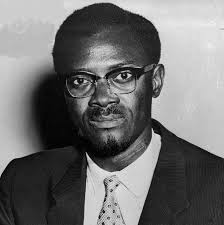
Some men are born to inherit the earth, while others are born to set it on fire. Patrice Émery Lumumba belonged to the latter. If you trace the geopolitical fault lines of the 20th century, you will find a handful of moments where the sheer, unadulterated force of one African man’s voice made global superpowers tremble. Lumumba was the author of one of those moments.
To the Congolese people, he was the bright, burning promise of a new dawn. To the Belgian colonial masters and the American Central Intelligence Agency, he was a terrifying disruption to a deeply profitable, blood-soaked status quo. His tenure as the first democratically elected Prime Minister of the Democratic Republic of the Congo lasted less than three months. Yet, his martyrdom solidified him as an eternal ghost haunting the conscience of the West, and a permanent patron saint of Pan-Africanism.
This is not just a story of politics. It is a story of audacity, betrayal, Cold War paranoia, and a brilliant mind that absolutely refused to compromise on the dignity of the African soul.
The Precocious Clerk from Kasai: The Making of an Évolué
Born Isaïe Tasumbu Tawosa on July 2, 1925, in the rural village of Onalua in the Kasai province, Lumumba entered a world tightly gripped by the brutal hand of Belgian colonial rule. His original surname roughly translates to "heir of the cursed" in the local Tetela language, a haunting foreshadowing of the tragic, sacrificial destiny that awaited him.
The Congo of Lumumba’s youth was a traumatized land. It was still recovering from the genocidal horrors of King Leopold II’s rubber regime, which had wiped out millions. Belgium’s subsequent colonial model was built on intense economic extraction paired with deliberate intellectual suppression. The Belgians offered primary education but heavily restricted higher education, operating under the paternalistic belief that an uneducated African was a compliant African.
But Lumumba possessed an insatiable intellectual hunger that no colonial system could contain. Educated at Catholic and Protestant missionary schools, young Patrice was exceptionally precocious, often boldly pointing out his teachers' errors in front of the entire class. He devoured history books, studied the Enlightenment philosophies of Jean-Jacques Rousseau and Voltaire, and taught himself the mechanics of global politics.
In his early twenties, Lumumba moved to the city of Stanleyville (now Kisangani) and secured a job as a postal clerk and later as a traveling salesman for the Bracongo brewery. These jobs were deeply strategic; they allowed him to travel, talk to ordinary people, and understand the vastness of the Congo. Charismatic, relentlessly energetic, and impeccably dressed, he became a prominent member of the évolués, the small, urban class of educated, Westernized Africans whom the Belgians treated as middle managers of the colony.
He was a man who understood the power of language. Lumumba spoke Tetela, French, Lingala, Swahili, and Tshiluba, a linguistic mastery that allowed him to connect across the deep ethnic divisions that the Belgians had weaponized to keep the Congo fractured. For a time, Lumumba believed the system could be reformed from within. But a brief, politically motivated stint in a Belgian prison in 1956 for alleged embezzlement shattered his illusions. He realized that the colonial master would never freely grant equality; it had to be taken.
The Birth of a Nationalist: The MNC and the Accra Awakening

By 1958, Lumumba had transformed from a reformist into a radical anti-colonial organizer. He helped found the Mouvement National Congolais (MNC), serving as its leader until his tragic death.
The MNC was revolutionary. At the time, Congolese politics were heavily fragmented along tribal and regional lines. Joseph Kasa-Vubu’s ABAKO party was strictly for the Bakongo people, and Moïse Tshombe’s CONAKAT party was fiercely dedicated to the mineral-rich Katanga region. Lumumba’s MNC was the only party that demanded a unified, centralized, and entirely independent Congolese nation that transcended tribal lines.
His vision crystallized entirely in December 1958 when he traveled to Accra, Ghana, to attend the All-African Peoples' Conference hosted by Kwame Nkrumah. Nkrumah, the godfather of African independence, was deeply impressed by Lumumba’s sharp intellect and magnetic oratory. Lumumba returned to the Congo with his Pan-Africanist fire fully ignited, backed by the ideological support of the wider continent.
The Crucible of Independence: Blood, Ballots, and Betrayal
By 1959, the Congo was boiling over. Frustrated by Belgian delays, massive riots erupted in Léopoldville (now Kinshasa), resulting in the deaths of dozens of Congolese protesters. Recognizing that they could no longer hold the colony by force, the Belgian government panicked. They convened a Round Table Conference in Brussels in early 1960 to negotiate a transition of power.
Lumumba, who had been imprisoned again for "inciting" riots in Stanleyville, was released specifically to attend the conference because the other Congolese delegates refused to negotiate without him.
In the country's first truly democratic elections in May 1960, Lumumba’s MNC won a stunning plurality. Because no single party won an absolute majority, a fragile coalition government was formed. The 34-year-old Lumumba became Prime Minister, sharing an uneasy, tense power dynamic with President Joseph Kasa-Vubu.
The Speech That Shook the World
June 30, 1960. Independence Day.
Inside the grand Palais de la Nation in Léopoldville, global dignitaries gathered. King Baudouin of Belgium took to the podium. In an astonishing display of imperial arrogance and historical blindness, the King praised the "genius" of his ancestor, King Leopold II, the man whose brutal regime severed the hands of countless Congolese children. Baudouin patronizingly warned the new Congolese leaders not to replace Belgian structures with "hasty reforms."
Lumumba was not officially scheduled to speak on the primary agenda. But as he sat there, listening to the oppressor demand gratitude and submission, the revolutionary within him refused to stay silent. He rose, approached the microphone, and delivered an impromptu, blistering, and legendary speech that would echo through eternity.
He rejected the King’s paternalism, reminding the world that Congolese freedom was not a magnanimous gift from Belgium, but a prize won through blood, tears, and fire.
"No Congolese worthy of the name will ever be able to forget that it was by fighting that it has been won," Lumumba thundered, his voice ringing with righteous fury. "A fight in which we were spared neither privation nor suffering, and for which we gave our strength and our blood. We have known that the law was never the same depending on whether it concerned a white or a negro... We have known the atrocious sufferings of those who were imprisoned for their political opinions or religious beliefs... an indispensable struggle to put an end to the humiliating slavery which was imposed upon us by force."
Western journalists in the room were paralyzed with shock. Time magazine decried it as a "vicious attack." But to millions of Africans, it was the ultimate reclamation of dignity. Lumumba had looked the empire in the eye, stripped it of its mythology, and demanded respect. In that exact moment, he became a hero to the global Black diaspora. And in that exact moment, he signed his own death warrant.
The Empire Strikes Back: The Congo Crisis Erupts
Almost immediately, the country was plunged into orchestrated chaos. A mutiny broke out in the army (the Force Publique), marking the start of the devastating Congo Crisis. Black soldiers rebelled against their white Belgian commanders, who had arrogantly declared that independence would change nothing regarding military hierarchy.
Using the mutiny as a pretext to protect white citizens, Belgium illegally deployed thousands of paratroopers back into the Congo. More insidiously, Belgium and Western mining corporations (like Union Minière) actively funded and orchestrated the secession of the Katanga province, the mineral-rich heart of the country, led by the Western-friendly Moïse Tshombe.
Lumumba appealed directly to the United Nations for peacekeeping forces to expel the Belgian troops and crush the illegal Katangan secession. But the UN, heavily influenced by Western powers, refused to intervene against Katanga.
Cornered, desperate to save his fracturing nation, and completely alienated by the West, Lumumba made a fatal, desperate geopolitical calculation: he asked the Soviet Union for military assistance.
At the height of the Cold War, this was all the excuse Washington and Brussels needed.
The Assassination Plot: The CIA and the Belgian Conspiracy
To the CIA and the Belgian government, Lumumba was no longer just an impudent African leader; he was a dangerous communist sympathizer who threatened Western access to the Congo’s vast uranium, copper, and cobalt reserves. (It is worth noting that the uranium used in the Hiroshima atomic bomb came from the Congo.
Declassified documents and subsequent Senate investigations have revealed the terrifying extent of the conspiracy. Congolese elites conspired directly with the CIA and the US administration to eliminate Lumumba. CIA Director Allen Dulles declared Lumumba's removal an "urgent and prime objective." U.S. President Dwight D. Eisenhower gave the green light for his assassination. The CIA even dispatched a top chemist, Sidney Gottlieb, to the Congo with a lethal biological toxin meant to be injected into Lumumba's toothpaste or food.
While the toothpaste plot ultimately failed due to logistical issues, Western intelligence agencies found willing collaborators on the ground. On September 5, 1960, with covert backing from the CIA, President Kasa-Vubu illegally dismissed Lumumba from office. Lumumba immediately went on the radio to dismiss Kasa-Vubu in return. The Congolese National Assembly intervened, disagreeing with the President and ordering Lumumba back in power.
But democracy was not allowed to function. A faction of the Congolese army, led by the young Chief of Staff Colonel Joseph-Désiré Mobutu, took over the government in a CIA-backed coup. Lumumba was placed under house arrest, guarded jointly by Mobutu's forces and UN troops from Ghana.
The Tragic Flight and Brutal Martyrdom
Knowing his life was in imminent danger, Lumumba managed to escape his house arrest in late November, hiding in the back of a diplomat's car. He attempted to flee toward Stanleyville, where his loyalists had established a rival, anti-Mobutu government called the Free Republic of the Congo.
He almost made it. But he was hindered by heavy rains and his refusal to leave his wife and young child behind. He was captured en route by an army patrol under Mobutu’s command at the Sankuru River and held prisoner in a military camp at Thysville.
The final days of Patrice Lumumba are a harrowing, grotesque testament to the cruelty of colonial hegemony. Even in prison, Lumumba's charisma was so powerful that he nearly convinced his guards to mutiny and release him. Terrified that he might escape, the CIA and Belgian advisors decided he had to be eliminated.
On January 17, 1961, Lumumba and two of his loyal ministers, Maurice Mpolo and Joseph Okito, were beaten, shackled, and thrown onto a plane. They were flown directly to Elisabethville in the separatist state of Katanga, delivered into the hands of their worst enemies.
Despite the presence of UN troops in the area, Lumumba was picked up by a small group led by Katanga's interior minister, Godefroid Munongo. He was driven to a villa where he was tortured for hours under the supervision of Katangan officials and Belgian military officers.
That night, they were driven to an isolated clearing in the bush. Under the direct command of a Belgian officer, Julien Gat, Lumumba and his comrades were tied to a tree and executed by a firing squad. Lumumba was just 35 years old.
To hide the horrific crime from the world, a Belgian police commissioner named Gerard Soete and his brother returned to the grave the next day. In an act of profound barbarism, they hacked Lumumba's body to pieces with a saw and dissolved his remains in vats of concentrated sulfuric acid.
All that remained of the bright, burning promise of the Congo was a single gold-capped tooth, which the Belgian commissioner kept as a macabre trophy in his pocket.
The Ghost That Will Not Rest

When news of his death finally leaked to the press weeks later, the world erupted. From London to Belgrade, from New York to Accra, furious crowds stormed Belgian and American embassies. Malcolm X would later call Lumumba "the greatest black man who ever walked the African continent." Lumumba instantly transcended his mortal life, transforming from a politician into an invincible symbol of anti-colonial resistance and African solidarity.
In the decades that followed, the Congo spiraled into a devastating, 32-year kleptocratic dictatorship under Mobutu, fully backed by the Western powers who had orchestrated Lumumba's fall. The country was plundered, its people impoverished, and Lumumba's dream of a free, prosperous Congo was deferred.
Yet, the memory of Lumumba could never be erased. It took 41 years for the Belgian government to officially apologize for its role in his execution, finally admitting "moral responsibility" in 2002. And it was only in June 2022 that Lumumba’s single remaining tooth was formally returned by Belgium to his family, allowing him to finally be laid to rest in a mausoleum in Kinshasa.
Patrice Lumumba’s life was painfully, unjustly brief, but his legacy is immortal. He dared to demand that the African continent be treated with dignity, and for that, he paid the ultimate price. But as long as the history of Africa is written, the name Lumumba will forever be synonymous with the fearless, unapologetic, and unyielding demand for total and complete liberation.